
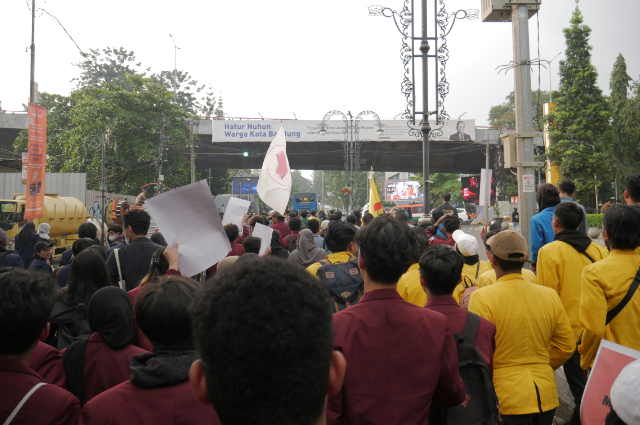
A year ago, few people outside university politics knew the name Neha Bora. Today she is the 29-year-old national president of the All India Students’ Association (AISA), the student wing of the CPI(ML) Liberation, and one of the most visible faces of the student-led protests that have shaped India’s political year.
Her sudden prominence has also pulled AISA, an organisation with a long and contested history on the Indian Left, into the national spotlight. To admirers, it is a campus group that fights for fees, safety and democratic space. To critics, its revolutionary heritage makes it suspect. Both views are now being argued far beyond the walls of JNU.
From Khatima to JNU
Bora is from Khatima in Uttarakhand and, according to Open magazine, was born into an army family. She studied at Delhi University, completed her master’s at Ambedkar University Delhi, and is now a PhD scholar in theatre and performance studies at JNU’s School of Arts and Aesthetics. Media profiles describe her early work in street theatre and say the 2019 protests against the Citizenship (Amendment) Act shaped her politics. She is reported to have joined AISA around 2018 and risen through campus campaigns, including those on fee hikes and scholarships.
Al Jazeera, in a recent feature, quotes colleagues describing years of unglamorous groundwork at JNU: pamphlets, door-to-door canvassing in hostels and room-to-room appeals for votes.
The hunger strike that made her known
The turning point came in mid-2026. Following the NEET-UG paper leak, Bora and two other AISA leaders, Manish Kumar and Aameen Amitoj, joined activist Sonam Wangchuk in an indefinite hunger strike at Jantar Mantar, demanding Education Minister Dharmendra Pradhan’s resignation. They ended the fast on July 20 after 23 days; AISA said each of the three had lost more than 12 per cent of their body weight. Pradhan resigned on July 25.
Outlook credits Bora, the Cockroach Janta Party (CJP) and other groups with forcing the minister out. That is one publication’s framing, and the causes of a resignation are rarely simple, but the protest undeniably transformed Bora’s profile.
From one protest to the next
Since then she has appeared at student agitations well beyond Delhi. In August, she joined protests in Jharkhand over recruitment-exam irregularities, where a man threw ink at her during a march to the state assembly. He told reporters he considered her “anti-national”. In Hyderabad that month, she told an audience that being called such names should not deter people from questioning the government.
In October, she became a leading voice in protests demanding the removal of Chief Election Commissioner Gyanesh Kumar over concerns about the Special Intensive Revision of electoral rolls. She has been detained repeatedly in the process.
On Sunday, October 4, AISA said Delhi Police took her away from a march towards Jantar Mantar in an unmarked vehicle with only male officers, and that her phone and bag were taken. A senior police officer told ThePrint that she was detained in a government vehicle and taken to a police station in the Outer North district, and Delhi Police denied that her belongings were seized. She was released that evening. CPI(ML) general secretary Dipankar Bhattacharya has described a pattern of single-out detentions, a charge police have not publicly answered. In a separate episode, Delhi Police detained a woman mistaken for Bora while the real Bora was protesting elsewhere in the city, a coincidence that spread widely on social media.
Why AISA divides opinion
AISA was founded on August 9, 1990, as the student wing of CPI(ML) Liberation. That party traces its lineage to the Maoist-inspired rebellion that began in 1967 at Naxalbari in West Bengal, a heritage Al Jazeera notes in describing the organisation. AISA calls itself a revolutionary student movement and has been a major Left force in North India, winning student elections at JNU and, in the 1990s, at Banaras Hindu University and Allahabad University.
Critics point to that lineage and to the organisation’s uncompromising language. They argue that a group rooted in revolutionary politics is ill-suited to represent students broadly, and some opponents brand its activists “anti-national” or “urban Naxals”, labels Bora has publicly brushed off. Her comments on jailed activist Umar Khalid have also drawn attention.
Supporters answer that the label is a way of avoiding the argument. They note that AISA’s everyday work has been about fee hikes, hostel and campus safety, scholarships and student elections, and that its recent protests, on exam integrity and electoral rolls, address concerns shared by many students who do not share its ideology. In the November 2025 JNU Students’ Union election, an alliance of AISA, SFI and DSF won all four central panel posts, which suggests that on campus at least, the Left retains real support.
Beyond campuses, the picture is less clear. ThePrint notes the wider Left has struggled to hold its electoral base even as student wings remain active, and that opposition parties are courting Bora. Whether AISA’s energy can outlast the current wave is, as Outlook put it, still an open question.
What happens next
Bora herself has framed the argument as one about patriotism, saying that loving the country means acknowledging how much is broken. Her opponents will insist that her movement’s roots count against her. Her supporters will say that what she has actually done, from fasting for 23 days to marching through repeated detentions, is the better measure. In the months ahead, voters, universities and the state will each have a chance to decide which of those readings sticks.
Sources and References
- Al Jazeera, “Neha Bora can outwit the police. Can Indian youth leader outfox Modi?”, Oct 22, 2026. https://aljazeera.com
- Outlook India, “Who Is Neha Bora? Tracing AISA’s Communist Roots And Student Politics”. https://www.outlookindia.com
- Outlook India, “‘Not Strategy, Just Coincidence’: Neha Bora’s Lookalike Detained As AISA Chief Protests In Delhi”. https://outlookindia.com
- Free Press Journal, “Who Is Neha Bora? Meet Student Activist Who Remained Steadfast At Delhi’s NEET Protest Despite A 23-Day Hunger Strike”. https://www.freepressjournal.in
- ThePrint, “Congress’ new darling & the face of youth anger: what Neha Bora’s rise means for flailing Left”. https://thepri nt.in
- ThePrint, “Neha Bora detained, later released by Delhi Police; AISA says her ‘bag, phone seized’”. https://theprint.in
- ThePrint / PTI, “J’khand job exam stir: Man throws ink at AISA’s Neha Bora, detained”, Aug 7, 2026. https://theprint.in
- The South First, “Hyderabad: AISA president Neha Bora speaks at 15th Hasan Memorial Lecture”. https://thesouthfirst. com
- The South First, “Delhi Police detain AISA president Neha Bora in unmarked car; Vrinda Grover, CPI(ML), others press for her whereabouts”. https://thesouthfirst.com
- The Week, “‘It’s okay if government calls you Pakistani’: AISA leader Neha Bora”, Aug 17, 2026. https://www.theweek.in
- Open Magazine, “Neha Bora’s ‘abduction’ by Delhi Police part of a pattern, alleges Dipankar Bhattacharya”. https://openthemagazine.com
- ARY News, “Delhi Police releases AISA president Neha Bora following Jantar Mantar protest”, Oct 4, 2026. https://arynews.tv
- ARY News, “Neha Bora: The Indian Student Activist Challenging Exam Scandals and Fighting for Education Reform”. https://arynews.tv
- Brut India, “Who Is Neha Bora? Why Is The JNU Scholar Talking About Umar Khalid?” https://www.brut.media
Note: Accounts of the police actions come from AISA and allied figures, as well as from police officers quoted anonymously; Delhi Police has not issued a detailed public statement on all allegations.