
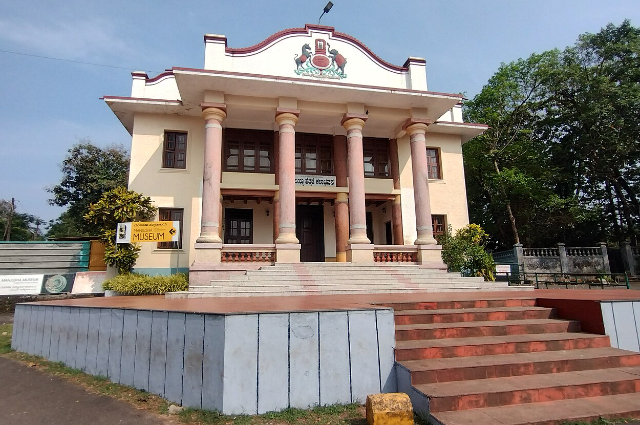
How a sanitation worker's confession cracked open one of Karnataka's most explosive investigations and why the truth is proving harder to bury than the bodies.
For nearly two decades, a sanitation worker in Dharmasthala, a wealthy and politically influential Karnataka pilgrimage town, says he did as he was told. He dug. He buried. He kept quiet. He claims that between 1995 and 2014, under threat of death, he interred the bodies of women, girls, and other victims along the banks of the Netravathi river, many bearing signs of strangulation and sexual assault. Among them, he alleged, was a schoolchild and a young acid-attack survivor.
For twelve years afterwards, he said, he lived in hiding.
The allegations became public in June 2025, when two Bengaluru lawyers announced they represented a client willing to lead investigators to the burial sites he said he had dug himself. Days later, the 48-year-old former worker came forward, his identity shielded by the court, and pointed authorities to thirteen locations where he claimed bodies had been laid to rest in secret.
It was enough to force the Karnataka government's hand. A police case was registered on July 4, 2025. Weeks of mounting public pressure and a delegation of lawyers and activists who met directly with Chief Minister Siddaramaiah led to the formation of a Special Investigation Team on July 19, headed by Director General of Police Pronab Mohanty.
Dharmasthala has not been a stranger to these allegations. Families and political groups have staged protests over disappearances and suspected cover-ups since the 1980s, and public anger flared again in 2012 after the rape and murder of a 17-year-old girl — a case that was investigated in turn by state police, Karnataka's Criminal Investigation Department, and eventually the CBI, without resolution the family considered satisfactory. The temple town, notably, had no police station of its own until 201 6. That history is part of why the sanitation worker's account landed with such force. It gave a name if not yet a face to suspicions that had circulated for years: that a town built around one of India's most revered religious institutions had also become a place where violence against women could disappear along with the evidence.
The SIT began excavating the thirteen sites the whistleblower identified. By early August, eleven had been opened. Most yielded nothing. But a human skull and bones were recovered at one location, and a partial skeleton at another, findings that, at least initially, seemed to lend the account weight. At one exhumation site, investigators also found a PAN card and debit card, later traced to a man from Bengaluru's rural Nelamangala district who, it turned out, had died of jaundice and been cremated in his own village a reminder of how difficult it can be to separate signal from noise in a search built on a single, traumatised memory.
The case took a turn few had anticipated. In August, forensic testing revealed that a skull and bones the complainant had presented to a magistrate, which he said belonged to a woman, were in fact male. Investigators determined that some of the samples he provided had been sourced from a medical institution rather than exhumed as claimed. On August 23, the SIT arrested him on perjury charges. Officials have been careful to say this does not end the inquiry. As of late August, the SIT maintained that only about a quarter of the investigation was complete, with forensic work on partial remains still pending, and said the probe would widen to examine unresolved missing-persons complaints from pilgrims across Karnataka and neighbouring states.
The case has also been muddied by other complications: a local activist's separate claim of witnessing a burial fifteen years ago; a complainant who first said her daughter had been murdered in Dharmasthala, then retracted the claim; and scrutiny of a YouTuber accused of using AI tools to sensationalise the story, whose devices are now being examined. A court injunction at one point suppressed thousands of pieces of media coverage, and a judge who briefly presided over the case recused himself after it emerged he had been educated at Dharmasthala-run institutions and had worked at a law firm representing the temple's leading family.
Whatever the outcome of the perjury case, the underlying questions that prompted Karnataka's government to open an SIT have not gone away: decades of protests, an unresolved 2012 murder, a temple town that went without its own police station until relatively recently, and now, human remains recovered at two of the sites a whistleblower led police to. Legal experts and activists have criticised the investigation itself as too narrow and insufficiently transparent, even as the state has pledged witness protection and an independent probe.
It is, in the end, a story less about any single confession than about the architecture of institutional power how it can outlast individual witnesses, individual complaints, even individual scandals, unless someone with nothing left to lose decides that silence is no longer survivable. Whether this particular whistleblower's account holds up to forensic scrutiny is now for the SIT, and eventually the courts, to determine. But the questions his allegations forced into the open are not going back into the ground.
References:
- Wikipedia, "Dharmasthala mass burial case," accessed July 2026 https://en.wikipedia.org/wiki/Dharmasthala_mass_burial_case
- The News Minute, "Dharmasthala mass burial case: SIT questions whistleblower for over five hours," July 27, 2025 https://www.thenewsminute.com
- Deccan Herald, "Dharmasthala mass burial: SIT questions former sanitation workers," August 20, 2025 https://www.deccanherald.com
- The Federal, "Dharmasthala 'mass burials': Investigation far from over, says SIT," August 25, 2025 https://thefederal.com