
Education is extremely important in the modern age. Where society can develop into a better and wiser version of itself, there’s no doubt how important it is to educate the youth of our generation.
In some places, most don’t have the privilege to have access to educational facilities or tools, even based on factors such as caste, poverty and gender.
That’s why, when people come together to create a facility for education for the empowerment of the youth in a way that greatly benefits the students, while also being mindful of the students’ wellbeing and experience, it is all the more impressive.
Therefore, we come to the topic of The Rajkumari Ratnavati School for Girls.
The School of the Desert
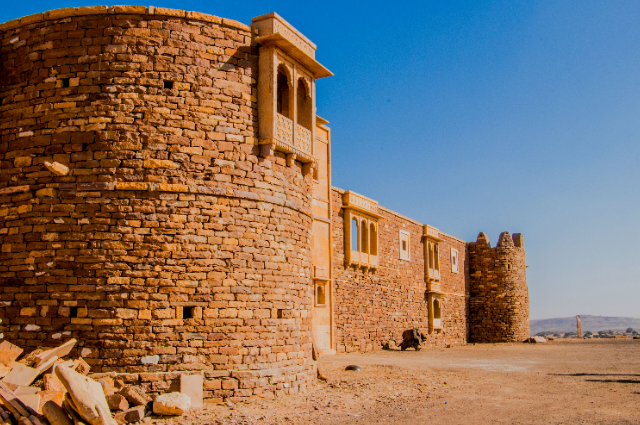
Known as “The Golden City”, the north Indian desert town of India known as Jaisalmer is a very well-known town of the North. Due to the abundance of sandstone-based architecture, it is why it has been termed ‘Golden’.
Despite its infamous name, a major flaw within the area is the low literacy rate for women in the area, which can only come up to 36 per cent of the general population. This has brought up many questions and arguments that encourage the education of women within the town.
The project was created as a means of empowerment for women and girls throughout the region by giving them the opportunity to be educated in a school meant for them. The project was commissioned by CITTA of India, with the design of the school created by a well-known New York architect known as Diana Kellogg. The school itself was built by local craftsmen of the area who were mostly the fathers of the girls.
It was even named the 2020 “Building of the Year” by the Architectural Digest of India, and the school has been open since November 2021, with many girls enrolled in the institute.
The Architecture
The school itself was modelled after analyzing many different cultures for symbols of femininity and women's empowerment. This led to the school being shaped in the form of three ovals, which were meant to symbolize femininity and infinity.
Due to the building itself being shaped like this, on top of the sandstone being used for building it, it managed to blend well with the rest of the terrain perfectly. In an area with temperatures up to 120 degrees Fahrenheit, the institute is built in a way to provide a safe and secure learning environment for every student who goes here.
The building features many unique elements needed for a good education. Examples include the large courtyard in the middle, the various classrooms that are within the building, a large computer center, a terrace, etc.
The classrooms were also built in a way that allows natural light and ventilation during the day, and it surrounds the entire institute in each room of the building.
There was even the use of blue tiled-mosaic tiles on the walkway of the roof, which adds a nice contrast with the bright yellow from the sandstone, while also reflecting the bright blue skies above against the yellow terrain.
The school even utilises solar energy for renewable energy, ensuring a safe and eco-friendly approach to conserving electricity. It also incorporates a water harvesting system during the rainy seasons, which allows for the recycling of rainwater and reduces waste.
The Cooling Factor
Due to the area it’s established in, it can be difficult to effectively integrate an educational institute in the heart of the desert. Which is why the institute has been crafted in such a way that not only does it incorporate many elements of traditional Jaisalmer architecture, but it also uses the same architecture to symbolize the hope of the desert.
The school has also been made in a way where the indoor classrooms are much cooler than the general outside. The real reason why is due to the use of sandstone for constructing the institute. Due to its abundance, cheap pricing and reliable structure, it has been widely used in many architectural pieces for the same reason. Kellogg herself has even stated that it can keep the heat and coolness out during the day and nighttime.
In primarily desert-based regions, this provides even more effectiveness due to the nature of the region and the availability of sandstone-based materials.
The shape of the structure also makes a big impact. Due to the oval shape of the building, it helps to circulate cool air around it as well as to capture it, making it all the more effective in cooling the area the school is situated in.
Final Thoughts
We can observe from here the different ways architecture can be built in a way fit for the region it’s situated in, as well as for the people’s comfort and leisure.
The school being made with feminine-based imagery and symbolism in mind, as well as the notable usage of sandstone in the form of unique traditional imagery important to the empowerment of women, shows the many different ways architecture can be designed in a meaningful manner.
Not only has the institute been designed in such a way to help empower and build confidence in the students, but it has also been built to be able to still be cool and provide a comfortable and safe environment despite the hot, sandy desert it’s situated in.
Architecture knows no bounds when it comes to building unique and memorable buildings of our time, and the Rajkumari Ratnavati School for Girls is certainly one of them.
References:
- https://edition.cnn.com
- https://tass-asia.org
- https://www.dezeen.com
- https://archello.com
- https://arquitecturaviva.com