
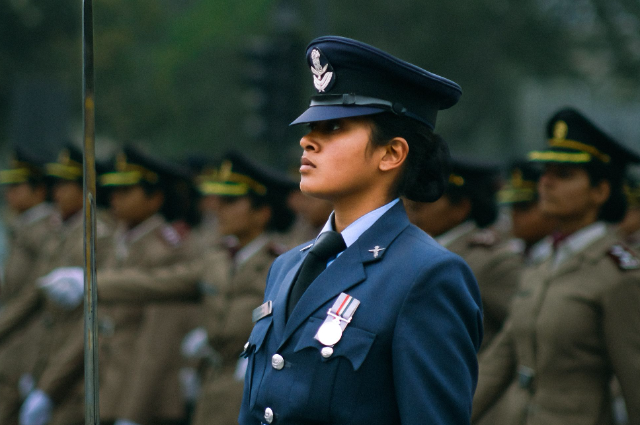
Heroes are not always in a powerful position, and they don't need a weapon to save the public from enemies; they need courage to face all situations. Kamlesh Kumari Yadav, a constable in the CRPF, didn't have a weapon to save the public and parliament members from the terrorists. She was aware of the other guards' movements through the walkie-talkie, and she sacrificed her life to stop the disaster in the Indian government.
Kamlesh Kumari was one of the CRPF security personnel on December 13, 2001. Kamlesh Kumari's life turned to tragedy while she was giving information to a higher official about the terrible attack. One of the terrorists fired a gunshot at her. She received the Ashoka Chakra posthumously for her contributions to peace. Let us discuss Kamlesh Kumari and the Indian Parliament attack in the following content.
Kamlesh Kumari's Motivation to Join the CRPF
Kamlesh Kumari, a girl who lived with ambition in public service, was born on June 30, 1969, in the Kannauj district of Uttar Pradesh. She grew up in a middle-class family where she learned moral values, discipline, and hard work. Most of us choose a career in public service, such as the army or the police, but she started her career in the CRPF as a constable. After joining the Central Reserve Police Force (CRPF), she contributed to the security of the Indian nation. She built a reputation among her superior officers during her service. She served for seven years in the CRPF. She played a crucial role over these seven years and sacrificed her life to help prevent the terrible moment from happening in India. On December 13 2001, during the Parliament attack, she faced danger in a critical situation; she moved intelligently, but the terrorist attacked her with a gun.
Assigned to the Security of Parliament House
After several years of experience, the CRPF posted Kamlesh Kumari as security in the Parliament House. The most sensitive and prestigious posting, the Parliament, is a central part of India's democratic system in New Delhi. She served under the 88th Battalion of the CRPF.
Security duties included monitoring all vehicles and personnel and observing the movements of those entering Parliament, and Kamlesh Kumari performed her duty with dedication and sincerity on December 13 2001. Usually, everyone argues in Parliament; three security forces protect MPs and ministers. Kamlesh Kumari was monitoring the vehicle at the gate for security purposes.
What Happened on December 13, 2001
2001 December 13, the day started calmly and with full security in the Parliament. The government provided three security forces for the Parliament House: the CRPF, Delhi Police, and the Parliament Security Service. A winter session meeting was held in both the Rajya Sabha and Lok Sabha. Journalists captured the meeting through the camera. Around 11:06 am, both Houses of Parliament ended the session. Leaders started to leave; Prime Minister Atal Bihari Vajpayee and Opposition Leader Sonia Gandhi both left before the terrorist attack. But more than a hundred MPs were in Parliament.
Around 11:40 am, a White Ambassador car entered the Parliament Complex at high speed towards Gate No. 12 and crashed into the Home Minister's car. Kamlesh Kumari suspected them, watched closely, and gave the information to their superior. Five terrorists disguised as Indian Army personnel were there and had AK-47 assault rifles, Grenade launchers, pistols, revolvers, Hand grenades, IEDs, and large quantities of ammunition. They used these weapons to attack the Parliament.
What is Kamlesh Kumari's Contribution
Kamlesh Kumari suspected it early and alerted the other security personnel. She reported the terrorist attack to the security system even during heavy gunfire. Her call to action had a huge impact in saving the people. While she was alerting the security system about the terrorist movement, one of the terrorists fired a bullet in her abdomen; she was severely injured, and it caused her death. Kamlesh Kumari was the first security guard to die during the Parliament attack.
For her bravery and presence of mind, she was posthumously honoured by India with the Ashoka Chakra in 2002, the highest peacetime gallantry award.
How She Inspired Future Generations
Years have passed, but everyone still remembers that incident. Kamlesh Kumari's heroism inspires future generations. The Parliament attack means everyone first remembers her sacrifice, presence of mind, and the way she handled the critical situation. After two decades, she still lives on through her sacrifice.
She was one of the first women in India's security force to receive the Ashoka Chakra award. She was an inspiration to young women to choose the army or police. Youngsters should be passionate about public service after knowing about the Parliament attack.
Three things we must learn from Kamlesh Kumari: first, we learn how she chose her duty over her life and being selfless for the nation. Next, we learn to face the problem without hesitation. Finally, we learn about leadership: how to lead the team in a cruel situation too.
References: