
Gopal Sharma was fifteen years old. He was a 9th-class student from Banwariwas village in the Jewar area of Greater Noida, Uttar Pradesh. He had a grandmother who loved him. And that love, a small, protective act of a woman standing between her grandson and what she feared, is what got him killed.
For a while, Gopal had been visiting a spot in the village where local men gathered to smoke hookah. His grandmother found out. She did what grandmothers do; she went directly to these men and reprimanded them for pulling her boy into their circle. After that confrontation, Gopal stopped going. Case closed, it must have seemed. A grandmother had spoken. A boy had listened. Life moved on.
But the men did not forget.
The investigation later revealed that there was no great enmity behind what happened, only an argument about hookah smoking and the habits of intoxication. But small humiliations, it turns out, can harden into something monstrous when left alone long enough. For nearly six weeks, the men remained silent, hiding their anger. Behind the scenes, they were preparing something that would shake the entire village.
On May 21st, 2026, Gopal visited their gathering again. He went missing under suspicious circumstances that day. When he didn't return home, his family filed a missing persons complaint with the police and search operations were launched. His mother thought he had only stepped out to a nearby shop. His father had gone to Noida to bring back Gopal's grandfather, who was admitted to a hospital there. The house was ordinary. The afternoon was ordinary. And then Gopal was gone.
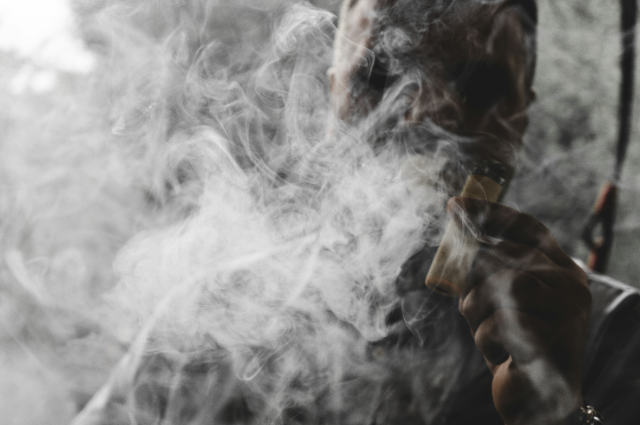
However, at around 11 pm on Friday, the family was informed that a boy’s body had been found inside a deserted house in nearby Rohi village. The victim’s relatives and police officials immediately reached the spot and confirmed the body as that of Gopal. Police allege the men forced him to smoke a hookah mixed with an unusually high amount of tobacco, which caused his death by asphyxiation.
What makes this detail worth sitting with is that hookah is not the harmless social ritual it is widely believed to be. Compared with a single cigarette, smoking hookah for one hour delivers 25 times the tar, 125 times the smoke, 2.5 times the nicotine, and 10 times the carbon monoxide. Because smoke passes through water, many people mistakenly believe hookahs are safer than cigarettes, but studies show hookah does not effectively filter out harmful substances, and smokers may end up breathing in higher amounts of nicotine, metals, and toxic chemicals. For a fifteen-year-old boy, forced rather than willing, the hookah was not a smoking device. It was a form of punishment.
The victim's family also alleged that the accused had mutilated parts of the body. The brutal incident triggered widespread outrage in the village and nearby areas. The post-mortem found no external injuries. Viscera samples were sent for chemical analysis. The violence had been interior, invisible, made to look like something else.
Three men were arrested — Naresh and Mohit from Rohi village, and Umesh Kumar from Champaran in Bihar. Two of the accused were shot in the legs during a police encounter, and the case was broken open using electronic surveillance. Two illegal country-made pistols and cartridges were recovered from them.
The National President of the Rashtriya Vipra Ekta Manch met the grieving family and issued a two-day ultimatum to the police administration, demanding strict action. Villagers warned that they would protest if action was not taken. As the community came together, so did its anger. Meanwhile, in the same house, a grandmother who had stepped out to protect her grandson was beginning to realise the terrible price he had paid.
What Gopal's story also quietly contains is a larger and largely ignored truth about adolescent vulnerability in rural India. Studies show that the prevalence of substance use among Indian youth is 32.8%, with the median age of first use being 18 years, and among those who use substances, 75.5% had started before completing adolescence. Research from rural Karnataka found that the most common reasons for initiating and continuing substance use were peer pressure and pleasure, and that despite high awareness of health problems, usage remained high. The places where young men gather in villages are often the only social infrastructure available to teenagers. There are no counsellors. There are rarely intervention programs. So families do what Gopal's grandmother did. They try to protect their loved ones on their own, relying only on care and concern while facing challenges far beyond their control. They try to protect their loved ones on their own, relying only on care and concern while facing challenges far beyond their control.
In a separate but similar case documented in Madhesh, the Chief District Officer observed that even minor disputes among neighbours are increasingly escalating into murder, driven by motives such as revenge and personal motives. "Conflicts, misunderstandings and disagreements between relatives, families, and neighbours are leading people to commit extreme acts," he said. This is a pattern that repeats across the subcontinent: a small incident, a perceived insult, a long wait, and then a tragedy that cannot be reversed.
Gopal's grandmother did nothing wrong. She saw men leading her grandson somewhere she did not want him to go, so she told him to come back. In a better story, that would have been enough. The boy would have stayed away, the men would have let it go, and none of this would have happened.
But things turned out differently. Her concern became the reason they were angry. The punishment was not directed at her, but at the grandson she was trying to protect.
He had already turned around once. He had already listened to her and walked away from those men.
He just did not know that he would only get that chance once.
. . .
References:
News Sources
Hookah & Health
Substance Use & Indian Youth
Revenge Killings & Village Violence