
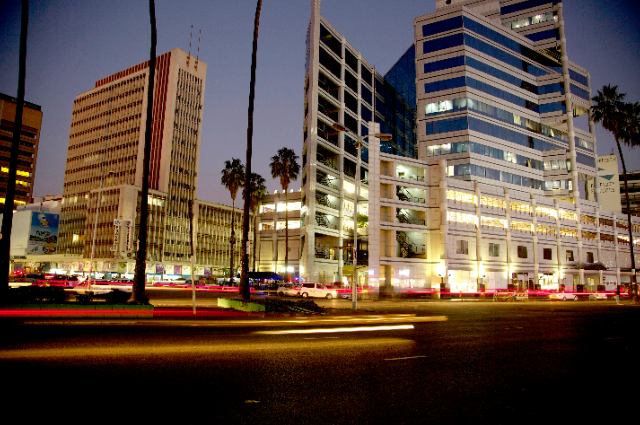
If you walk into most big office buildings in a hot city, you will feel the same thing. Cold air blasting from somewhere above you, a low humming sound. Air conditioning is the immediate answer to heat almost everywhere in the world now. But there is one building in Harare, the capital of Zimbabwe, that decided to skip that answer entirely and ask a much older question instead. How do termites do it?
The building is called the Eastgate Centre. It has shops on the lower floors and offices above them, and it was designed by an architect named Mick Pearce, who started working on it in the early nineties. The person who hired him wanted a large building without the huge cost of running air conditioning around the clock. That is a strange thing to ask an architect in a place where the weather regularly swings from cold nights to very warm days. Most people would have said it could not be done without machines and innovative technologies. Pearce looked outside his own field for the answer and proved that it can.
He looked at termite mounds. In parts of Africa, termites build these tall mound structures out of soil, and inside them they grow a fungus that they eat, which only survives if the temperature inside stays stable. The termites cannot control the fungus directly; instead, they build their homes in a way that manages air on its own. The mound has tunnels and chimneys running through it. Warm air rises and escapes through the top, and as it leaves, it pulls cooler air in from below. It works quietly, all day, without anyone or anything actively deciding when to turn it on. The shape of the mound is doing the work.
Pearce took this idea and converted it into concrete and brick. Eastgate does not have one central air conditioning unit. Instead, it has a series of chimneys that run through the building, along with fans placed at the base. At night, when the outside air in Harare cools down, those fans pull that cool air into the building. The building's concrete structure is thick and dense, so it absorbs the coolness and holds onto it. During the day, as the building fills with people and machines and the temperature naturally starts to climb, that stored coolness gets slowly released back into the rooms. Meanwhile, the warm, stale air already inside gets pushed upward and let out through vents and chimneys on the roof. It is not one clever gadget doing all the work. It is the whole shape of the building acting like a slow breathing system, taking in air on one side and letting it out through the other.
What makes this interesting is not just that it is a nice environmental idea. It actually works, and it has worked for decades now, after the building opened its doors in the mid-nineties. Compared to a similarly sized building using standard air conditioning, Eastgate uses less energy just for keeping the air moving and comfortable. This is often used as one of the go-to examples whenever people talk about biomimicry, which is the practice of copying designs found in nature to solve human problems instead of inventing something completely from scratch. Termites were not thinking about architecture when they built their mounds over thousands of years of evolution, but the outcome of that evolution turned out to be something worth studying.
There is a small correction that is worth mentioning here, because it makes the story raw and honest. For a long time, people believed termite mounds worked exactly like a temperature control system, constantly adjusting to keep one stable and steady number inside no matter what was happening outside. Later research on actual termite mounds suggests the reality is a little more complicated and that the mounds may function more like a breathing organ that helps termites exchange gases than a thermostat. Eastgate was built based on the simpler, earlier idea of the mound as an air conditioner. Even so, the building performs well, and the underlying instinct, using passive airflow and thermal mass instead of machines, still holds up.
Pearce did not stop at termites either. He looked at cactus plants too, since uneven surfaces help them lose heat more easily at night compared to something smooth. Eastgate's outer walls copy that texture in a way, with concrete shapes, balconies, and small projections breaking up the surface instead of leaving it as one flat wall.
What I find interesting about this story is that it did not need expensive, high-tech solutions to succeed. It needed patience, observation and research. Pearce spent time actually studying how nature already solved a very similar problem long before humans needed offices and shopping centres. In a country where electricity supply is not always reliable, and machinery can be costly to maintain, designing a building that leans on physics and airflow instead of constant power made a lot of practical sense too. It was not built to win environmental awards; although it later did receive recognition for its design, it was built because the client wanted a functional, affordable building, and the most functional and affordable answer happened to already exist in the ground outside Harare.
Nearly thirty years later, Eastgate is still standing and still being used the way it was designed, without needing a full air conditioning retrofit. That time alone says something about how well the concept holds up over time. It is easy to think of nature and technology as two separate categories, one soft and organic and the other hard and engineered, but Eastgate is a reminder that they were never really that far apart to begin with. Sometimes the most advanced idea available to us is just paying closer attention to something that has already been quietly working for millions of years.
References:
- Grist, "These self-cooled buildings were inspired by termites and frogs" Nautilus,
- "The Termite and the Architect" Earthbound Report, "Building of the week: Eastgate, Zimbabwe"
- AsknNature, "Passively Cooled Building Inspired by Termite Mounds" Biomimicry 3.8
- "Case Example: Sustainable building secrets of termites" Wikipedia, "Eastgate Centre, Harare"