
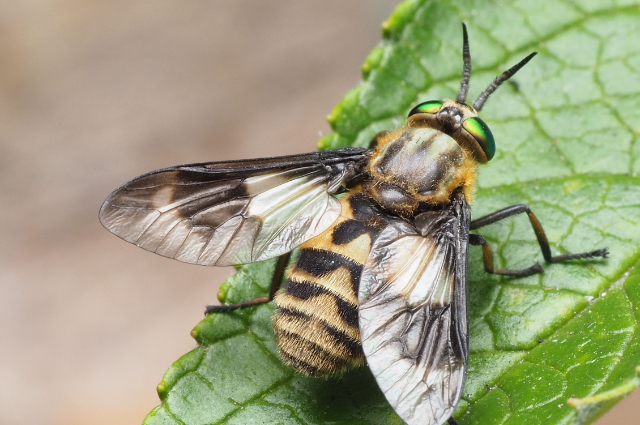
For decades, North American livestock ranchers shared a rare piece of collective comfort: they didn’t have to think about Cochliomyia hominivorax. The New World screwworm, whose scientific name literally translates to "human-eater", was a ghost of agricultural history, systematically driven out of the United States in the 1960s and pushed all the way down to a permanent biological wall in the dense rainforests of the Darién Gap between Panama and Colombia.
But borders are human constructs, and biology is opportunistically fluid.
The biological wall has breached. Over the past few years, the flesh-eating parasite has been aggressively creeping back up through Central America and heavily infiltrating Mexico. By early 2026, Mexico reported thousands of confirmed cases in animals, with infestations popping up within 100 miles of the United States border. The threat is no longer a distant projection: a travel-linked human case was confirmed by the CDC in a patient who returned to Maryland from Central America, and the USDA recently confirmed domestic animal cases, including a three-week-old calf in Zavala County, Texas.
The Biological Nightmare
To understand the panic sweeping through the agricultural sector, one must understand how the screwworm operates. Unlike typical blowflies, which play an ecological role by consuming dead or decaying tissue, the screwworm is an obligate parasite of living flesh.
It requires nothing more than a minor breach in the skin of a warm-blooded host, a tick bite, a scratch from a barbed-wire fence, or the unhealed umbilical cord of a newborn animal. Attracted to the scent of blood, a female fly deposits up to 400 eggs at the wound's edge. Within hours, the larvae hatch. Armed with specialised, screw-like ridges on their bodies, they bore deep into the living muscle tissue, eating the host alive from the inside out. Left untreated, the resulting condition, infestation by fly larvae known as “myiasis,” is almost universally fatal as it destroys vital organs and induces massive secondary infections.
The Domino Effect on Global Food Security
Beyond the gut-wrenching horror factor, the screwworm resurgence is a massive economic trapdoor. An unchecked outbreak directly threatens food supply chains and consumer wallets at an incredibly vulnerable moment.
The U.S. cattle herd has already shrunk to its smallest size in seven decades due to prolonged droughts. With beef prices sitting at historic highs, a widespread re-introduction of the parasite would be devastating. The USDA estimates that a full-scale screwworm outbreak could cost the livestock industry billions of dollars in livestock deaths, heavy medication expenses, and intensive labour costs, as ranchers would be forced to manually inspect every single animal daily for open wounds.
The economic fallout wouldn't stop at the ranch gate. A sudden constraint on the meat supply chain ripples fast, triggering aggressive inflation at grocery stores and risking localised meat shortages.
The Fragility of Eradication
The current crisis exposes just how fragile human health and agricultural victories truly are. The original eradication of the screwworm is widely considered one of the greatest triumphs of modern science. It relied on the Sterile Insect Technique (SIT): millions of factory-bred male flies were sterilised via radiation and released into the wild from aeroplanes. Because female screwworms only mate once in their lifetimes, mating with a sterile male results in unhatched eggs, causing the local population to collapse.
Maintaining this success requires flawless, permanent geopolitical coordination and massive funding. The barrier in Panama worked for over 15 years, but a combination of illegal transboundary animal movements, globalised trade routes, and declining regional surveillance funding allowed the fly to slip through.
Once the fly established a foothold north of the Darién Gap, the dominoes fell rapidly through Costa Rica, Honduras, Guatemala, and Mexico. In response, the USDA and the Mexican government have scrambled to open new sterile-fly production facilities, such as a converted plant in Matapa, Mexico, to ramp up production to hundreds of millions of sterile flies a week.
What Climate Change Is Unlocking
The underlying fuel for this biological march northward is a changing climate. Screwworms are inherently tropical and subtropical insects; they are highly sensitive to frost and require warm, humid environments to thrive.
Historically, cold winters acted as a natural geographic constraint, killing off northern fly populations. However, rising global temperatures and milder winters are quietly transforming vast swathes of North America into highly hospitable territory. Combined with altered rainfall patterns that stress wildlife and alter livestock grazing habits, climate change is expanding the parasite’s potential ecological niche.
The screwworm’s return is a stark warning. Planetary warming does not just mean higher temperatures; it means the shifting of biological boundaries, the undoing of historical scientific triumphs, and the silent unlocking of ancient nightmares.
References:
- U.S. Department of Agriculture (USDA) / APHIS: Screwworm.gov Unified Government Response (2026 Situation Reports and Domestic Detections).
- Centres for Disease Control and Prevention (CDC): New World Screwworm Outbreak & Travel-Associated Cases (August 2025 – July 2026 Summaries).
- International Atomic Energy Agency (IAEA) & FAO: Project Launched on the Use of Nuclear Techniques to Target the New World Screwworm Outbreak in Central America, Mexico, and the United States (June 2026 Joint Report).
- Reuters / Texas Public Radio: U.S. Confirms Nation's First Travel-Associated Human Screwworm Case (August 2025 Data).