
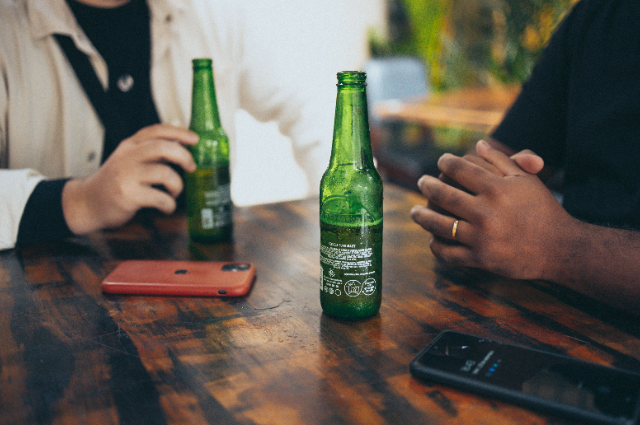
For decades, the standard rite of passage for a young adult was getting blackout drunk and nursing a near-illness hangover the next day. You could tell how vital this ritual was not just by how religiously the youth followed it but also from the media created depicting young adults from the early 2000s. The movies then treated getting absolutely wrecked not just as a fun weekend plan, but as a mandatory structural pillar of growing up, and the young adults responded in kind.
In recent years, however, that pillar has cracked. The share of adults under 35 who say they ever drink dropped ten percentage points over two decades — from 72% in 2001–2003 to 62% in 2021–2023. alcohol is not the rave anymore, a fact that almost goes against the grain of human nature; after all, who in their youth did not drink alcohol?
Gen Z apparently.
Historically, alcohol has always been the default social lubricant. So why are Gen Z avoiding it?
- Financial Strain: With inflation and the price of everything rising while wages remain unchanged, buying alcohol at any price really feels like a Budgetary crisis.
- The Wellness Shift: Gen Z has grown up saturated in a wellness culture that treats alcohol like poison. They are acutely aware of its caloric load, its status as a carcinogen, and its devastating impact on sleep quality.
- Hangover Anxiety (hangxiety): Armed with unprecedented access to mental health vocabulary, young adults are increasingly unwilling to trade a night out for a next-day spike in panic and depression.
- Aesthetics: Being visibly drunk at this age, where recording people without consent is the new law, is a social liability. Young adults trying to build a life in white-collar careers recognise alcohol is not worth acting sloppy where it could end up on social media forever.
Where they're not: Everything else.
But here is where the sober narrative cracks wide open. While alcohol sales slump among the youth, addiction and misuse rates for alternative substances are quietly climbing. Gen Z has effectively decoupled sobriety from abstinence. For many, being sober simply means being free from alcohol. In its place, a different cocktail of habits has emerged. Alcohol is a blunt instrument; it makes you sloppy. For a generation dealing with high rates of reported anxiety and academic and financial stress, they need precise tools to turn off the noise and cope with the stress rather than to party.
Specifically:
Weed: In 2022, an astonishing 13.3 million young adults aged 18–25 reported using marijuana. It is the highest prevalence of any age bracket surveyed, fueled by rapid legalisation and the perception of cannabis as a natural, harmless plant. It being a holy plant for some religions (Rastafari) creates a “ you'll use weed one way or the other” type of situation, further increasing the already high number of users.
Vaping: Vaping took the social, slow ritual of smoking and turned it into an invisible, constant habit. You don't have to go outside to smoke anymore; you can pull 20% more nicotine into your lungs sitting at your desk or in bed, sustaining a flatline of dopamine all day. While only 3% of Gen Z reported vaping at age 17, that figure skyrockets to 20% by the time they reach age 23.
Prescription drug misuse: The pressure to perform in a hyper-competitive, unstable economy has turned prescription drug misuse into a productivity coping mechanism. Rebranding the addiction as efficiency, Gen Z outpaces other generations in the misuse of prescription benzodiazepines (like Xanax) and stimulants (like ADHD medications), frequently using them to self-medicate a baseline of chronic anxiety.
Gambling: The addiction isn't always chemical. Sports betting and crypto trading apps have turned gambling into a video game. It’s no longer about sitting in a smoky casino; it's a sleek interface on a phone screen that feels exactly like scrolling a social feed, completely lowering the psychological barrier to financial risk. A person can sit alone in a room, entirely sober from alcohol, while simultaneously experiencing a severe surge of cortisol, screen addiction, and algorithmic isolation. One in three Gen Z individuals engage in gambling, with roughly 5% slipping into clinical addiction.
The invisible catalyst: Digital addiction
You cannot talk about Gen Z’s substance habits without looking at the screen in their hands. Social media acts as both a catalyst and a digital drug in its own right.
Algorithms continuously serve up content that normalises—and glosses over—the realities of substance use. Influencers aestheticise everything from cali-sober lifestyles to prescription routines. Simultaneously, the constant, algorithmic feedback loop of social media fuels the very isolation, body dysmorphia, and FOMO (fear of missing out) that drive young adults to seek chemical relief in the first place.
The bottom line.
Gen Z is a generation of deep contradictions. They have successfully identified the toxic legacy of alcohol culture and walked away from it, a genuine health victory.
Yet, the underlying drivers of addiction haven't vanished. The crushing economic anxiety, the mental health crises, and the need to escape an overwhelming world remain completely intact. Gen Z isn't destroying addictive behaviour; they are repackaging it for a new era. They’ve traded the hangover for the vape cloud, proving that until we address why young people want to escape, they will always find a new doorway out, convenient ones.
References.
- Substance Abuse and Mental Health Services Administration. (2023). Key substance use and mental health indicators in the United States: Results from the 2022 National Survey on Drug Use and Health (HHS Publication No. PEP23-07-01-006). Centre for Behavioural Health Statistics and Quality. https://www.samhsa.gov
- American Psychological Association. (2024). Stress in America 2023: A secondary crisis of loneliness and burnout. APA Economics and Health Briefs. https://www.apa.org
- Substance Abuse and Mental Health Services Administration. (2023). Key substance use and mental health indicators in the United States: Results from the 2022 National Survey on Drug Use and Health (HHS Publication No. PEP23-07-01-006). Centre for Behavioural Health Statistics and Quality. https://www.samhsa.gov
- American Psychological Association. (2024). Stress in America 2023: A secondary crisis of loneliness and burnout. APA Economics and Health Briefs. https://www.apa.org
- Centre for Longitudinal Studies. (2024, March). Substance use on the rise among Gen Z in their early 20s: Millennium Cohort Study updates. University College London. https://cls.ucl.ac.uk
- Centres for Disease Control and Prevention. (2024). Tobacco product use among U.S. middle and high school students — National Youth Tobacco Survey, 2023. Morbidity and Mortality Weekly Report, 72(44), 1195–1202. https://www.cdc.gov
- National Council on Problem Gambling. (2023). National survey on gambling attitudes and gambling experiences (NGAGE): Gen Z focus report. NCPG Publications. https://www.ncpgambling.org