
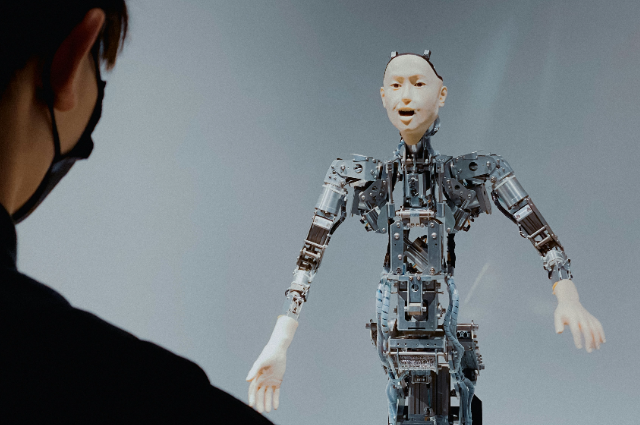
The world is not always absolutely black and white, and such is true about AI work. AI indeed has many benefits alongside vices, like all things considered extraordinary. It is one of the most uncomfortable inventions (I think all inventions are uncomfortable before they are extraordinary) because it threatens to make work boring. For the older generations who grew up especially equipped to do monotonous repetitive work for most of their adulthood, it is a vice. They were taught that boring work equals stability, and that's just not true anymore. AI is actively dismantling traditional work patterns and creating new ones.
The task killer reality.
AI is a tool. That means it cannot do the entirety of any job by itself. What it does, however, is target specific tasks within the job. When a piece of software can instantly generate an invoice, format a complex data sheet or write a marketing copy, the time required to complete that specific role shrinks dramatically, and so does the number of people needed.
Traditionally, the first few years in many people's careers used to be filled with monotonous tasks like data entry and initial research, things AI can do instantaneously.
AI excels at processing data, recognising patterns, and handling repetitive communication. Because of this, companies have begun reducing headcount or slowing down hiring in specific departments.
AI targets the routine and the predictable. If a job consists entirely of executing structured, repetitive digital tasks, that role is highly vulnerable to consolidation.
The silver lining.
AI, despite all its vices, is not without merit. While it has taken it upon itself to do all the tasks that youths used to get experience with, it remains a tool, meaning it still needs a human to manage it. With the rise of AI, the job market has widened. While routine execution is shrinking, the demand for strategic direction, technical maintenance, and human-in-the-loop oversight is scaling rapidly. AI isn't just creating niche tech roles like data scientists or machine learning engineers; it is reshaping broader employment fields through intelligence Augmentation.
New professional ecosystems are emerging around three core pillars:
- The Builders & Trainers - Designing, programming, training, and refining AI models to ensure accuracy and reduce bias. They include: data Annotators, AI Architects and Integration Specialists.
- The Directors & Editors - Using AI as a force multiplier to produce higher output, shifting focus from execution to curation and quality control. They include AI Content Editors, Prompt Engineers and Augmented Developers
- The Human Insulators - Roles anchored heavily in human traits that AI cannot replicate: deep empathy, ethics, complex negotiation, and accountability. They include Change Management Consultants, Ethical Compliance Officers and Care Workers.
The true narrative of AI work isn't about human displacement; it is about a fundamental shift in where human skill is applied. In an AI-driven environment, value moves away from the raw speed of execution and toward the quality of context and judgment. AI acts as a task killer for everything routine, but a job creator for roles requiring direction, critical evaluation, and deep human connection. The challenge ahead is not a lack of work, but a massive skills gap. The transition requires a systemic focus on continuous learning, adaptation, and training—ensuring the workforce is equipped to direct the machines rather than compete with them.
References
- Acemoglu, D., & Restrepo, P. (2018). Artificial intelligence, automation and work. National Bureau of Economic Research, Working Paper 24196. https://doi.org
- Dehouche, N. (2026). Creation, validation, obsolescence: Observed evidence of AI-driven labour market displacement, 2020–2025. Frontiers in Human Dynamics, 8, Article 1815037. https://doi.org
- Gathmann, C., Grimm, F., & Winkler, E. (2025). AI, task changes in jobs, and worker reallocation. IZA Institute of Labour Economics, Discussion Paper No. 17554. https://doi.org
- Lim, K.-T. (2026). Augmentation or elimination: The potential impact of AI on the Malaysian economy. ISEAS Perspective, 2026(41), 1-11.
- Wong, L. P. W. (2024). Artificial intelligence and job automation: Challenges for secondary students’ career development and life planning. Merits, 4(4), 370-399. https://doi.org