
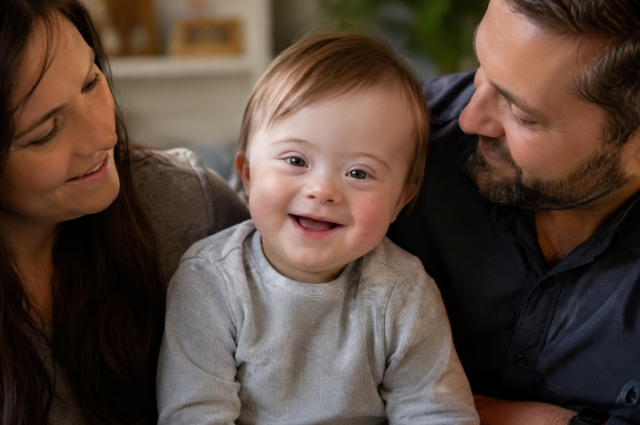
Down syndrome (Down’s syndrome) is a widely misunderstood genetic disorder caused by an extra copy of chromosome 21, or Trisomy 21. It isn’t a disease and does not require treatment or a cure. Individuals with Down syndrome can participate in education, work, develop loving relationships and give back to society in many positive ways. Even though individuals with Down syndrome can participate in all areas of life, their existence continues to be one of the most difficult moral dilemmas facing our society today.
Much has been said about Iceland’s role in addressing the Down syndrome moral dilemma. Iceland is touted as being the country that has “almost eliminated” Down syndrome; however, this is not completely accurate. There is no cure for Down syndrome, but Iceland does have a very active program about prenatal testing; therefore, many expectant mothers can determine whether or not the foetus has Down syndrome. When a diagnosis of Down syndrome is made, the majority of pregnancies are terminated, resulting in very few births of children with Down syndrome in recent years.
The existence of this situation also raises significant ethical issues regarding reproductive choice.
Proponents believe that reproductive choice is considered a right. Parents should have access to accurate medical information and be able to make their own personal choices regarding their pregnancies without any coercion. From this standpoint, prenatal testing gives families power and knowledge instead of being controlled by a decision.
On the other hand, those who oppose the use of prenatal testing see the low number of Down syndrome babies born in the world as evidence of a more public attitude towards people with disabilities. They believe that if almost every pregnancy diagnosed will result in termination, the message sent is that a disabled person's life is not as valuable. Therefore, the trend of reducing the number of disabled individuals will result in a society that places a greater emphasis on having "perfect" individuals than promoting diversity and inclusion.
The issue is not limited to Iceland. Advances in genetic testing throughout the world are leading us all to reassess what we mean by the concept of valuing human life. As advances in medical technology continue to evolve, ethical obligations will continue to carry greater weight. Another challenge can be seen in India. Although there are legal protections under the Rights of Persons with Disabilities Act 2016, there are still numerous barriers preventing people with Down syndrome from accessing education, obtaining employment, availing themselves of appropriate health care and being accepted socially within our communities. Inclusion is not only about creating laws and policies. Rather, it requires creating a structure that provides access to opportunities for individuals with disabilities; building communities that support people with disabilities; and working towards changing attitudes towards individuals with disabilities.
What is interesting is that many studies have found people with Down syndrome to be very satisfied with their lives. Many families describe their child with Down syndrome as being a source of joy, compassion, and perseverance to their family. This information casts doubt on the belief that there is a direct correlation between a genetic difference and the value or quality of a life. The conversation about Down syndrome should not be about chromosomes. The conversation should be about respect, dignity, and the values that we, as human beings, choose to live by. Medical technology can give us choices regarding how to treat chromosomes, but medical technology cannot decide for us how we should make moral decisions about the use of that technology. As technology advances, the most important question to ask, as opposed to removing genetic differences, is how we can create a society that provides respect, support, and the opportunity for all people, with and without disabilities, to flourish.
Sources:
- World Health Organisation (WHO): Down syndrome – Fact Sheet- https://www.who.int
- Centres for Disease Control and Prevention (CDC): Facts about Down Syndrome- https://www.cdc.gov
- National Down Syndrome Society (NDSS): About Down Syndrome- https://www.ndss.org
- The Lancet: Prenatal screening and ethical considerations for Down syndrome (various peer-reviewed articles)- https://www.thelancet.com
- Rights of Persons with Disabilities Act, 2016 (India): Ministry of Social Justice and Empowerment, Government of India- https://legislative.gov.in
- CBS News: Inside Iceland's disappearing Down syndrome population (2017)- https://www.cbsnews.com
- Harvard Medical School – Harvard Magazine: The Truth About Down Syndrome- https://www.harvardmagazine.com