
India's status in the 2026 Environmental Performance Index (EPI) has highlighted once more the problems facing the country's environment. The score of 22.46 has placed India in the 176th position out of 177 countries, which means it occupies the second-to-last place globally and the eighth place among Southern Asian countries. The only country that has scored lower than India is Laos, with a score of 21.78. The statistics are alarming, especially because India is one of the largest economies of the world and has a rapidly growing population. However, it is important to understand the ranking beyond the number itself. The EPI is not just an indicator of how well a country does or how poorly it performs in environmental terms; it assesses performance across several areas of environmental issues such as health, vitality of the ecosystem, and climate. The EPI 2026 Index covers 177 countries through 47 indicators in 12 categories. Speaking of India, though its ranking is extremely low in the EPI, the overall ten-year change in the index is positive, with India comprising 7.47 points.
The report has particularly underscored the problem of air quality in India. India stands at 175th in the Air Quality category, with a score of merely 7.89, which is considerably lower than the Southern Asia regional average of 19.74. Air pollution has caused a serious challenge in various states in India, especially in highly populated industrialised regions. The sources of air pollution may vary from vehicle discharge to industrial effluents, to construction dust, to domestic fuels, to burning waste and to agricultural activities. The problem transcends nature and creates havoc in people's daily lives. Poor air quality can pose a danger to health, jeopardise and augment medicine pressmedicaleover, India achieves the 174tranksnvironmental Health, with an Environmental Health score amounting to 15.13 in comparison to the regional average of 25.27.
Concerning biodiversity and habitats, India needs to change its priorities. In the Biodiversity & Habitat category, India holds the 174th rank with a total score of 9.09. India has a plethora of ecosystems, such as the Himalayan mountains, the Western Ghats, forests, wetlands, grasslands, rivers, and coastal landscapes. All these ecosystems provide necessary services to the population and house thousands of plant and animal species. However, with rapid urbanisation, construction projects, land use changes, and other disturbances exerting huge pressure on nature, protecting ecosystems has become practically impossible. Therefore, the index of biodiversity and habitat protection is very low, as is shown by India's 76th position in the score of terrestrial biomes. Nevertheless, the dynamics of India's 10-year change concerning biodiversity and habitats is positive by 1.63 points.
Climate change represents yet another challenge for India. It is a key developing country, and as such, its energy consumption is still rising. Coal continues to be an important energy source, while the demand for electricity, transport, construction, and industrial production activities is rising. This makes it difficult to find a compromise between economic growth and reduction of greenhouse gas emissions. Nevertheless, the results regarding India’s climate change mitigation show greater success than those according to other indexes. As per 2indicesa, India is ranked 130th in this category with a score of 28.01 and a 10-year improvement of +13.98 points.
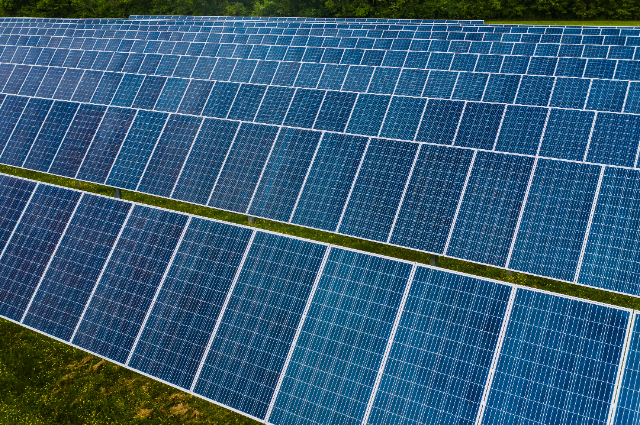
The continuous positive trend is an important aspect of the story. India's overall EPI score has increased by 7.47 points during the last ten years. This means that one cannot say that the story of India's environmental performance is only that of the decline. Over the past decade, India has put in effort to develop renewable energy sources, improve energy efficiency and implement laws aimed at limiting emissions and protecting natural resources. Importantly, India has expanded its potential for producing renewable energy, mainly solar energy, in its attempts to reduce dependence on fossil fuels. However, the progress has to be compared to the level of the existing challenge. A country can improve its environmental performance but still be close to the last position in the ranking if the starting point is very low or if other countries improved much faster. This is why it is important to examine both EPI's long-term trends and ranking in the present.
The ranking also raises inquiries about measuring environmental advancements. The EPI is intended to be an evaluative instrument through which countries can spot trends and assess the status of the environmental situation in their country. Its use is not just about getting a score. As per this app, rankings can be useful for politicians in devising plans and understanding which policies are likely to produce the desired results. Nonetheless, it should be remembered that all environmental rankings need to be interpreted carefully because the countries differ from one another in terms of geography, size, economy, development, and access to resources.
Maintaining good air quality must continue to be a top priority in the country. Environmentally friendly public transportation, industrial emission restrictions, proper waste disposal and alternatives to field burning may assist in achieving cleaner air. Equally important is the need to conserve forests, wetlands and other natural ecosystems for the sake of biodiversity and climate change resilience. An environmental policy only becomes effective if there is adequate implementation and monitoring at the local level. It must be noted that policies from the government will not be enough to address all environmental issues. There are other stakeholders, including business organisations, citizens and scientists, that must also do their part.
This means that India’s poor rank, i.e., 176 in the 2026 EPI is a wake-up call,l rather than a final assessment of its environmental performance. Indeed, it goes without saying that India has to overcome numerous challenges in terms of environmental protection, which include, among others, air pollution, protection of ecosystems and the human environment. Nevertheless, positive changes during the last ten years show that there is hope for improvement. The problem is how to make them faster and make sure that the improvements reach the grassroots level. In other words, it seems like the country has everything that is necessary for achieving positive changes, including technologies, science and manpower. However, in order to do this, it is vital to implement consistent policies, enforce them, invest in the process and engage the population. Thus, the low rank can be regarded as a disappointment; however, it offers an excellent opportunity to evaluate the current situation in India and figure out how things have to be changed in the future. In summary, environmental performance cannot be assessed based on the country's ranking in international indices.
References:
- Yale Centre for Environmental Law & Policy, Environmental Performance Index 2026
- EPI 2026: Southern Asia Results
- EPI 2026: India Country Results