
The Environmental Performance Index for the year 2026, compiled jointly by Yale and Columbia Universities, has once again drawn severe criticism regarding India's environmental performance. India stands at 176 out of 177 countries in terms of its environmental performance, thereby making it the second-worst performer in the world after Laos. With a score of 22.46 out of 100, this position has opened up an entire debate regarding the environmental policies and developmental priorities of India.
India has been claiming that while looking at its contribution to global warming, the issue must be seen from the standpoint of per capita emissions and not emissions alone. The reason behind this claim is simple – India is one of the most populous countries in the world. This means that the carbon emission per head in India remains much smaller than that of many other developed countries, including the USA, Canada, and Europe. But now this argument has become insufficient in the wake of recent developments.
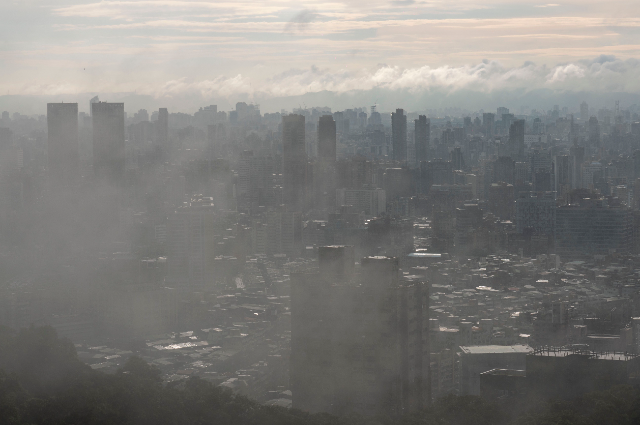
Some of the main reasons for the low score that the report highlights include problems with poor air quality, which continues to plague the lives of millions of Indians. The air quality in several Indian cities is one of the worst in the world because of emissions from industrial units, thermal power stations, transportation, construction work, and crop stubble burning. Poor air quality has become one of the main environmental and public health emergencies in the country, resulting in respiratory illness and even premature deaths.
Other environmental problems that India faces are those related to the fact that it still depends largely on coal. While the country has been making tremendous progress in its renewable energy sector, coal continues to be the main source of electricity generation in India.
The report has identified poor biodiversity conservation and insufficient marine protection as well. Urban development, deforestation, loss of habitat, and pollution have created immense pressure on the wildlife and ecosystem of the region. Areas that are protected account for only a small share of the marine area in India.
India’s performance in specific categories was also not satisfactory. In terms of Environmental Health, India secured the 174th position owing to environmental issues such as air pollution and health. In Ecosystem Vitality, India secured the 171st rank because of difficulties in maintaining its forests and natural resources. Nevertheless, India's performance in Climate Policy, where it secured the 130th position, was comparatively good.
However, there is an interesting point in the report, according to which India has witnessed a significant positive change as far as its ten-year environmental trend score is concerned (+7.47). It proves that despite the fact that the environmental condition in India is rather poor, the country has started making some progress towards improving its situation in some areas. Such programs as renewable energy, electric mobility, afforestation, sustainable development, and others have been launched.
Nevertheless, one should note that the Indian government was critical of the Environmental Performance Index on multiple occasions. In particular, the government officials stated that the methodology adopted for calculating the EPI indices has flaws because it cannot take into consideration the specific developmental requirements of developing countries. Similar criticism was voiced by Indian officials after the release of the EPI in 2022, when India was at the bottom of the list.
However, the results provide a valuable lesson for everyone. Solely depending on per capita emissions is not enough in order to combat environmental issues. People suffer from environmental degradation due to polluted air, polluted water sources, destruction of forests, and global warming irrespective of whether they use per capita emissions or not. Good environmental performance needs strict implementation of policies on green energy usage, pollution controls, biodiversity conservation, and sustainable urban planning.
Thus, in summary, the poor ranking of India in the Environmental Performance Index 2026 acts as a wake-up call for India in regard to the fact that economic development cannot be achieved at the cost of the deterioration of environmental conditions. Even though some progress has been observed, there is still a lot of work that needs to be done. India should overcome its defence of the environmental record based on per capita emissions and work towards improving its environmental situation.
References:
- Wendling, Z. A., Emerson, J. W., Esty, D. C., de Sherbinin, A., Block, S., et al. (2026). 2026 Environmental Performance Index. Yale Centre for Environmental Law & Policy & Columbia Climate School. Retrieved from Environmental Performance Index
- Yale Centre for Environmental Law & Policy. (2026). India: 2026 Environmental Performance Index Results. Retrieved from India's 2026 EPI Results
- Columbia Climate School. (2026, July 15). New Environmental Performance Index Highlights Sustainability Gains and the Challenges Ahead. Retrieved from Columbia Climate School News Release