
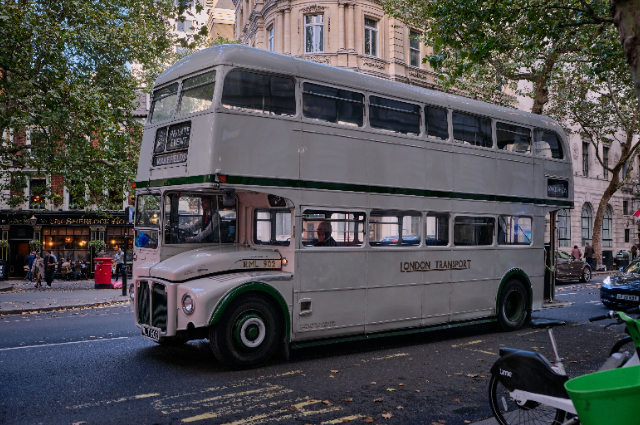
Imagine stepping onto a bus in India and getting off in London almost 2 months later. It sounds incredible, yet from the late 1950s to the mid-1970s, it was a real possibility. Long before budget airlines arrived, long before the proliferation of travel agents and internet booking, travellers could take one of the world's longest bus journeys between two of the world's most iconic destinations. This truly incredible route became legendary, affectionately referred to as the London-Calcutta Overland Bus Route, and became a culture in its own right. It was not just travel, but a whole lifestyle, embodying adventure, freedom, shared culture, and the desire to explore, undertaken by what must have been one of the most vibrant ascendant generations of their time.
A Journey Unlike Any Other
Overland Bus was a service that ran from 1957 to 1976 between London and Calcutta (Kolkata), a journey of almost 20,000 km which usually took about 50 days. There is often a delay when crossing borders due to weather conditions and road conditions. The route crossed several countries, including:
- United Kingdom
- Belgium
- Germany
- Austria
- Yugoslavia (then a single country)
- Bulgaria
- Turkey
- Iran
- Afghanistan
- Pakistan
- India
The travellers experienced a great variation in the geography along the way. From European cities, they crossed, in a north-south journey, the Turkish mountains, Iran's deserts, Afghanistan's mountains, the plains of Pakistan, and most recently India. Every step of the way offered something new in terms of idioms, manners, food, and traditions. This bus journey was different from travelling today, as you would reach your destination within hours; rather, it allowed travellers to experience the passing from one culture to the next.
The Beginning of the Historic Route
The first well-known service was delivered by a company called The Indiaman. When demand grew, over 30 other providers offered comparable overland routes between Europe and India. For example, public buses, more specifically the double-decker bus called Albert, were most popular. Albert was not a normal bus, but rather a luxurious long-distance vehicle. The passengers had good seats to sit or sleep on during the long journey. They were offered refreshments, heating when going through cold regions, and there was luggage space for longer travel. Some buses even had libraries, music and even a cooking stove. However, although the journey was lengthy and time-consuming, it was still a travel experience to be remembered by the number of passengers who called it the trip of a lifetime.
Cost of the Journey
Given the enormous distance travelled, this was, at the time, a good value ticket. Fares ranged between 85 and 150 according to operator and time of year. The ticket often included:
- Transportation
- Accommodation during scheduled stops
- Basic meals
- Ferry crossings where required
- Guided sightseeing at selected destinations
Travelling itself was good value for many young travellers, since the trip coupled transportation, accommodation and tourism.
Travelling Along the Hippie Trail
The London-Calcutta bus came to be strongly identified with the legendary Hippie Trail throughout the 1960s and 1970s. The Hippie Trail was a well-known overland journey taken by thousands of young Western backpackers hoping to find spiritual enlightenment, thrills, and adventure, all while discovering the far reaches of Asia. India became one of the most common places to visit along the hippie trail, with travellers heading there via major cities such as Delhi, Varanasi, Rishikesh, and Goa. The overland bus was perhaps the safest, most organised way to do this trip. Unlike independent b had scheduled departure and arrival times, skilled overland drivers, and a systematic border crossing process. In addition to being a mode of transport, the bus was also a meeting point for people of various natures. Students, painters, scribblers, photographers, musicians, and explorers would also meet between Delhi and Leh. And over long, hard trips, many soon became close friends, past some sharing drinks, stories, and adventures.
Life on the Road
All this travelling would be considered rather exhausting in the present time because one would have spent almost fifty days on a bus, but the passengers did not see it that way. During this trip, sightseeing was regularly undertaken in popular cities and historic sites. Visiting markets, museums, old ruins, holy places, and places of natural beauty, they moved on to the next destination. The bus transformed into a community-everybody would celebrate birthdays, take out their music and books, and listen to stories about native lands from other passengers. Crossing borders was another story. People had several visas, a couple of passports with a large number of immigration stamps, or waited for hours to go through customs. Such waits were rather a part of exotic travel as an inconvenience.
Challenges Along the Route
It was an exciting journey, but a rather challenging one. Roads and conditions of travel were totally different from country to country: pavements, country ways, mountain ways or desert sands. Breakdowns sometimes happened and required the drivers to undertake repairs on their buses in difficult environments with limited equipment. The weather also posed a problem. It was freezing winters in Europe, hot deserts in Iran, artificially driven in mountainous Afghanistan, and moist practically in the Indian subcontinent, all in the same trip. Came across political issues sporadically on the borders, so operators had to delay their departure or wait for authorisation from the relevant country. Even so, it was still hugely popular because it provided a unique experience.
Why the Service Ended
The well-known overland bus route was formally closed in 1976. Amongst others, some of the political developments made our journey more challenging and hazardous. Increased insecurity in the Middle East and Central Asia directly impacted the challenges and safety of international overland travel. Within this same period, political instability was escalating in Iran to a point that eventually culminated in the Iranian Revolution of 1979, and Afghanistan also became unstable (destabilised) preceding the Soviet invasion of 1979. Therefore, the so-called routes that were once accessible became war zones. Due to mounting Security concerns, insurance problems, difficult border regulations, and dropping passenger confidence, operators could no longer safely provide this service. From the moment people could afford to fly, and air travel became more affordable and efficient, air travel became the preferred mode of travel rather than weeks on the road. The long-famous route by bus began to fade away.
Influence on Modern Travel
Though the service has long since finished, the legacy endures. The London-Calcutta bus proved that the trip could be as important as the destination. In turn, it inspired numerous travel writers, photographers, filmmakers and explorers. Many think that the journeys undertaken by overland travellers were a source of inspiration for the first travel writing, such as that produced by Lonely Planet and other similar companies who promote the joys of self-guided travel to places around the world. To this day, the story of this marvellous bus route continues to be revisited by documentaries, books, and travel blogs, which regard it as the finest adventure in transportation history.
Attempts to Revive the Route
There has always been an enduring sense of fascination with the prospect of performing recreations of the traditional trip. Recently, a private company announced the intention of a Delhi-to-London bus service, a journey that could extend the classic overland route with a luxury experience across many nations. This would mean an up-to-date coach, with the comforts of today. Due to international travel restrictions, travel numbers, logistics problems, geopolitics, and border regulations, the project has not been able to establish normal operations despite being delayed repeatedly since 2021. While many travellers would love to see this route return one day, the uneasy political situation in many of the countries along the line makes any such prospect a distant one.
The route of the London-Kolkata overland bus is undoubtedly one of the most exciting stories in the history of transport. For almost two decades, it united Europe and Asia on a journey of thousands of kilometres, crossing numerous boundaries and taking travellers through an astonishing range of different cultures and environments. Not only a means of transportation from point A to B, but the bus was also about once-in-a-lifetime memories, lifelong relationships, and stories that still inspire travellers of the new generation. It was about an era where adventure is about uncertainty, exploration of the as-yet-undetermined world and also every mile of it. Despite the completion of the initial service in 1976, the services. Enduring renown serves as a testament to the fact that historically, some of the world's best travel has been achieved not in the fastest or most convenient manner but in the most adventurous and surprising.
Sources
- The Guardian – Articles on the Hippie Trail and overland travel history https://www.theguardian.com
- The Better India – Stories about the historic London-to-Kolkata bus journey https://www.thebetterindia.com
- India Today – Coverage of the proposed Delhi-to-London bus revival https://www.indiatoday.in
- The Times of India – Reports on the Delhi-London bus proposal and travel history https://timesofindia.indiatimes.com.