
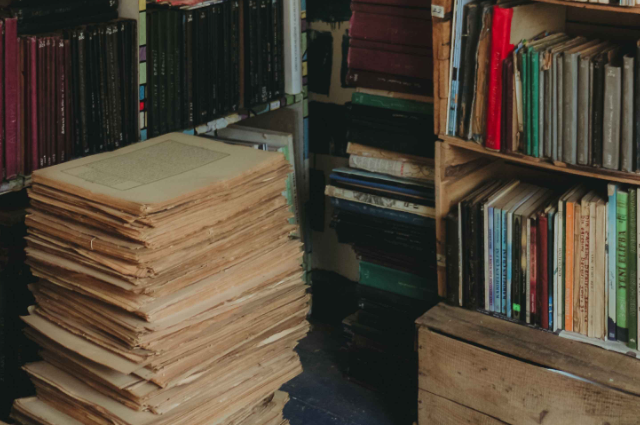
Before sustainability was an internationally popular term, Indian families had been practising it for a long time. Each household would have its own “raddi corner,” where old papers, magazines, cardboard boxes, glass bottles and metal scrap would be kept with care rather than discarded. The process of recycling and a circular economy, which many people now engage in and refer to in these terms, was simply a normal way of life for generations of Indians.
The raddi system represents a way of life based upon being resourceful with regard to using all possible resources. It was believed that up until the last bit of use was made from something, it would not be considered waste. Clothing that had been worn out would be used as rags for cleaning, glass jars would be repurposed as storage containers, and old textbooks would be passed from one sibling or neighbour to yet another sibling or neighbour. The kabadiwala would call to everyone in the neighbourhood, picking up the reusable items, and making sure they were put back into the system financially (i.e., the income generated would circulate back into the economy).
Government regulations and environmental campaigns did not motivate this activity; rather, it developed through thrift, practicality and respect for resources. Families believed that there was value associated with each object they possessed. Thus, by reducing the amount of waste sent to a landfill, these families reused/recycled materials more effectively.
The kabadiwala was a key participant within this informal recycling system. His purchasing of old newspapers, bottles, metals, and various other objects that were thrown away created the foundation of a 'grassroots' waste management system that existed before organised recycling programs came into existence. Their work not only supported their livelihoods but also contributed to the preservation of the environment at significant levels.
Rapid urban growth and the evolution of shopping patterns have led to the weakening of some of these traditions. Disposable goods and fast consumption have also resulted in increased generation of waste. Many of the new sustainability initiatives being implemented nowadays are ironically trying to incorporate what has always been part of daily Indian life.
As climate change and depletion of natural resources become critical issues worldwide, many lessons can be learned about how to deal with waste based on India's past methods of managing waste. The "raddi corner" represented much more than just a place to keep things; it represented a way of thinking about how we can reuse rather than throw away things, conserve rather than be wasteful, and think before we act.
The concept of "sustainability" is often thought of as something brand new, although people living in Indian homes have been practising the principles of sustainability for centuries. The raddi corner is a perfect illustration of this, showing that the best solutions are often found through reusing something rather than trying to reinvent it.
References: -
- Ministry of Environment, Forest and Climate Change (MoEFCC), Government of India. "Solid Waste Management and Recycling Initiatives."
- NITI Aayog. Circular Economy in India: Approaches and Pathways.
- United Nations Environment Programme (UNEP). Global Waste Management Outlook.
- Centre for Science and Environment (CSE). "Waste Management and Sustainable Living in India."