
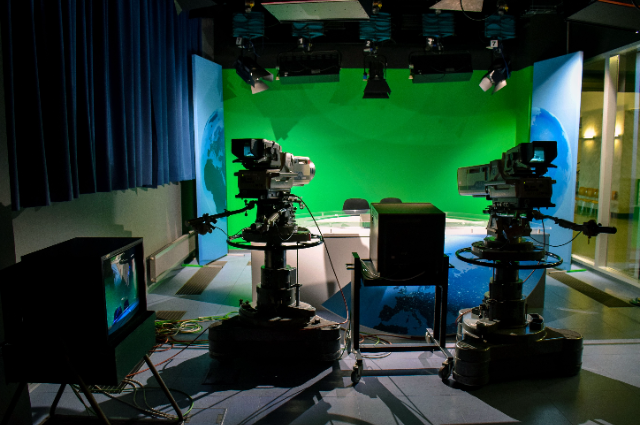
In this rapidly evolving digital age, news is not limited to the TV studios, the newsroom in the newspaper, or the broadcasting station anymore. Now everyone’s a publisher, everyone is a reporter, and everyone is an opinion-maker-even your Twitter account. Journalism has been changed forever. The newsroom is not a physical place anymore, where you have editors, reporters and a camera. The newsroom is where you are standing if you are dedicated to truth, accuracy and public concern. Yet despite the intrusion of new technology, the core mission of journalism has not altered.4 For at heart journalism's raison d'être is to serve society by providing a service of informing the public (from the Greek meaning of clear and bright), providing disclosure, by holding the powerful to account and ultimately serving democracy.5 It is the link between events and people, and in this information age, responsible journalism has never been more critical.
Journalism: The Fourth Pillar of Democracy
The Fourth Pillar of Democracy. In addition to the Legislature, Executive and Judiciary, journalism is also accepted as the Fourth Pillar of Democracy. Unlike the other three, journalism lacks any constitutional power to legislate, execute or interpret the laws. Its mandate rests solely on public confidence, independent reporting and freedom of the press.
A free press is a watchdog on the powerful-and any reporter who uncovers corruption, questions political decisions, exposes corporate wrongdoing, or raises an issue of public concern brings into the open a topic that someone would prefer to keep in the dark.
History is replete with examples of investigative journalism that has exposed financial embezzlement, human rights abuses, environmental crimes, and corruption in politics; this has also prompted government officials to be held accountable before the people as their masters.
Informing Citizens for Better Decision-Making
Enlightened citizens are the backbone of a thriving democracy. While news on politics, economics, education, health, sciences, sports or the arts might seem like a monopoly for specialists, journalists translate that into an accessible language for the general public. It is on that basis that voters, investors, clients, patients, and ordinary citizens make decisions every day. For instance, during elections, responsibility ensures that the electoral process is facilitated, as the opposing parties can be held to account, and voters are able to evaluate parties' programs, measure their campaign promises against what they really stand for, and inform voters about the social issues at stake. During natural and health disasters, journalists are able to deliver news and information to save lives; when accurate, they enable citizens to hear the facts and make rational decisions rather than reacting emotionally based on rumours.
Journalism in the Digital Age
The internet and social media have revolutionised the process of newsgathering and news consumption. No longer does the news source go through numerous editorial filters before being published. Now, anyone with a cell phone can share images, videos, or even live reports in real time. This has created both opportunities and problems. On the one hand, citizen journalism makes more information available in more real-time. A set of eyes on the scene can capture images, video, audio and facts before the journalism professionals arrive. But not always so quickly; as we know, false news, doctored images and headlines, and the potential of AI fakes. As we know, does so quickly commercialism remains crucial. It is the responsibility of the journalist to check facts, cite others, include background, and observe journalistic ethics before publication. The journalist must not only relay the event but also include the truth.
The Newsroom Is Wherever You're Standing
"The Newsroom Is Wherever You're Standing" accurately describes the changing professional world of reporting. Today's journalist is not confined to an office layout or television booth but is increasingly on the ground. In addition, common people have taken an active role in news selection. Videos shot by ordinary people not only bring everyday life to the TV screen but also expose police violence, environmental pollution, traffic accidents and injustices to the public eye. Nonetheless, of course, being able to publish information also carries a significant commitment. Journalistic standards of integrity necessitate cross-checking and fact-finding before publishing, upholding personal privacy, steering clear of sensationalist reporting, and providing a diverse spectrum of viewpoints. Technology perhaps facilitated access for reporting on all fronts, but responsibility remains the essence of reputation.
The Role of Journalism in Building Society
Journalism is not only about covering day-to-day occurrences. It also provides us with information in an unbiased way, stimulates public discussion and serves as a voice to marginalised groups. Fair media also draws our attention to matters like poverty, unemployment, gender imbalance, implementation of environmental measures, health and education. Journalism, through focusing on stories about rural communities, disadvantaged populations, and minority groups, fosters inclusivity. It motivates politicians to recognise social issues and stimulates the general public to contribute to social improvement. Constructive journalism also recognises innovations, scientific and technical achievements, as well as initiatives and successes in local communities. Good journalism may not only criticise and search for the causes of problems but also focus on potential solutions, uplifting hope and progress.
Challenges Facing Modern Journalism
However, journalism is still as vital as ever,r but has encountered some significant problems: distrust due to the proliferation of misinformation and fake news. Social media algorithms favour sensational news over factual reporting. Financial strain on media organisations has led, in many cases, to a focus on clickbait and more advertising revenue at the expense of quality journalism. Besides state intimidation of the media, journalists also suffer from intimidation. They are often blackmailed by political pressure, threatened with legal action, raped on the internet, subject to censorship, and assaulted. They have also been targeted while on the ground reporting and revealing the interests of powerful entities. Another challenge that has arisen is the use of AI. AI has so much potential in it that it can create very convincing images, videos and even articles that can distort reality and create fake news. To meet these challenges, journalists must maintain standards of ethics, transparency and accountability while embracing new technology.
Journalism and Content Writing
Content writing is, in many aspects,s similar to journalism. They both need powerful research skills, sharp language ability, a keen eye on the target audience and the talent of storytelling. Yet the content purpose is different. Journalism is concerned more with facts and public interest, while content may focus more on knowledge, information and promotion. Lessons learned from journalism, for indeed, content writers’ Journalistic rules such as a mention of 'checking the facts', the value of citing trusted sources, credibility, simple to understand copy truly make the content worthy. Content writers, blogging, writing for newsletters, and digital marketing content/ online needs to make use of principles of blogging; writers would ensure high-quality content and thrill the reader beyond expectation. In a time when the majority of businesses communicate electronically, copywriters who go beyond the principles of journalistic ethics will be distinguished, delivering accurate, interesting and relevant content.
Journalism is still one of the most distinguished deliverers in society. This is because journalists give power to the public by informing, holding those in power to account, and defending democracy. Despite the changes technology has caused to the news industry,y the fundamentals of journalism are still the same. Today, the newsroom is no longer defined by walls, cameras, or printing presses. It’s where someone chooses to be a journalist, citizen reporter or content writer, thinking of the best interest of the known world, rather than to raise just an argument. Ithe 21stst century of information excess came a duty of responsible journalism, that is not only to report news but to support the truth, democracy and allow social actors to influence. As demonstrated also in a famous saying, your newsroom is where you are; then society's news-keepers are all of us who seek the truth, not the noise.
References:
- Reporters Without Borders (RSF). (2025). World Press Freedom Index. https://rsf.org/
- Society of Professional Journalists. (2024). SPJ Code of Ethics. https://www.spj.org/ethicscode.asp
- Press Council of India. Norms of Journalistic Conduct. https://presscouncil.nic.in/
- The Constitution of India, Article 19(1)(a) (Freedom of Speech and Expression).