
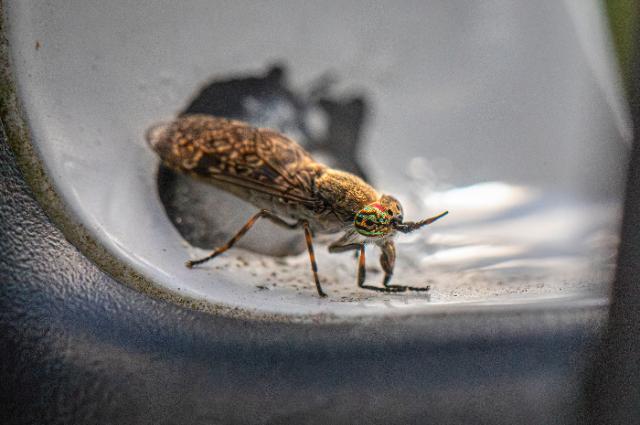
The New World screwworm had been considered one of the most notable successes in the eradication of an organism for decades. With an extensive sterile insect release program, this dangerous parasite has been eliminated in the whole of North America, saving both livestock and wild animals from the devastating infestations. However, recent events indicate that the trouble is returning. The parasite has already been reported in some regions of Central America and Mexico, and there has been one human case connected to travelling to the USA. Its return poses serious threats to animals, food security, and human beings and is alarming for vets, farmers, health professionals, and governments around the world.
Compared to common flies feeding on dead organic waste, the New World screwworm (Cochliomyia hominivorax) is a more hazardous creature. The adult females lay their eggs not on rotting flesh, but on the open wounds, cuts, and surgical areas of warm-blooded animals. Then, in a few hours, larvae hatch from the eggs and start digging into the healthy living tissue instead of the dead one. As they develop in the body, they increase the wound size and inflict pain, infection, damage to tissues, and possibly death to the host. The name «screwworm» derives from the larvae that have a similar shape to screws and penetrate deeper and deeper into the body of the host.
Animals first to be infected by screwworms are livestock. Cattle, sheep, goats, horses, pigs, and even some wild animals suffer from screwworm infestation. Farmers endure significant losses when infected livestock lose weight, produce less milk, become infertile or die from parasitic infestation. The cost of veterinary services is high because it includes cleaning of the wound, removal of larvae, application of antibiotics, and use of insecticides. If the infestation spreads, countries may find themselves in a situation where they cannot export livestock anymore.
Infection of humans with screwworms is a rare case, but not impossible. Individuals without treatment or with wounds, a lack of hygiene, or no access to medical treatment are at higher risk of getting infected. Travellers returning from the regions where the parasite exists may carry the infection; that’s why monitoring is very important. Infected individuals demonstrate symptoms such as painful wounds that worsen instead of healing, abnormal motion in the wound due to feeding larvae, swelling, bad-smelling discharge, and secondary bacterial infection of the wound. Early treatment of infected individuals is extremely important to prevent serious tissue damage.
The original eradication of New World screwworm is one of the best examples of biological pest control. In the regions suffering from the infestation of screwworm, scientists released millions of sterile flies that were bred in laboratories. When wild females met sterile males and mated with sterile males, they did not produce any further generations. Due to this fact, the population of screwworm flies was eliminated over time. This environmentally friendly solution succeeded in eradicating screwworms from the USA, Mexico, and most regions of Central America. However, it is important to remember that the achievement has to be maintained, which is possible as long as there is constant control over the situation, including international cooperation, because the situation can change as the problem may arise in another region.
Climate change is aadding anew concern to the issue. The time when temperatures are rising, rainfalls have a differenn, and tropical conditions appear is creating new opportunities for the survival of screwworm flies. This means that scientists believe that places where it was impossible for screwworms to survive will soon become endangered by the presence of this insect. The theory is supported by the increasing number of international travel, transportation of livestock, and the movement of wild animals.
The comeback of the screwworm also poses a risk to food security worldwide. Big outbreaks could hurt livestock efficiency, affect meat and milk distribution, and lead to increased vet bills and food prices. Rural regions that rely on livestock are most at risk. Therefore, its prevention is a must for governments and farming organisations.
Experts claim that it is better to prevent screwworm infestation rather than to treat it. Farmers should check their animals for injuries, keep them clean, take care of wounded animals, and inform veterinary services about any suspicions. Inspections at border crossings, surveillance systems, and the use of sterile bugs in the production process will also play significant roles in the prevention of screwworm outbreaks.
The return of the New World screwworm shows us all of us that the eradication of diseases cannot be regarded as forever. The biological risks may reappear again and again after decades. Continuous improvement of science, collaboration, and informing the public are vital for the avoidance of this harmful parasite's permanent presence.
References:
- Centres for Disease Control and Prevention (CDC). Myiasis and New World Screwworm. https://www.cdc.gov/parasites/myiasis/
- United States Department of Agriculture (USDA APHIS). New World Screwworm. https://www.aphis.usda.gov/
- Food and Agriculture Organisation (FAO). Sterile Insect Technique. https://www.fao.org/
- World Organisation for Animal Health (WOAH). New World Screwworm. https://www.woah.org/
- International Atomic Energy Agency (IAEA). Sterile Insect Technique. https://www.iaea.org/topics/sterile-insect-technique