
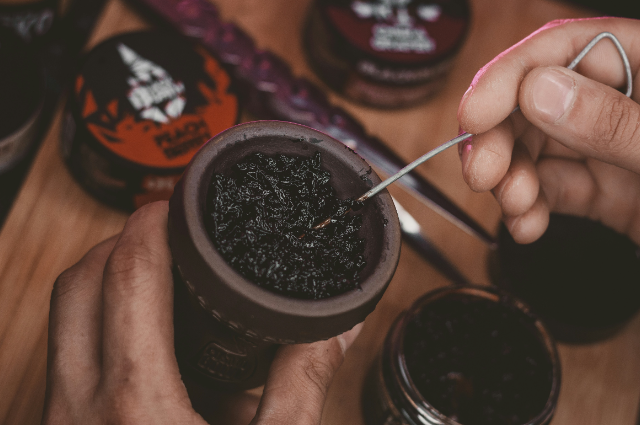
It takes a specific kind of outrage to kill a fifteen-year-old boy for the offence of having a grandmother who cared for him. That is, what the police alleged, happened with Gopal from Banwariwas village in the Jewar area of Greater Noida, Uttar Pradesh. The motive of this crime wasn’t hatred, animosity, greed or survival, but rather a grudge that three grown men held against the teenager who had simply stopped visiting their hookah spot.
Gopal was an ordinary boy with a family that noticed he was missing, a grandmother who cared about what kind of people he hung out with. Gopal had fallen into the habit of visiting a spot in the village where a group of local young men would regularly smoke hookah. As his grandmother paid attention to his everyday life, she noticed this and scolded those men for being a bad influence on a young teenage boy. Gopal stopped going to their spot. For a woman from a rural area, that might have been the most responsible thing she could’ve done for her grandson. But for the men, it was a humiliation that they carried for one and a half months until they decided to act on it.
According to the Gautam Buddha Nagar police, when Gopal visited the group's house again on May 21st, the men allegedly forced him to smoke hookah mixed with an unusually large quantity of tobacco, enough to kill him through asphyxiation. They then hid his body in the deserted house, where it was eventually discovered on May 22nd. The post-mortem examination found no external injuries on Gopal's body, and viscera samples were sent for chemical analysis, strongly suggesting the cause of death was internal, exactly what the police described. The victim's family further alleged that the body had been mutilated, a claim that added to the widespread outrage that followed across the villages. Three men were arrested—Naresh and Mohit from Rohi village, and Umesh Kumar, originally from Champaran in Bihar. Two of the accused were injured during a police encounter before they could be formally taken into custody.
What police found during the investigation brings us to the roots of the crime—two illegal country-made pistols and cartridges, recovered from the accused. While this might not seem crucial, in normal circumstances, this case deserves to sit with the reader for a moment. These were men in a small village who spent their evenings smoking hookah at a local gathering spot, and they had illegal weapons. This is not unusual in Uttar Pradesh. According to available records, UP accounts for 27,189 registered arms cases, the highest of any state in the country. Illegal country-made pistols, known locally as desi kattas or tamanchas, are manufactured in clandestine workshops across UP, Bihar, and Madhya Pradesh and can reportedly be purchased for as little as Rupees 1,000 to 1,500. They are small enough to carry in a pocket, easy to conceal, and widely available without any documentation. A Tribune India investigation found that such weapons are routinely smuggled through two-wheeler networks and sold across the NCR region. The presence of those two pistols in the Gopal Sharma case is not incidental—it is a reminder that in many Indian villages, the gap between a personal grudge and lethal violence has become very small.
The hookah angle of the case also deserves equal attention. Hookah is often perceived as a relatively harmless social activity, something shared among friends, milder than cigarettes, a feature of restaurants and roadside gatherings alike. That perception has made it far easier for it to reach teenagers. According to a 2022 government submission to the Supreme Court, 1.58 crore children between the ages of 10 and 17 are addicted to substances in India. Research published by the International Society of Substance Use Professionals notes that early initiation of substance use among Indian youth typically occurs between the ages of 14 and 17, which is precisely where Gopal was when he started frequenting that hookah spot. This problem is not unique to one boy or one village. It is a part of a wider pattern among most of the teenagers in our country, in which adolescents are drawn into substance use through peer networks in spaces that have no oversight and no accountability.
What happened to Gopal also fits into a disturbing trend that researchers and police officials have been flagging for years. Killings over minor personal disputes, like a gambling debt, a perceived insult, or a boundary disagreement between neighbours, are becoming more common. A 2025 report noted that even trivial interpersonal conflicts are increasingly escalating into acts of murder, driven by a combination of personal vendetta, unemployment, and social frustration. The men who allegedly killed Gopal did not do it for money, land or survival. They did it because an elderly woman had embarrassed them in front of their own community. The disproportionality of the response is as chilling as the act itself.
After the arrests, the National President of the Rashtriya Vipra Ekta Manch visited the grieving family and gave the local police administration a two-day ultimatum, demanding strict action against the accused. Villagers in Banwariwas and surrounding areas warned of protests if authorities did not act swiftly. The community's anger was real and immediate. But anger, however justified, does not answer the questions that this case leaves behind. It does not explain why illegal firearms remain so accessible in rural areas despite repeated crackdowns. It does not address why substance use among minors is rising even as government campaigns like Nasha Mukt Bharat Abhiyaan claim to be reaching millions of young people. And it does not align with the deeper social environment that allows a group of men to spend forty-five days nursing a grudge against a fifteen-year-old boy and then act on it without anyone intervening.
What Gopal’s case reveals to us is that the safety of young kids in rural areas depends too heavily on the courage of individual family members—the grandmother speaking up against the grown men, the father filing a missing persons case report. They are people doing what systems should do, absorbing risks that no family member should have to absorb. Gopal's grandmother did everything right. She saw the threat, she named it, she intervened. The boy she was trying to protect was killed for it. Until the illegal arms networks are broken, until the substance use crisis among Indian youth is met with genuine public health infrastructure rather than slogans, and until village-level social friction has somewhere to go other than violence, the next Gopal Sharma is already somewhere out there, sitting at a hookah spot while his family doesn't yet know they should be worried.
References:
- Saifia, Nadeem. "Dadi Ki Daant Ka Khooni Badla! Huke Ki Lat Par Toka to 15 Saal Ke Gopal Ko Mar Dala, 3 Arrest." TV9 Hindi, 27 May 2026, www.tv9hindi.com.
- "Greater Noida Mein 15 Saal Ke Gopal Hatya Kand Ka Sansanīkhej Khulasa." Pooja News, 27 May 2026, www.poojanews.com.
- "Palwal, Hathin in Mewat Emerge as Illegal Arms Market." The Tribune, 2 June 2025, www.tribuneindia.com
- "The Changing Face of the Gun Trade." Outlook India, 11 Mar. 2024, www.outlookindia.com.
- "Patterns of Drug Use Among Indian Youth: Emerging Trends, Causes, and Public Health Implications." International Society of Substance Use Professionals, www.issup.net. Accessed 2 June 2026.
- "Child Drug Addiction and Substance Abuse in India." SK Vision, www.skvision.org. Accessed 2 June 2026.
. . .