
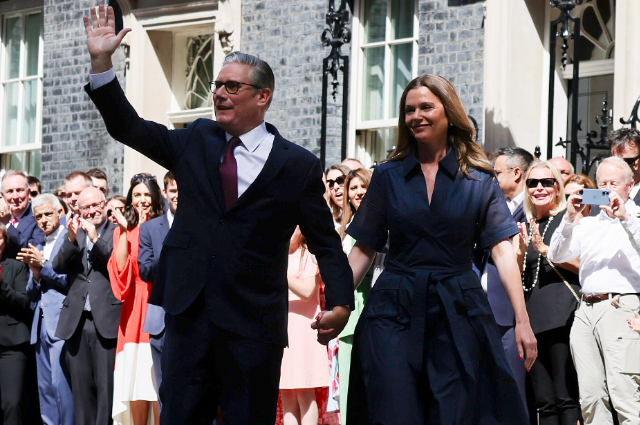
Following the return of the Labour Party to power in the United Kingdom less than two years ago after crushing the Conservatives in general elections, Keir Starmer has announced that he will step down as Britain’s Prime Minister. Experts believe his resignation prompts former Greater Manchester Mayor Andy Burnham as a prime candidate. By September, the United Kingdom will have its seventh Prime Minister in a decade.
Behind His Resignation
Losses in May 2026 local elections
Local elections were held for 5066 English councillors for 132 local authorities and 6 directly elected mayors in England,d with 2 by-elections in Wales on 7th May 2026. Labour Party took 1068 seats, suffering a loss of 1498 seats, whereas the right-aligned Reform UK Party took 1452 seats, an increase of 1452 seats. Parties such as the Liberal Democrats and Green Party increased their seat shares; on the other hand,d the Conservatives lost 563 seats from previous elections. Labour severely underperformed, ed losing control of 38 councils, and Reform gained 14 councils, with 23 councils having no control of a single political party.
Reform UK leader Nigel Farage describes results as historic and a big day for reshaping British politics as his party took control of five councils in the local elections. Labour MP Jonathan Brash asked to look for change at the top of the Labour Party. Diane Abbott, an MP on the leftof Labour, stated that Starmer and his policies are very unpopular. Starmer said he took responsibility for the tough results as pressure grew within the party.
Loss of confidence within his party
Starmer faced calls to set up a timeline for his departure following the electoral losses. Initially, Labour senior Catherine West asked a cabinet minister to challenge Starmer or else she would trigger a leadership contest herself. Later, Health Secretary Wes Streeting resigned from his post, stating he no longer had confidence in Starmer’s leadership and he could not lead the party into the next general election. Home Secretary Shabana Mahmood, Energy Secretary Ed Miliband, Foreign Secretary Yvette Cooper and Transport Secretary Heidi Alexander suggested Starmer draw up a schedule to vacate Downing Street. Six ministerial aides were replaced after calls against the PM. More than 100 Labour MPs, coordinated by the backbenchers of the party,y wrote a letter to Starmer stating “no time for leadership contest” as he said he would not stand down while a formal leadership contest is not successful when he previously met his cabinet.
Final blow at the Makerfield constituency
Burnham’s candidacy as the next PM seems to have been engineered, as Josh Simons resigned on 14th May to allow Burnham to contest the by-election to attempt a return to Parliament. Burnham won the crucial by-election with 54.8% of the 24937 votes against Robert Kenyon of Reform UK with 34.5% of the votes. The Labour majority was 9241 votes, about a 20.3% margin, exceeding opinion poll expectations. He served nine years inthe Mayor’s office, making him an influential figure inBritain’ss politics. Manchester Evening News praised his achievements in transport and economic development, whereas his major shortcomings include the collapse of Greater Manchester Police and his environmental policies. His victory acted as a final signal that the party demanded a change.
PM Keir Starmer’s resignation and its aftermath
On 22nd June, Starmer announced his resignation after serving as Prime Minister for two years since July 2024. He said that he had informed King Charles III of his decision, though he continues to remain in his position as a caretaker until a new leader within the Labour Party is elected.
In the face of an uprising within his own party, he said, “The question my party is asking now is whether I am best placed to lead us into the next general election. I have heard the answer of my parliamentary party to that question, and I accept that answer with good grace.”
His voice choked with emotions as he talked about his wife, Victoria Starmer and her support, and their two children.
Starmer’s likely successor is Burnham, who returned to Parliament on 18th June. Burnham confirmed that he wishes to replace the outgoing leader. Starmer informed that the nominations to replace him as the leader of the Labour Party and Prime Minister will open on 9th July and close when Parliament resumes after the summer break on 16th July. If no competitor emerges to Burnham, he will assume office shortly after that. If a contest occurs, a new leader will be chosen by September 1st.
Reactions that followed
Following the announcement, Stramer’s colleagues and party members reacted warmly, describing him as a man of integrity devoted to public service. His decision was the right thing to do, many others voiced. His loyalists were disappointed and looked back in pride to have served in his government. Meanwhile, Farage said the PM was “finished,” demanding a general election soon, arguing a new Labour leader should not replace him without a public vote.
References:
- https://www.theguardian.com
- https://www.manchestereveningnews.co.uk/
- https://www.aljazeera.com
- https://www.pollcheck.co.uk/by-elections/makerfield
- https://www.bbc.com/news/articles/cx210w87l4do
- https://www.lbc.co.uk