
Back in the mid-1900s, the fare for a round trip from London to Calcutta was around £150, nearly ₹2000-3000 in the 1960s, which is around one-fifth of the air fare for a round trip from New Delhi to Kolkata today.
The First Trip of the Indiaman
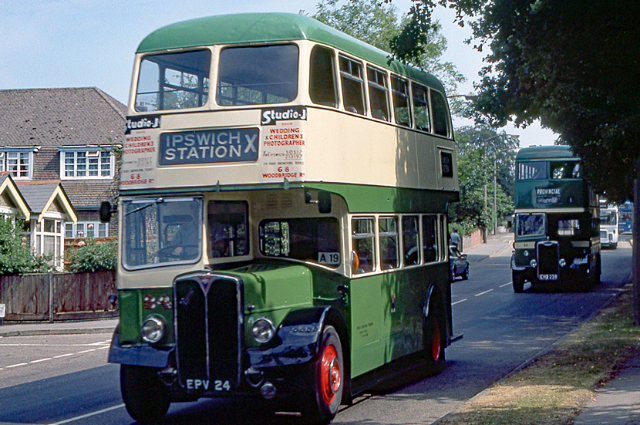
The Indiaman, owned and driven by a 40-year-old Oswald-Joseph Garrow Fisher, crossed 20,000 miles through France, West Germany, Austria, Yugoslavia, Bulgaria, Turkey, Lebanon, Syria, Jordan, Israel, Iraq, Iran, and Pakistan into India. An AEC Regal III model bus departed for its first journey from Victoria Coach Station on 15th April, 1957. 20 passengers boarded the bus for £85, out to Calcutta, and £65 to return to London.
Mr Garrow-Fisher described the cliffs and hairpin turns in Mount Ararat in Turkey, the need for placing planks on desert sands in Iran, and the narrow roads with soft shoulders and wandering cyclists in India, reaching their destination, Calcutta, on 5th June.
On their return, the Pakistan-Iranian frontier beyond Lahore was closed due to the epidemic of Asian influenza. Mr Garrow-Fisher drove to Karachi to take a ship to Iran, but then the frontier opened, so he drove back to Lahore again. When the rumour that everyone on the bus was being murdered by bandits circulated, the British embassy in Tehran was so relieved to see the bus that they threw a cocktail party for them.
The bus returned to London on 2nd August after 110 days. Passengers were given free shopping days in New Delhi, Tehran, Salzburg, Kabul, Istanbul, and Vienna. The tour’s highlights were Banaras on the Ganges, the Taj Mahal, the Raj Path, the Caspian Sea coast, Khyber Pass, the Rhine Valley, and the Peacock Throne.
The bus is equipped with cooking gear, sleeping compartments, fans, and music for pleasure. The passengers spent the nights in hotels or camped out in tents when no accommodations were available.
Nearly 30 operators emerged on the route. The Indiaman completed four trips but met with an accident in India, after which their business wrapped up.
World’s Longest Bus: Albert
Another popular bus named Albert was run by Albert Travels. Andy Stewart, a British travel agent residing in Australia, saw a newspaper ad offering the double-decker Albion on sale. He bought it, renamed it Albert, and refitted it with seats and bunk beds, added extra fuel capacity, new water tanks, new lower deck heating and a galley kitchen with a gas cooker and sink.
Albert’s first journey from Sydney started on 8th October, 1968 and reached London on 17th February, 1969 after 132 days. From Sydney, the bus travelled to Perth, from where it boarded the ship to Singapore; then it rode to Malaysia, Thailand, and Burma, reaching Calcutta and then London following the Indiaman’s route.
The fare for London to Sydney one way was £290, and London to Calcutta was £145. Albert provided a comfortable journey with facilities like a dining lounge, entertainment systems including music and radio setup, and cosy interiors with curtains and carpets. The bus made fifteen trips from London to Calcutta, out of which four were extended to Sydney before its discontinuation.
Hippie Trail Era
During the 1960s to 1970s, young travellers from Europe, North America, Australia and New Zealand travelled east. They used buses, trains, motorcycles, cars, camper vans and hitchhiking. They would engage in low-travel, eating local food, staying in inexpensive guesthouses, and using local transport. The travellers used to seek adventures, freedom, meditation, and spirituality. Many of them were attracted by cheap cannabis and hashish available in South Asian countries and parts of West Asia.
They would begin their journeys from England, France, or Germany, moving into Turkey, Iran, Afghanistan, Pakistan, India, and Nepal, with its capital, Kathmandu, as the symbolic end of the trail. Few of them continued their trips to Thailand, Malaysia, and Indonesia. The popular places on the trail were Istanbul, Tehran, Isfahan, Kabul, Peshawar, Lahore, Delhi, Banaras, Rishikesh, Goa and the Freak Street of Kathmandu, where cannabis was sold legally in government-owned stores.
Lonely Planet, a travel guide book publisher, was founded in 1973 in Australia. The first book they published was Across Asia on the Cheap, written by the couple Tony and Maureen Wheeler in their home. The book describes the Hippie Trail as an economical way to explore Asia and the openness of cross-border travel.
End of the Trail and Modern Revival Attempts
The overland operations became difficult due to the political unrest in the Middle East during the 1970s, coming to a complete halt when the Pakistan-Afghanistan border was closed in 1978, the Iranian revolution and the Soviet invasion of Afghanistan in 1979.
A Delhi-based travel company, Overland Adventures, founded by Sanjay Madan and Tushar Agarwal, proposed a “Bus to London” to start functioning in 2021. The bus will cover 20,000 kilometres, crossing 18 countries in 70 days. The launch was delayed due to the COVID-19 pandemic and again in 2023 when the Myanmar and China borders were shut. The route for this trip excludes the original Pakistan-Afghanistan-Iran route due to instability and starts from India to Myanmar, China, Central Asia, Russia, and into Europe. Concerns were also raised regarding the Russian part due to the ongoing war with Ukraine.
The “revival route” proves the original Hippie Trail route is almost impossible considering the increased tension between nations. Wars and conflicts have closed more doors to travel since the 1970s.
References:
- Richard Gregory
- Young Pioneer Tours
- Maddy’s Ramblings
- New York Times