
/english-betterindia/media/post_attachments/uploads/2018/12/Untitled-design.jpg)
On 13th December, 2011, a white ambassador car with a laal batti tagged “Parliament” and “Home Ministry” was involved in a fatal attack on the Parliament House. Rushing through the 1st gate of the compound of the Sansad Bhavan, five men shook the nation. They carried multiple assault rifles, grenades, a grenade launcher, handmade bombs, spare ammunition and a large bomb made of ammonium nitrate.
While crossing the gate, the car violated the protocol; instead of slowing down, it suddenly accelerated. They rammed into the Vice President’s car, which stood blocking the way. Fortunately, the Vice President was not inside his car. Blemishing the car, terrorists started walking towards the compound with their AK-47 rifles.
At that moment, the session had been adjourned 40 minutes before the car had entered. Members of the Parliament, including the then Home Minister, LK Advani, and the then Foreign Minister, Jaswant Singh, were inside the Parliament. Every representative who was present was at risk of being butchered, leaving India without a functioning Parliament.
Kamlesh Kumari’s Valiance
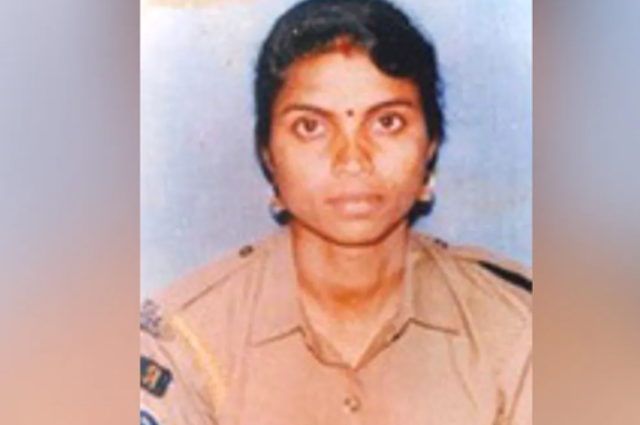
Kamlesh Kumari, a constable in CRPF (Central Reserve Police Force), was manning nearby when the car was speeding. Sensing something wrong, she moved towards the car without hesitation, becoming the first one to spot the terrorists. Armed with just a walkie-talkie, she screamed and alerted Constable Sukhwinder Singh, who was on duty nearest to Gate number 11. The braveheart, without caring for her security, also alerted the terrorists; they opened fire indiscriminately at the lady. 11 bullets pierced her body, making her the first victim of the attack. Along with her Watch and Ward staff, JP Yadav also spotted the suspicious car. Rushing to stop it, he also fell to the bullets.
The policy back in 2001, did not allow women constables to carry arms, which is itself an institutional irony. The system assumed female constables were responsible for frisking duties of the female visitors, a security protocol role, but her sacrifice proved it wrong.
The Chain Reaction
Her most decisive act of transmitting urgent messages in those crucial seconds alerted other officials. The internal gates of the Parliament were sealed just in time. Constable Sukhwinder Singh, alerted by her, pursued the attackers and shot the terrorist who was wearing a suicide vest. The bomb exploded, killing the terrorist and saving the lives of others. Head Constable Y B Thapa, guard commander who was with Singh at the moment, said, "I ran and took position behind a pillar while Sukhwinder took guard behind a wall near gate no 3. We both started firing at one of the terrorists running towards gate number one. Soon, there was an explosion, and I saw the [terrorist] had died. When I tried to move, I just couldn't. I looked, and there was blood all over. I had been hit." He then limped to the CRPF tent as the bullets kept flying.
Constable D. Santosh Kumar, aged 21 years, was fresh from his training and was deployed at Gate number 6, neutralised three of the five terrorists. He said, “I was at gate no. 6. As soon as I heard bursts of fire, I knew it was an attack. I took position behind a tree and soon saw three terrorists running towards gate no 9. They wanted to enter Parliament, but as they were being fired at from the other side, they were forced to take position near the gate," Recalling the incident, he also told, “The time when they could barely see me, even I did not have a very good view of them, but I could see their chest and abdomen and knew what had to be done...The third understood my location and fired at me from his AK-47. By then, my bullet had pierced him as well”.
The fifth terrorist running towards gate number 5 was gunned down by Constable Shyambir Singh. During all this chaos, ready-to-retire inspector Mohan Prasad commanded the men throughout the attack, running from one gate to another, shouting, “Idhar se gher, udhar mar”, reminisced Kumar. The four CRPF men were awarded Shaurya Chakra for their gallantry in repelling the heavily armed terrorists, with an out-of-turn promotion.
Her Legacy left behind.
Instrumental in limiting the attack outside the building, she indirectly protected the former Home Minister and the Foreign Minister. She was posthumously awarded the Ashoka Chakra, India’s highest peacetime award by the then President K R Narayan on Republic Day in 2002 for her exceptional bravery. She remains the first and only policewoman in Indian history to have been awarded this prestigious award. Prime Minister Atal Bihari Vajpayee also paid tribute to her.
Born in 1969 in Sikanderpur village of Kannuaj, Uttar Pradesh, she had joined the CRPF in 1994. Her first posting was at Allahabad, 104 Rapid Action Force. She was later posted at 88 Mahilan Battalion in July 2001. She became a part of the Bravo Company, the group tasked with securing Parliament when in session.
Kamlesh Kumari is now outlived by her husband, Avdhesh Yadav and two daughters, Jyoti and Shweta. She lived the values of the uniform, continuing to inspire the youth to join India’s police and paramilitary forces. December 2025 marked 24 years of the Parliament attack; she carried no weapon but militarised the first warning to protect Indian democracy.
References:
- https://thebetterindia.com/
- https://storypick.com/kamlesh-kumari/
- https://tfipost.com
- https://timesofindia.indiatimes.com
- https://thebetterindia.com