
A boy who did not come home again
A 15-year-old boy from Banwariwas village in the Jewar area of Greater Noida, Uttar Pradesh. He was in the 9th class. On 21 May 2026, he went to play but did not come home. Nobody stopped him or asked where he was going; boys like him came and went. But not this time; in the evening, Gopal did not come home. Night came, and still nothing. His family called everyone who knew him, knocked on doors, and walked the streets they had already walked twice. By the next morning, his father, Ravi Bhusha (Bunty), walked into the Jewar Kotwali police station and filed a missing person's complaint.
For two days, the family kept searching for him. Hoping that he was in a safe place or at a friend's house. A misunderstanding. Anything that could be explained and undone. What they got instead was a phone call on May 23.
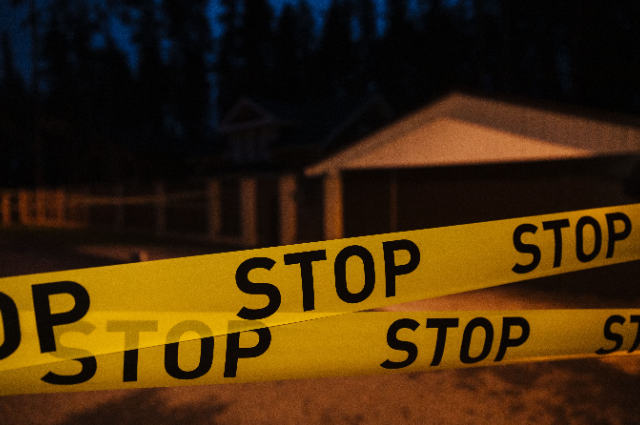
Gopal's body had been found inside an abandoned house in Rohi village, around four kilometres from where he lived. Dainik Bhaskar reported that the room told its own grim story: signs of severe head trauma, blood on the floor. The Greater Noida DCP confirmed the discovery on social media, noting that the body was located after local police received a tip. The missing child case had become a murder investigation.
A Grandmother Spoke Up. Men With Grudges Listened.
To understand what happened to Gopal, you have to go back roughly six weeks before his death. Sometimes he used to visit a spot in the village where some local youth would regularly smoke hookah. His grandmother found out about this and went straight to those men, scolding them for having a bad influence on Gopal. After that, Gopal stopped going there. Also, those people had to stop all of this. However, those people became angry about this, but at the time, they did nothing.
Police said that they had been suppressing their anger for a month and a half and were looking for an opportunity to exact revenge.
On May 21, Gopal came to their house again. According to the police version of events, the men forced him to smoke a hookah that had been loaded with a dangerously high quantity of tobacco. Gopal was fifteen, had no history of smoking, and no tolerance for what was being pushed into his lungs. He lost consciousness inside that room. He did not survive. The men then moved his body and hid it in the abandoned house in Rohi village, where it would eventually be discovered two days later.
Three men were arrested after a police encounter: Naresh and Mohit from Rohi village, and Umesh Kumar, a Bihar native from Champaran. Two of them were injured in the encounter. Two illegal country-made pistols along with cartridges were seized from them. The administration followed up by sending bulldozers to the accused's properties. The DCP announced on social media that the case had been solved.
No Marks on the Body. That Is Not What It Sounds Like.
The post-mortem came back with a finding that confused many people outside the forensic world: no external injuries. For a grieving family and an outraged community already circulating horrific claims on social media, that result felt like a dismissal. How could a boy be dead if nobody had touched him?
Forensic pathologists would answer that question differently. When death comes through poisoning, forced asphyxiation, or a toxin that shuts the body down from the inside, the skin often shows nothing. No bruises, no cuts, no marks of any kind. The exterior stays intact while the damage happens deeper, in the lungs, the blood, the brain, starved of oxygen. The absence of visible injury does not mean the death was natural. In many cases of deliberate chemical killing, it is exactly what you would expect to find.
The DCP confirmed that the post-mortem did note a head injury, but the exact cause of death could not be established from the examination alone. This is why viscera samples were preserved and dispatched to a Forensic Science Laboratory for chemical analysis. Under Indian medicolegal guidelines, this step is mandatory when a body is in an advanced state of decomposition or when the cause of death cannot be conclusively determined on the autopsy table. The preserved samples typically include stomach contents, liver, kidneys, blood, and, in select cases, bone marrow, depending on what the examining doctor suspects.
What the FSL will specifically screen for, in a case like this, includes nicotine, its primary breakdown compound, cotinine, and markers of carbon monoxide absorption retained within the organ tissue. These substances leave measurable traces in the liver, kidney, and blood even after partial decomposition. The skin tells no story here. The organs might.
What Hookah Actually Does to a Body, Especially a Young One
There is a widespread and dangerous belief that hookah is softer than cigarettes. Milder. Safer. The World Health Organisation has spent years trying to correct this. The smoke from a hookah session passes through water, yes, but water filters almost none of the harmful compounds. What reaches the lungs is a mixture of nicotine, tar, carbon monoxide, heavy metals including lead and cadmium, and carcinogenic compounds. Research published in medical literature has found that the blood nicotine level in a regular hookah smoker is equivalent to smoking roughly ten cigarettes a day.
The more immediately dangerous element in enclosed spaces is carbon monoxide. Hookah tobacco is heated using burning charcoal, and charcoal combustion produces CO in large quantities. Once inhaled, carbon monoxide binds to haemoglobin in the blood with roughly 200 times the affinity of oxygen. The result is that the blood loses its ability to carry oxygen to the organs, brain, heart, and everything. This condition, carboxyhemoglobin poisoning, causes dizziness and confusion at lower levels and progresses to loss of consciousness, cardiac arrhythmia, and death as concentrations rise.
Medical case reports documented in international journals have recorded adolescent patients arriving at emergency rooms with carboxyhemoglobin levels between 20 and 30 per cent following hookah sessions, levels sufficient to cause fainting and, in certain conditions, fatal outcomes. A German case series published in Deutsches Ärzteblatt International described four patients who lost consciousness after hookah use in poorly ventilated rooms. One of them was sixteen years old.
Nicotine itself, at high concentrations, is acutely toxic. Forensic toxicology literature is clear on this: elevated nicotine acts on the central nervous system, suppressing it progressively, dropping blood pressure, slowing the heart, eventually paralysing respiratory muscles. Death comes from asphyxia. The body, on the outside, can look entirely undisturbed. Scientific case reports have documented deaths from nicotine poisoning where the gross examination at autopsy found nothing unusual, and only toxicological screening of the organs confirmed what had killed the person.
For a fifteen-year-old non-smoker forcibly made to inhale concentrated hookah smoke inside a sealed room in the heat of a May afternoon in UP, the physiological math is brutal. The body had no tolerance, no adaptation, no defence. The skin stays clean. The damage writes itself elsewhere.
The FSL Queue and the Justice That Waits in It
In India, getting a viscera report back from a Forensic Science Laboratory is rarely quick. The process stretches across weeks and often months. The delay is not merely administrative; it runs deeper than that. Forensic practitioners and legal scholars have consistently flagged a structural problem: the doctor who conducted the post-mortem and collected the samples is frequently transferred to a different posting by the time the FSL report arrives. What follows is a breakdown in coordination; the autopsy opinion sits in one file, the viscera report surfaces separately, and no one formally connects them. In district courts across the country, medico-legal cases quietly accumulate for exactly this reason. When police do not actively track viscera submissions, the chain of evidence frays. In cases where internal poisoning is the only mechanism of death, that institutional gap has historically been enough for the guilty to escape conviction.
That gap cannot be allowed to open here. The viscera samples drawn from Gopal Sharma's body need to be screened for nicotine, cotinine, carbon monoxide markers, and any other toxic compounds consistent with heavy hookah smoke exposure in a confined space. If the FSL confirms elevated concentration levels that point to forced, prolonged inhalation rather than incidental contact, it will do more than support the police account. It will build the forensic connection between the accused and the cause of death. And the very finding that initially seemed to weaken the case, no external injuries, will become its most solid foundation. A body unmarked on the outside but carrying a toxic signature on the inside is not an inconclusive result. It is a record of exactly what happened, written in chemistry.
Grief, Misinformation, and a Father's Words
While the forensic picture remained incomplete, the one playing out in the village and on social media was anything but. Gopal's father, Bunt,y spoke to reporters and described what he had seen when he found his son's body: eyes bulging, acid burns, and mutilated private parts. His mother said the body was in a condition she could not bear to look at. His grandmother said something had been forced into the boy's mouth.
These accounts spread rapidly. The DCP stepped in to clarify publicly that the post-mortem had found none of the mutilations the family described, no acid burns, no cutting of body parts. The condition of the body, including the appearance of the eyes, was explained as a consequence of decomposition in extreme heat. The abandoned house where Gopal's body had spent two days in May was, in the DCP's words, as hot as a furnace.
Decomposition in high heat does disturbing things to a body. It is not the same as mutilation, but it can look that way to someone who has never seen it before, especially a father identifying his murdered son in the middle of the night. The family's horror was real. Their interpretation of what they saw was shaped by grief and shock, not malice.
Meanwhile, the National President of the Rashtriya Vipra Ekta Manch, Mitresh Chaturvedi, visited the family and handed the police a two-day ultimatum demanding strict action. BJP MLA Shalabh Mani Tripathi stated publicly that he had spoken directly to UP DGP Rajiv Krishna and STF Chief Amitabh Yash. The machinery of political pressure had been set in motion alongside the machinery of forensic investigation.
Through all of it, the sentence that cut through everything came from Bunty. Talking to reporters, he said: "If my son had been shot, I wouldn't have felt as much pain as I do after hearing these things." A father saying that a visible death, something he could point to and understand, would have been easier to carry than this. The uncertainty of an invisible killing. The fact that his son's body showed nothing on the surface, while everything had already gone wrong inside. The not knowing, for days, is its own kind of violence.
A Pattern That Rural UP Has Seen Before
Uttar Pradesh has no shortage of cases where a petty dispute or a bruised ego has ended in the killing of someone who had nothing to do with starting it. In June 2019, a two-year-old girl named Twinkle Sharma was abducted from Tappal in Aligarh district and killed; the motive, police later established, was a dispute over an unpaid debt of Rs 10,000 between her family and the accused. A child paid with her life for money she had never borrowed, a nd a fight she never knew was happening.
The Gopal Sharma case sits in the same dark category. A fifteen-year-old boy was targeted not because of anything he did, but because his grandmother had the nerve to tell some men to leave him alone. The grudge was not even with him. It was with her. He was the easier target.
What makes this case distinct is the method. Hookah tobacco is not a weapon that anyone registers as dangerous. It sits in drawing rooms and dhabas and village gatherings across north India. It has a social texture to it, something shared, something communal, something that does not set off alarm bells the way a knife or a gun would. That normalisation is precisely what made it usable as a murder weapon. Nobody questions a hookah. Nobody thinks to test for tobacco poisoning when a boy is found dead with no marks on him.
That assumption needs to be reconsidered. The WHO has been saying for years that hookah is not a harmless social ritual. Research consistently shows that one hour of hookah smoking exposes a user to as much smoke volume as a hundred cigarettes. Carbon monoxide output during a typical session far exceeds any safe threshold. In an unventilated room, with a non-smoker who cannot stop or walk away, those numbers stop being a health statistic and start being a cause of death.
The Skin Was Silent. The Organs Are Not.
Gopal Sharma was killed, according to police, with something his grandmother had tried to keep him away from. Not a blade, not a firearm, smoke was fed deliberately into a boy who had no idea what was being done to him or why. His grandmother had seen these men for what they were before anyone else did. She had walked across the village and told them so. They held that against her for six weeks, and then they settled it with her grandson.
Three men are now in custody. Two illegal weapons were seized from them. A bulldozer has already moved against their properties. A community that went to the streets is watching what happens next. The post-mortem raised a question that the examining table alone could not answer. And in a queue at a Forensic Science Laboratory, preserved samples drawn from the organs of a fifteen-year-old boy are waiting to be read.
The surface of his body was clean. What lies beneath it is not. Whether the justice system follows that evidence to its conclusion, whether the viscera report makes it back to the right desk, whether someone connects it to the autopsy file, whether the chain holds, is now the only question that matters. For Gopal. For his grandmother, who tried. And for a father still carrying the particular weight of a death he cannot see.
References
- OpIndia, Gopal Sharma case full report
- Zee News, Teen found dead in Jewar, villagers warn of protests
- ScienceDirect, Death due to nicotine ingestion: case report
- ScienceDirect, Death from nicotine replacement therapy overdose
- PubMed, Carbon monoxide poisoning in hookah smokers
- Deutsches Ärzteblatt, CO poisoning following hookah use: case series
- Rutgers / NJ Poison Control, Carbon monoxide risk from hookah smoking
- ResearchGate, Viscera preservation for post-mortem toxicological analysis
- Legal Service India, Viscera examination and criminal justice challenges
- American Lung Association, Facts about hookah
- Forensic Field Blog, Nicotine toxicology and autopsy findings
- The Law Institute, Goals of post-mortem examination in India