

Image by Engin Akyurt from Pixabay
The first thing I wrote was not a story. It was not even a proper diary entry. It was something like:
The kettle works.
The wind is strong today.
The children are playing.
Simple observations. Dry sentences. Facts without emotion.
If someone had shown me those notes and told me that they would eventually become the beginning of my life as a writer, I probably would not have believed them.
At the time, I was not trying to become a writer.
I was doing my homework.
My psychologist had suggested that I write every day. Nothing complicated. I did not have to create a story or explain everything I was feeling. I simply had to notice things and put them into words.
It sounded easy.
It was not.
There are strange moments when speaking about ourselves becomes more difficult than speaking about almost anything else. We can discuss work, children, plans, news, appointments, shopping lists, and everything that needs to be done tomorrow. But ask us what hurts, what frightens us, what we miss, or what we cannot forgive, and suddenly language becomes much harder.
Sometimes we do not even know how to begin.
So I began with the kettle.
The Safety of Facts
Facts are safe.
A kettle either works or it does not.
The wind is strong, or it is not.
A room is quiet. A car passes outside. Someone closes a door.
You do not have to defend a fact.
You do not have to explain why you noticed it.
Most importantly, you do not have to explain yourself.
That was probably why my first notes were so detached. I could describe what was happening around me without describing what was happening inside me.
There was a strange comfort in that.
I could write:
The window is open.
Much easier than:
Today I feel trapped.
I could write:
It is raining.
Much easier than:
I am sad, and I don't know exactly why.
I could describe silence without admitting that silence could frighten me.
At first, I thought I was simply completing an exercise.
Then something began to change.
The sentences became longer.
The kettle did not just work anymore. I started noticing the sound it made before the water boiled. The wind did not simply exist; it moved the curtain and changed the light in the room. A song playing somewhere stopped being background noise. I started wondering why some sounds felt warm while others made something inside me tighten.
My notes stopped recording only what happened.
They began recording what it felt like when it happened.
And that was a completely different kind of writing.
When Observation Becomes Emotion
There is a small distance between noticing something and feeling something.
Writing slowly taught me how to cross it.
A room was no longer just a room.
It could feel safe.
Or lonely.
Or too quiet.
A closed door was no longer only a physical object. It could become separation.
Music was no longer only sound. It could carry memory.
I began to understand that our minds are constantly attaching emotions to ordinary things, even when we do not consciously acknowledge it.
That fascinated me.
And little by little, another idea started forming.
What if emotions could be experienced through something visible?
What if music did not exist only as sound?
What if somebody could experience it as colour?
The idea did not arrive dramatically.
There was no cinematic moment in which I suddenly understood that I had found a story.
It grew quietly.
One observation connected to another. A feeling connected to an image. An image became a character. A character needed a past. Then another character appeared. Questions followed.
Why does she react this way?
What happened to her?
What is she afraid of?
What does music mean to her?
Soon my therapy notes were no longer only notes.
They were becoming fiction.
Eventually, they became my first story, The Colour of Music.
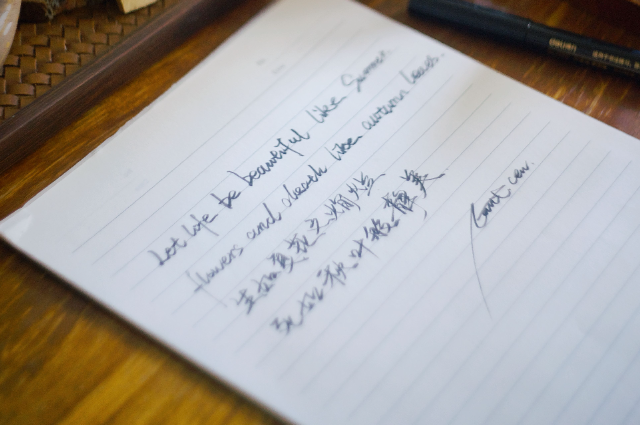
Photo by ivi nnnnnn on Pexels.
The sentences became longer. Somewhere between observation and confession, the exercise stopped feeling like homework.
Fiction Told the Truth Differently
That sounds contradictory.
How can fiction help someone tell the truth?
But perhaps fiction sometimes allows us to approach truth from an angle that feels safer.
When we say, “I am afraid,” the sentence belongs completely to us.
When a character is afraid, there is distance.
At first.
You can watch the character.
You can ask why she behaves the way she does.
You can let her make mistakes.
You can give her memories.
You can allow her to say things you have difficulty saying yourself.
And somewhere during that process, something surprising can happen.
You begin recognising pieces of yourself.
Not necessarily in the events. The story does not have to reproduce your life.
The truth may live somewhere else — in an emotion, a fear, a reaction, a need.
I began understanding things through my characters that I had difficulty explaining directly.
Sometimes it is easier to write:
She could not tolerate the silence.
than to say:
Silence makes me uncomfortable.
It is easier to ask:
Why does she need someone to stay?
And only later realise that perhaps the question matters to you too.
Fiction creates distance.
But sometimes that distance is exactly what allows us to get closer.
Writing Is Not the Same as Speaking
I do not believe writing replaces conversation, therapy, relationships, or professional support.
A notebook cannot diagnose us.
A story cannot give medical advice.
A character cannot answer back when we need another human being to challenge what we believe.
But writing can do something else.
It can give shape to thoughts before we are ready to speak them.
Spoken words disappear quickly. Sometimes we hear ourselves saying something and immediately want to take it back.
Written words wait.
We can look at them.
Change them.
Delete them.
Return the next day and realise that one sentence still feels true.
There is also privacy in writing.
A page does not interrupt.
It does not look shocked.
It does not tell us that someone else has it worse.
It does not say, “You shouldn't feel that way.”
It simply holds the sentence until we are ready to understand it.
That mattered to me.
The more I wrote, the more I noticed that I was no longer only documenting my days.
I was asking questions.
Why did this moment stay with me?
Why did that comment hurt?
Why did I react so strongly?
Why does this memory still return?
Why does one sound feel comforting while another produces tension?
These were not always questions with immediate answers.
But now they existed somewhere outside my head.
I could see them.
The Moment Was Not One Moment
When people talk about life-changing moments, we often imagine something dramatic.
A phone call.
An accident.
A wedding.
A diagnosis.
A departure.
A meeting with somebody who changes everything.
Those moments certainly exist.
But sometimes change arrives so quietly that we do not recognise it while it is happening.
For me, there was no single morning when I became “a writer.”
There was one sentence.
Then another.
Then another.
There was a kettle.
There was wind.
There were ordinary sounds.
There were observations that slowly became descriptions.
Descriptions became emotions.
Emotions became characters.
Characters became a story.
And somewhere along that path, writing stopped being homework.
I wanted to return to it.
That may have been the biggest change.
At first I wrote because someone asked me to.
Later I wrote because I needed to know what happened next.
Not only to my characters.
Sometimes to myself.
What Healing Looked Like for Me
I hesitate when people describe healing as though it has a clear ending.
We often talk about healing as if one day a person crosses an invisible line and becomes completely restored.
My experience has not felt like that.
Healing can be smaller.
Sometimes it is recognising an emotion sooner than before.
Sometimes it is finding language for something that previously existed only as discomfort.
Sometimes it is realising that a fear has a history.
Sometimes it is being able to write one honest sentence.
Writing did not erase difficult experiences.
It did not transform every painful memory into something beautiful.
And it certainly did not make life uncomplicated.
But it gave me another way to approach myself.
Before, an emotion could exist as a heavy, shapeless thing.
Once written, it became something I could examine.
Sometimes I discovered that the first sentence was not the real sentence.
I am angry.
Then:
I am disappointed.
Then:
I expected somebody to understand.
And occasionally, underneath everything:
I was hurt.
Writing allowed me to keep going until I reached the sentence that felt true.
That is why I think my healing began there.
Not because writing solved everything.
Because it helped me stop hiding everything from myself.
The Story After the Story
When I finished The Colour of Music, I had something that did not exist when I wrote those first dry notes.
A completed story.
Characters.
A world.
Something other people could read.
But there was another result that mattered just as much.
I had discovered a language.
Not English, Russian, French, Hebrew, or any other spoken language.
A personal one.
A language made from observations, memories, imagined scenes, questions, metaphors, characters, colours, sounds, and all the things we sometimes struggle to say directly.
That first story led to more writing.
More ideas followed.
Some were fiction.
Some were reflections.
Some explored fear, relationships, trauma, social questions, or the strange ways people survive things they once thought they could not survive.
But whenever I think about where it began, I return to something almost embarrassingly ordinary.
A therapy assignment.
A few sentences.
A kettle that worked.
Wind outside.
Nothing that looked important.
And perhaps that is why the memory matters to me.
We do not always recognise the beginning of something while we are living through it.
Sometimes the thing that changes our life enters disguised as homework.
When Words Become a Door
There are still things that are easier for me to write than to say. I no longer think that makes writing less honest. Sometimes writing is how honesty begins.
We write a sentence privately before we can say it publicly. We give an emotion to a fictional character before recognising it as our own. We describe a sound because describing the memory attached to it still feels impossible.
And then, slowly, the distance becomes smaller.
The page becomes a bridge.
My first notes were almost emotionless because that was what I could manage at the time.
That was enough.
I did not need to begin with a confession.
I did not need to understand myself immediately.
I only needed to begin noticing.
The kettle works.
The wind is blowing.
The room is quiet.
Then one day:
The silence feels different today.
That is how a note becomes a thought.
A thought becomes a feeling.
A feeling becomes a story.
And sometimes, without noticing exactly when it happened, the story becomes a way back to yourself.
For me, writing did not begin because I already knew what I wanted to say.
Writing began because I didn't.
And somewhere between those first dry notes and the final pages of my first story, I discovered that when I could not speak an emotion aloud, I could sometimes write my way toward it.
That was where my healing began.
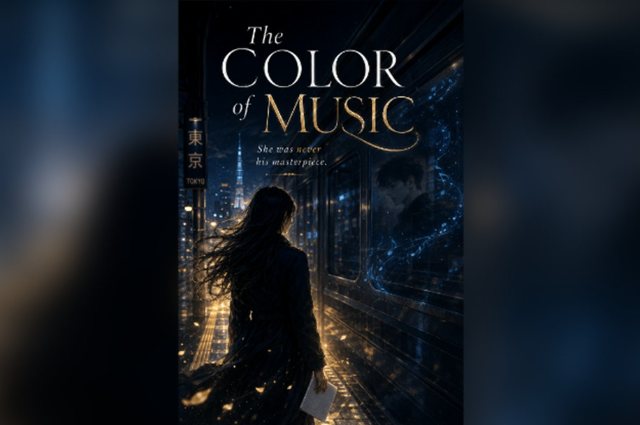
What began as a few ordinary notes eventually became The Colour of Music. Somewhere along the way, writing stopped being homework and became part of how I healed.