
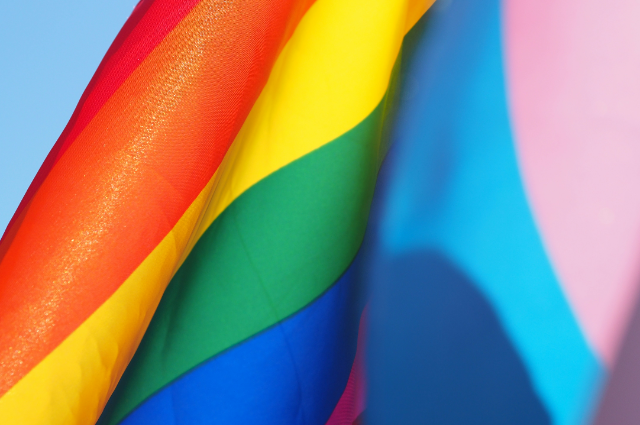
Every June, the rainbow flag is raised across cities and streets. But many do not really know the story behind this day, the story of the Stonewall uprising. The month of JUNE, when the rainbow flag is raised, not with shame but with pride, solidarity, and utmost acceptance.
Pride month, also called the LGBTQ+ Pride month, is a month dedicated to the celebration of the dedication and contribution of the lesbian, gay, bisexual, transgender, queer and other like communities.
Pride month encompasses a month where the struggles, the sacrifices and also the progress towards the rights, respect and acceptance of the LGBTQ+ community are celebrated, to remember those who have not only faced discrimination but also the hardships that came with being in the LGBTQ+ community.
Pride month runs from the beginning to the end of June, although having June 28as the anniversary date of the 1969 uprising.
In 1969, soliciting for the rights of homosexuals and others was an illegal act in New York City, the LGBTQ+ community needed a place for acceptance, and at that time, the gay bar became a place for gay, lesbian and other individuals to socialise freely. But many of these bars were also subject to harassment and discrimination by police officers who often raided them.
The Stonewall Inn was one of those bars for the LGBTQ+ community. The Stonewall Inn was located in Greenwich Village. It was a crowded bar that was recorded to have been operating without a liquor license.
The Stonewall Uprising we speak of today started in this inn.
LGBTQ+ life before stone-throw
Even before the 1969 uprising, the political and social discrimination of the LGBTQ+ community was not just common but deep-rooted.
During the 1940s, the Lavender scare saw gay and lesbian federal employees harassed, persecuted and fired from their jobs. The term “Lavender scare” was popularised by a historian called David K. Johnson. The theory of the lavender scare came into existence when gay and lesbian federal employees were accused of being security threats to the state, as they were believed to be susceptible to blackmail by communists and would therefore endanger national security. And although no particular evidence suggested this accusation was true, it became a myth that persisted for decades and led to the dismissal of thousands of federal employees. Beyond government-led discrimination, such as the lavender scare, LGBTQ+ individuals also faced harassment in their daily lives. Police frequently target people who do not conform to traditional gender expectations. During the 1960s and 1970s, many cities enforced the anti-cross-dressing law, which was often used to intimidate or harass transgender or gender nonconforming individuals. Then, LGBTQ+ people could be questioned, arrested, or detained simply because their dress did not match their assigned sex. This situation incited fear and made public self-expression very risky.
What happened on June 28, 1969?
It was in the early hours of Saturday, June 28, 1969. A bar which served as a resting, open and fear free place for gay, lesbian and transgender individuals- the Stonewall bar was met with a raid as police men entered the inn, arrested the employees selling alcohol without a licence and the patrons and also cleared the bar in accordance with the New York criminal statute that authorized the arrest of anyone not wearing at least 3 articles of gender appropriate clothing.
But this time, one of the events that stood out was that people outside did not retreat or scatter like before. Their anger could clearly be seen as they watched bar patrons and employees being forced into the police van. The people began to jeer and throw bottles at the policemen, because the policemen were used to a more passive behaviour from the people. This behaviour felt strange and alarming, making them call immediately for backup to disperse the crowd of about 400 people. This riot lasted for 5 more days and became an uprising recorded in history as one that paved the way and served as a stepping stone for the LGBTQ+ community. Stonewall became a symbol of resistance to social and political discrimination and harassment that would inspire firmness and a stronghold among the LGBTQ+.
Why stone-wall matters
The spontaneous act of resistance in 1969 galvanised the community, leading to the formation of more gay rights organisations and activists.
The riot led to a surge in public visibility for the LGBTQ+ community and a more assertive approach to activism. Formation of organizations as numerous gay rights organisations, was founded, including the Human Rights Campaign, GLAAD, and PFLAG. A major victory was the American Psychiatric Association's declassification of homosexuality as a mental health disorder in 1973.
Also, the Stonewall Inn was designated a national monument in 2016, recognising its historical significance.
The woman is called the mother of pride.
Brenda Howard, who was an activist in a fight against the Vietnam War, like many other known personalities, grew tired of the existing and deep-rooted patriarchy and soon became a feminist in the 1960s. Her role soon included gay rights as well. She coordinated a Christopher Street Liberation March to commemorate the anniversary of the Stonewall riot. Howard is well known as the mother of Pride, as she not only organised but also coordinated week-long events around Pride Day, and this marked the beginning of the annual LGBTQ+ celebrations held worldwide today. Howard played a great role in the creation of gay and lesbian rights and laws in New York City in 1986, and along with activists Robert A. Martin and Craig Schoonmaker made known the word Pride to mark these week-long events. Brenda Howard remained deeply involved in LGBTQ+ activism throughout her life. She also played an important role in the 1993 March on Washington for gay, lesbian and bisexual rights, serving as the female co-chair of the leather contingent and advocating for inclusion of the word “Bisexual” in the event’s title. Howard was also active in several LGBTQ+ organisations, including the gay liberation front and the gay activist alliance, where she chaired the Speakers Bureau. In addition, she served in the steering committee for Stonewall 25. Howard passed away from colon cancer in 2005.
The story behind the rainbow flag
Yes, during Pride Month, the rainbow flags are raised with pride and triumph, but the history of the rainbow flag is just as important to Pride Month. The history began in 1978 when Gilbert Baker, who was an openly gay man, designed the first rainbow flag as was urged by a then U.S official who was also gay, for the gay community. Baker believed that gay people should come out without fear and not hide behind lies. He was a proud gay man who never missed a chance to declare his sexual orientation. He adopted 8 colours for the flag, which included: hot pink for sex, red for life, orange for healing, yellow for sunlight, green for nature, turquoise for art, indigo for harmony and violet for spirit. Baker and other volunteers made more flags to cover a large number of people.
The first flag was raised on June 25, 1978, for the San Francisco Gay Freedom Day parade. However, because the hot pink colour was not readily available, they were removed from the flag, and also the 2 shades of blue--the turquoise and the indigo-- were combined to create a royal blue stripe. These practical combinations resulted in the creation of a six-striped flag widely accepted and used today.
Before the rainbow flag
Before the recognition of the rainbow flag as a symbol of the LGBTQ+ community, many activists used the pink triangle, which originated from Nazi Germany, where gay men in concentration camps were forced to wear the pink triangle for identification and discrimination. Though the rainbow flag is now used, the pink triangle remains a symbol of remembrance for the LGBTQ+ of the resistance, the discrimination, the strength and perseverance. It became an important reminder of the persecutions the LGBTQ+ community faced and the progress of activism.
Pride becomes official
Although pride celebrations had been going on for many years, their official recognition came much later. In the month of June 1999, President Bill Clinton proclaimed June as Gay and Lesbian Pride Month, acknowledging the importance of the Stonewall uprising and the contributions of LGBTQ+ Americans.
This proclamation helped to draw greater national attention and respect to the Pride celebrations and fights against discrimination.
The tension between celebration and protest
More than five decades after Stonewall, Pride has evolved into a global celebration. However, not everyone agrees on what Pride should represent. While many view it as a time for celebration, visibility, and community, others believe it should remain focused on activism and social justice. Critics argue that increasing corporate involvement has shifted attention away from the issues that originally inspired the movement. As a result, discussions continue about whether Pride should primarily be a celebration, a protest, or a combination of both.
What began as a confrontation outside a small bar in New York City grew into a movement that transformed LGBTQ+ history. The Stonewall Riots not only inspired activism and advocacy but also laid the foundation for the Pride celebrations observed around the world today. More than fifty years later, the legacy of Stonewall continues to remind people of the importance of equality, dignity, and the ongoing pursuit of human rights.
References:
- Britannica.(n.d.). Gay Pride Month. Retrieved June 13, 2026, from https://share.google
- Vance,S.R.(2020). Commemorating pride: Reflecting on progress and continuing to advocate for gender diverse and sexual minority youth. Journal of Adolescent Health,6(66), 641-642
- Legacy Project Chicago. (n.d). Brenda Howard. https://legacyprojectchicago.org
- The American Presidency Project. (1990). Proclamation 7203-Gay and Lesbian Pride Month, 1999. https://www.presidency.ucsb.edu Baker, G.(2019) Rainbow warrior: my life in colour. Chicago Review Press
- Tandon, A., & Rao, T.S. (2021). Pride parades. Journal of psychosexual Health, 3(3), 209-211