
In 1967, North Vietnam asked China for help because malaria killed not only civilians but a large number of soldiers during the Vietnam War.
At that time North Vietnam was fighting with South Vietnam in the Vietnam war (1955-1975) BECAUSE China was an ally of North Vietnam it asked China for help to find a cure for malaria, at that time the existing drug like chloroquine were becoming ineffective cause malaria parasite had developed resistance, which left the doctors with very few effective treatment options, as the number of infected soldiers continue to rise.
Upon asking for help, China recognised that the crisis required an immediate response. On 23 May 1967, the Chinese government, under the leadership of Mao Zedong, established a confidential research initiative known as Project 523. The name "523" was derived from the date of its launch, 23 May. Unlike a small laboratory project, this was a nationwide scientific effort involving more than 500 researchers from over 60 universities, hospitals, and research institutes. Scientists from different fields, including medicine, chemistry, pharmacology, and traditional Chinese medicine, worked together with a single goal to discover a new treatment that could defeat drug-resistant malaria and save countless lives.
Secret project
The project was launched during the Cold War and the Vietnam War; China didn't want the rival countries to know about the research they were conducting.
The project was a military priority. The main goal was to develop a medicine that could protect North Vietnamese and Chinese soldiers from malaria, which was spreading like fire in a jungle.
The Chinese government controlled scientific information tightly during that period. As a result, scientists worked secretly and were unable to publicly discuss or publish their research because of that until years later, when scientists got very little recognition.
Tu Youyou and the breakthrough
Tu Youyou studied pharmaceutics at Beijing Medical College and graduated in 1955. After completing her degree, she joined the Institute of Materia Medica under the Academy of Traditional Chinese Medicine, which is now called the China Academy of Chinese Medical Sciences. Between 11959 and 1962, she received intensive training in traditional Chinese medicine through a program created for researchers who already had a background in Western medicine. This experience later enabled her to combine traditional Chinese medical knowledge with modern scientific research, ultimately contributing to the development of new medicines.
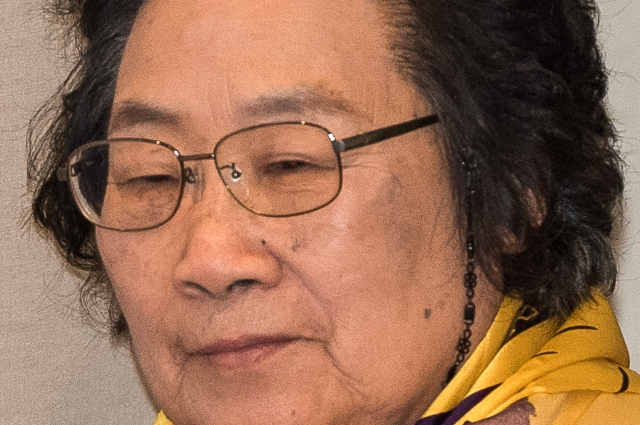
Tu Youyou was appointed as the leader of Project 523.
The research for the cure
Rather than relying only on conventional laboratory methods, Tu adopted a unique approach by combining modern scientific research with traditional Chinese medicine. She and her team reviewed more than 2,000 ancient medical texts and collected hundreds of herbal remedies that had been used over centuries to treat fever-like illnesses. From these records, they identified around 640 promising herbal recipes and tested hundreds of plant extracts in the laboratory.
Despite years of experiments, the researchers continued to face disappointing results. While studying an ancient medical text written by the physician Ge Hong, Tu noticed a description suggesting that sweet wormwood should be soaked and gently squeezed rather than boiled. She realised that heating the plant during extraction could destroy its active ingredient. After developing a low-temperature extraction method, her team successfully found the cure. Tu Youyou volunteered to become the first test subject for the project. Laboratory tests and later clinical trials confirmed that the compound was highly effective at killing the malaria parasite.
Tu Youyou's discovery transformed malaria treatment around the world. Artemisinin-based therapies became the standard treatment for malaria and have saved millions of lives.
Recognition of the discovery
Because the research was conducted under the secretive Project 523, many scientists contributed to the work, leading to debates over who deserved the most credit for the breakthrough. Some researchers believed that the achievement should have been recognised as a team effort rather than being associated mainly with one individual. In addition, due to China's political climate and limited scientific communication with other countries at the time, Tu's research remained largely unknown outside China for many years. As a result, international recognition of her contribution came much later, culminating in the Nobel Prize in 2015. Another point of discussion was that Tu did not hold a doctoral degree or have overseas research experience, making her Nobel Prize an unusual and inspiring achievement that challenged traditional expectations in the scientific community.
Reason for debate
China's view: Scientific discoveries are made by teams, so everyone should get credit.
Western view: Western People often celebrate one individual genius who made the breakthrough.
Since she got the Nobel Prize, it led to the debate about:
Should only Tu Youyou receive the Nobel Prize, or should the entire Project 523 team receive recognition?!
Tu Youyou’s discovery of artemisinin is a great example of how looking at ancient medicine can solve modern problems. Her idea to check Ge Hong's 1,700-year-old book was the exact spark the project needed, but it also took a massive team of scientists to actually bring the drug to life. Even though people still argue over who should get the most credit, the individual scientist or the whole team- the most important part of the story is that their hard work ended up saving millions of lives around the world.
References: