
When people think about sustainability, they often imagine about the advance technology, recycling plants and government policies or campaigns; however, for many Indians, it was not about any advanced technology or any policy. It was simply a way of life. India has been practising recycling long before it became a global trend.
Growing up in an Indian household, we must have seen the stack-up of old newspapers, plastic bottles cardboard boxes, and metal scraps. They don’t throw all these items away immediately sell it a kabadiwala. Children use these items in school for their projects, in activities like best out of waste. Nobody described this process as environmental responsibility. It was simply common sense.
India is the country which has very large population, and every piece of waste leads to pollution, but recycling items, one of the greatest initiatives taken by Indian households: selling those items to a kabadiwala, without any government funding.
Long before the world embraced terms such as "circular economy" and "sustainability, Indian communities already understood the value of extending the life of materials, passing old clothes to a younger sibling; glass jars became storage containers in kitchens. Plastic containers found new purposes instead of ending up in bins. Waste was rarely seen as completely useless. Using newspaper on shelves and keeping things on. People of India are already used to these recycling activities, and they understand their responsibility for keeping the environment safe.
Today, this tradition has formed the backbone of one of the world's most efficient material recovery systems. India’s recycling sector has up to 4 million workers. Waste pickers, kabadiwalas, scrap dealers, and small sorting units work they all work together to collect and recover recycled materials from different homes, streets, marketplace. These workers recover approximately 60 per cent of India's plastic waste. In comparison, the global average for plastic recycling remains significantly lower.
What makes this system remarkable is that without government funding, it functions on a large scale. Instead of economic incentives, everyone in the chain benefits from it. Households earn a small amount of money, collectors make a living, and industries gain access to reusable materials. The system rewards efficiency naturally.
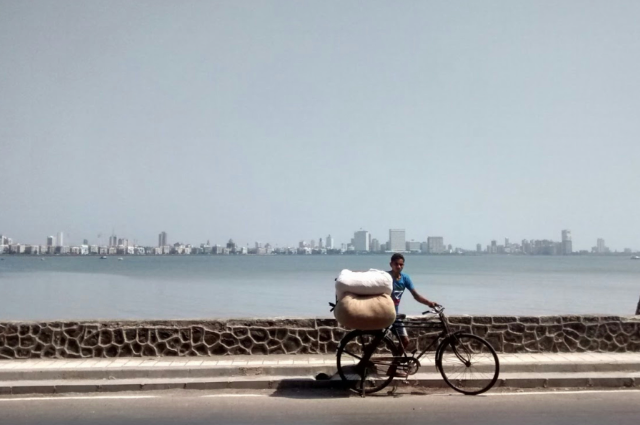
Mumbai's famous dabbawalas are another example of sustainability. Every day, thousands of lunchboxes travel across the city, and they are delivered by Mumbai’s dabbawalas by bicycle and local trains; the system achieves extraordinary accuracy while producing minimal waste and consuming very little energy.
These examples challenge the belief that sustainability requires a massive budget or technology; all it needs is innovation, common sense and participation of the community in this system. India's traditional systems prove that environmental solutions can emerge from everyday habits and shared responsibility.
However, people behind this system remain unseen; informal workers who contribute to the recovery of the recycled items rarely receive the recognition, social security, or support they deserve. Acknowledging their efforts is essential if societies wish to build stronger and more inclusive waste management systems.
Informal workers didn’t get safety equipment while collecting this waste and also had limited health care facilities, which often led to serious health problems.
The younger generation is also participating in sustainability activities; they go to beaches to collect plastic waste or waste that can be recycled. In school, students get knowledge about different types of waste, what can be done with waste and how it can be reused. How waste is divided into different categories: dry waste. wet waste, etc. These habits can strengthen India's recycling culture, small practices that begin from home.
Also, this habit of recycling waste creates employment opportunities for people who lack skills and knowledge and can earn through it.
The world can learn a lesson from this recycling system of India that sustainability does not begin in laboratories or in policy meetings; sometimes it comes from an ordinary house where people choose to reuse rather than discard. It begins with individuals who understand the value of reusing the recycle material to make useful objects.
As environmental challenges continue to grow, perhaps the future of recycling lies not only in new inventions but also in rediscovering practices that communities have followed for generations. India did not wait for sustainability to become fashionable. Through kabadiwalas, waste pickers, and countless households, it quietly built a circular economy before the world gave it a name.
Recycling also helps conserve natural resources and reduce the amount of waste sent to landfills. By reusing materials such as paper, plastic, glass, and metal, less energy is required to manufacture new products. This not only protects the environment but also reduces pollution and preserves valuable resources for future generations.
In the end, recycling is more than a process. It is a mindset- one that reminds us that what we throw away still has the potential to create value, support livelihoods, and protect the planet for future generations.
Reference:
- India’s Waste Management Scenario: Challenges and Recycling Capacities
- Global Leaders in Recycling and India's Comparative Position
. . .