
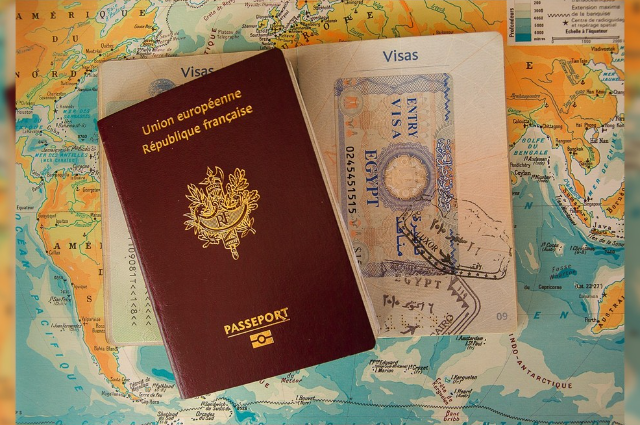
Image by jacqueline macou from Pixabay
"With deepest affection, to my beloved..."
Within the yellowed, fragile folds of old inland letters—steeped in tears and silent prayers—lies the emotional map of an entire generation of transnational migrant workers. To the families remaining in their homelands, the Gulf has long been romanticised as a land of boundless opportunity, a localised mythos symbolised by the remittance of wealth, the luxury of imported perfumes, and the aspirational aura of the returning migrant archetype cloaked in success. Yet, reading between the lines of these archival correspondences reveals a starkly different reality.
They speak of an agonising solitude endured within the suffocating confines of cramped, single-room accommodations, and the slow, unseen erosion of human dignity under the weight of relentless, exploitative labour.
This deep socio-economic and psychological dissonance is not merely an individual tragedy; it is a structural feature of modern global capital. As the silent architects of the Middle East’s dizzying modernisation, migrant workers constitute the definitive demographic and economic backbone of the Gulf Cooperation Council region. According to estimates by the United Nations, there are approximately 167.7 million international migrant workers globally, with their concentration reaching an absolute zenith in the Gulf.
The GCC commands the highest proportion of foreign workers relative to its total labour force anywhere in the world, standing at 35.6 percent. Trailing only the broader European Union and the United States in absolute migration volume, the oil-rich states of Saudi Arabia, Kuwait, Bahrain, the United Arab Emirates, Oman, and Qatar have built their economic empires upon transnational labour. This demographic reliance transitions into an absolute dependency in nations like Qatar and the United Arab Emirates, where foreign nationals comprise an astonishing 90 to 95 percent of the total working population.
The Anatomy of an Invisible Public Health Crisis
To understand the human cost of this demographic shift, one must look closely at the concept of mental health, which the World Health Organisation defines not merely as the clinical absence of psychiatric disorders, but as a holistic state of physical, mental, social, economic, and cultural well-being. It is a multidimensional framework that empowers individuals to realise their potential, navigate the normative stressors of life, work productively, and make meaningful contributions to their societies. Globally, the WHO reports that one in eight individuals experiences some form of psychological distress or mental illness. However, within the transnational migrant workforce of the Gulf, this vulnerability escalates into an acute public health emergency.
Driven by a toxic convergence of domestic unemployment, predatory recruitment practices, unsafe working environments, systemic overwork, arbitrary wage discrepancies, and profound structural isolation, a silent epidemic of clinical depression and generalised anxiety is sweeping through the expatriate community like a contagion.
Expatriates who depart their homelands burdened by exorbitant debts simply to secure a work visa increasingly find themselves trapped in a cycle of despair. When they eventually return, they frequently bring back the dual afflictions of premature ageing and a physically broken, psychologically scarred body—a catastrophic trade of their youth for a hollow mirage of prosperity.
The baseline reality of this existence is illustrated by the daily life of a construction worker labouring in the urban centres of the United Arab Emirates. Tasked with navigating demanding physical regimes for over eight hours a day under dangerous conditions, often for a monthly salary falling below 1,000 AED, their daily survival is less a triumph of transition and more an extraordinary, exhausting feat of human endurance against psychological collapse.
*The Illusory Paradise Behind the Skyline*
The continuous migration of labour to the GCC is structurally sustained by an attractive matrix of high living standards, the promise of secure financial mobility, rapid technological development, and tax-free incomes. Yet, the very populations instrumental to the infrastructural and economic breakthroughs of these host nations are paying a severe psychological price. Many have become casualties of complex psychiatric vulnerabilities, including clinical depression, severe panic disorders, and Post-Traumatic Stress Disorder.
In a landmark 2022 survey conducted by the McKinsey Health Institute, which assessed over 4,000 employees across four major Middle Eastern nations—Kuwait, the United Arab Emirates, Saudi Arabia, and Qatar—the true scale of this crisis was laid bare. The study revealed that two-thirds of the workforce experienced profound mental health challenges and elevated stress levels. Specifically, 66 percent of respondents reported severe psychological difficulties, while 62 percent identified co-occurring physical health challenges.
Furthermore, 18 percent faced intense social crises, and an equal 18 percent reported deep spiritual or existential distress. Crucially, one in three employees exhibited clinical symptoms of occupational burnout—a metric that significantly outpaces the global average of one in four. Over half of the surveyed workforce, standing at 55.7 percent, also reported enduring high levels of toxic and distressing behavior within their immediate workplaces. Because psychological health is inextricably bound to physical comfort and material stability, an examination of these environmental variables across specific nations highlights the localised nature of this suffering.
*Saudi Arabia and the Human Cost of the Green Transition*
The data from the McKinsey Health Institute indicates that residents within the Kingdom of Saudi Arabia suffer the highest levels of distress, clinical depression, anxiety, and burnout when compared to their counterparts in the United Arab Emirates, Qatar, and Kuwait. As the global economy's largest crude oil producer, Saudi Arabia is currently executing an aggressive structural pivot toward renewable energy infrastructure. The state aims to generate 50 percent of its electricity from renewable sources by 2030, with a target of absolute carbon neutrality by 2060, backed by a massive 8.3-billion-dollar investment in solar, wind, and hydrogen projects designed to attract international commercial giants.
However, a comprehensive investigation by the Business and Human Rights Resource Centre—which analysed the lived experiences of dozens of South Asian migrant workers across various renewable energy fields—reveals systemic human rights violations underlying this transition. Labourers in these emerging green sectors are frequently subjected to erratic, uncompensated working hours, verbal abuse, a total absence of rest periods, and severe occupational discrimination targeting unskilled labour.
Furthermore, the globally recognised "Employer Pays Principle"—which mandates that no worker should ever bear the financial burden of their own recruitment—is systematically ignored by subcontracting engineering firms. The investigation noted that 19 out of every 20 surveyed workers were forced to labour up to seven days a week in direct violation of Saudi labour law, while 18 out of 20 operated in extreme, life-threatening thermal environments without adequate protection. As one construction labourer poignantly observed, the summer heat begins to intensify by 8:00 AM and becomes entirely unbearable by 10:00 AM, forcing workers to execute complex manual tasks under a blazing sun.
In a separate epidemiological survey of 400 migrant workers stationed in the Al-Qassim region of Saudi Arabia, researchers documented a 20 percent prevalence of clinical depression. This systemic psychological decay correlates strongly with severe psychiatric conditions such as schizophrenia and an alarming rise in suicide rates. Epidemiological data confirm that mortality by suicide, particularly through hanging, is disproportionately higher among the migrant worker population than among native Saudi citizens. Despite these pervasive violations, structural mechanisms of surveillance, restricted freedom of movement, and the constant fear of sudden termination and deportation keep workers from organising or reporting grievances. This creates a painful irony for a nation that sits high upon the United Nations Development Programme’s Human Development Index.
Kuwait and the Crucible of Thermal Inequity
Climate data compiled by NASA’s Goddard Institute for Space Studies demonstrates that while global temperatures have risen by approximately 1.28°C since the pre-industrial era, the Middle East is warming at more than twice the global average. Analytical tracking from the World Meteorological Organisation, Berkeley Earth, and the National Oceanic and Atmospheric Administration identifies Kuwait as one of the most thermally volatile countries on Earth, with the Mitribah region recording a historic temperature of 54.0°C (129.2°F).
Because the vast majority of the outdoor industrial workforce is composed of non-Kuwaiti citizens, these migrants bear the brunt of this climate crisis, experiencing alarming rates of heatstroke, severe thermal burns, and acute dehydration. Studies indicate that outdoor labourers in Kuwait face a mortality risk three times higher than optimal temperature baselines. Michael Page, the Deputy Director for the Middle East at Human Rights Watch, has directly linked this extreme heat exposure to a quiet epidemic of Chronic Kidney Disease among millions of Gulf labourers, caused by years of severe, daily dehydration.
This thermal crisis is compounded by severe industrial pollution. The rapid proliferation of heavy transport vehicles and commercial buses burning low-grade, unrefined diesel fuel has filled residential and industrial zones with toxic emissions, forcing workers to inhale hazardous fumes during both their shifts and their rest hours. Although a statutory Midday Work Ban exists in Kuwait, its enforcement is compromised by regulatory loopholes and a lack of oversight.
An expatriate electrician operating in Kuwait described the physical reality of this environment.
"I frequently experience severe dizziness, vomiting, acute headaches, and blurred vision due to the heat. It is common to see workers simply lose consciousness and collapse at construction sites. The heat is so intense that you can actually see birds falling dead from the sky. A few years ago, while working on an airport runway line, I fainted multiple times because there was no shade."
The vulnerabilities of migration are equally pronounced among female domestic workers who travel to Kuwait. Sociological data reveal that foreign domestic workers experience levels of psychological stress and anxiety up to five times higher than native women. This is exacerbated by the emotional pain of intense homesickness and the psychological paradox of being forced to nurture and care for a foreign family while being completely separated from their own children and parents.
The United Arab Emirates and the Precarity of Blue-Collar Hubs
In the United Arab Emirates, migrant labour constitutes roughly 90 percent of the total population, encompassing an estimated 500,000 construction workers and 450,000 domestic labourers. While cities like Abu Dhabi and Dubai are globally marketed as glamorous centers of luxury and technological advancement, studies focused on the country's demographic undercurrents reveal that expatriate workers suffer from significantly higher rates of clinical depression and suicidal ideation than native citizens. Research shows that 6.3 percent of surveyed workers reported persistent suicidal thoughts, while 2.5 percent had actively attempted self-harm.
The UAE serves as a major global hub for blue-collar labour across the transportation, manufacturing, and construction sectors—industries that require intense physical exertion. Yet, systemic vulnerabilities such as illegal recruitment fees, arbitrary wage deductions, and the unlawful confiscation of passports remain common, trapping many workers in conditions that border on forced labour. While the international community envisions the UAE as a paradise island of economic mobility, thousands of migrants spend their lives confined to crowded, poorly ventilated labour camps situated on the industrial fringes of the major cities.
This population is also disproportionately exposed to environmental toxins resulting from fossil fuel extraction and processing, which severely impacts their respiratory, cardiovascular, and nervous systems. Because the state prohibits the formation of independent labour unions, workers lack any viable mechanism for collective bargaining or legal resistance.
Demographic variables also influence these psychiatric trends; data indicate that single, unmarried migrant workers experience significantly higher rates of severe depression and homesickness than their married, divorced, or widowed counterparts.
While the UAE Ministry of Human Resources and Emiratisation has enforced a mandatory summer midday work ban between 12:30 PM and 3:00 PM and is standardising health insurance, the fundamental power imbalance between employer and employee continues to cause deep psychological distress.
Systemic Drivers of Psychosocial Decline
To systematically deconstruct this mental health crisis, we must isolate the primary socio-economic and structural drivers that catalyse psychological collapse among Gulf migrants.
Overwork and Institutionalised Wage Theft
An exhaustive investigation by Human Rights Watch, which interviewed nearly a hundred migrant workers across 60 distinct employers and corporate entities, revealed that wage exploitation remains an institutionalised practice. Workers routinely face uncompensated overtime, arbitrary monetary deductions, protracted payment delays, and total wage withholding.
In Qatar, an economy deeply reliant on roughly two million migrant workers—who comprise 95 percent of the nation's total labour force—this exploitation was highly visible during the massive infrastructural push for the 2022 FIFA World Cup. Labourers from India, Nepal, the Philippines, Bangladesh, Kenya, and Uganda built the stadiums, transport lines, and hotels that hosted the world. Yet, the statutory minimum wage of 750 QAR ($206) per month remains insufficient to cover basic nutritional needs, let alone liquidate the massive recruitment debts workers incurred back home.
The story of Henry, a Kenyan national who travelled to Qatar to work as a plumber, illustrates this structural trap. Henry was forced to take a loan at a 30 percent interest rate to pay an uncontracted recruitment fee of $1,173. Although promised a monthly salary of $329 along with food allowances and overtime pay, he was forced to labour for 14 hours a day at a luxury hotel project in Lusail, only to have his base salary cut by 30 percent without explanation. Henry’s experience is mirrored by workers like Samantha, a Filipina migrant who was forced to abandon her expatriate career after two years of total denial of her basic wages and overtime compensation.
Occupational Instability and Digital Fraud
The initial phase of migration is increasingly fraught with financial risk. Arriving migrants require significant cash reserves to survive the first three to four months of job seeking. Thousands return to their home countries completely bankrupt after six months of fruitless searching. This desperation has fueled a rise in sophisticated cyber-scams across social media platforms, where fraudulent entities offer high-paying, non-existent jobs—a trend that recently prompted formal warnings from the Indian Embassy in Abu Dhabi.
Migrants are frequently enticed into entering host nations on temporary tourist or visit visas, only to find themselves trapped in legal grey zones, facing immediate arrest and deportation when the promised employment fails to materialise.
Furthermore, underemployment remains a major issue; academic and professional qualifications are routinely ignored by Gulf employers, who treat the migrant purely as manual labour.
Even highly publicised legal reforms, such as Qatar's historic abolition of the 'No-Objection Certificate' (NOC) system, often fail to work in practice. Employers frequently refuse to sign formal resignation letters, arbitrarily cancel legal residency visas, or file false complaints with the Criminal Investigation Department, branding the departing worker an illegal "absconder."
Macroeconomic Push Factors
Domestic Unemployment Migration is rarely an entirely voluntary journey; it is more often a desperate survival strategy driven by economic distress in the countries of origin. A report by the International Labour Organisation highlighted a severe crisis in the Indian labour market, noting that youth unemployment has nearly doubled over the past two decades, climbing from 35.2 percent in 2000 to an alarming 65.7 percent. This complete lack of domestic opportunity and the resulting financial panic force young, educated individuals into highly volatile migration pathways, even driving them to accept high-risk manual labour roles in active global conflict zones such as Israel.
The Pressures of Rapid Nationalisation Policies
The psychological anxieties of the contemporary migrant workforce are further compounded by aggressive nationalisation policies across the GCC, designed to replace foreign labour with native citizens. In the United Arab Emirates, the Nafis initiative, overseen by the Ministry of Human Resources and Emiratisation, mandates that all private corporations with more than 50 employees achieve an absolute 8 percent localization rate by the conclusion of 2025.
This policy forces corporate entities to displace skilled South Asian and South Indian professionals from stable administrative, human resources, and marketing roles to accommodate local citizens. The policy also extends to small and medium enterprises with 20 to 49 employees, requiring them to hire at least one citizen in 2024 and a second by 2025.
The financial penalties for non-compliance are severe: companies are fined 8,000 AED monthly per unhired citizen (accumulating to 96,000 AED annually), while attempting to falsify localisation records carries fines of up to 500,000 AED. This structural shift has placed immense economic strain and severe job insecurity on long-term expatriate professionals and business owners.
Deconstructing the Myth of the Expatriates
Addressing this deep-seated crisis requires more than just institutional policy reforms; it demands a profound transformation in the socio-cultural narrative maintained by the migrants' home communities. The glitzy, highly curated images of architectural marvels and material excess shared on social media mask a painful reality. The history of Gulf migration must be re-evaluated not as a simple tale of fast wealth, gold chains, and financial prosperity, but as a complex narrative of human sacrifice, profound family separation, and psychological survival.
To protect their families from anxiety and sorrow, expatriates routinely maintain a carefully constructed facade of happiness, willingly playing the social role of the "wealthy millionaire" while quietly enduring financial desperation and physical exhaustion. This creates a painful state of emotional division: the physical body labours under the desert sun while the psychological self remains entirely anchored in the homeland. The responsibility for recognising and healing this hidden trauma lies with the families and communities who benefit from these remittances. Before expecting the migrant provider to solve every minor domestic issue or financial demand back home, families must learn to ask about the psychological weight their loved ones are carrying.
Towards an Equitable Future for Migrant Labour
In 2000, the United Nations General Assembly designated December 18th as International Migrants Day to commemorate the 1990 International Convention on the Protection of the Rights of All Migrant Workers and Members of Their Families. Yet, decades later, international legal frameworks still struggle to create tangible, protective changes on the ground within the GCC.
The foundational step toward resolving this crisis requires building environments of genuine psychological safety, where migrant workers can openly voice their mental health struggles without the constant fear of employer retaliation, visa cancellation, or social stigma. Implementing structural mental health interventions, providing accessible counselling in the workers' native languages, and cultivating empathetic corporate cultures are essential steps forward. As a study published in the Harvard Business Review demonstrates, employees who feel structurally recognised, valued, and safe consistently exhibit higher emotional resilience, greater productivity, and significantly lower levels of clinical stress.
There is an urgent need for expanded, cross-border academic research into the long-term psychosocial life cycles of migrant workers, tracking their well-being both during their time abroad and after their eventual return. Concurrently, both the host nations of the GCC and the governments of the sending countries must collaborate to design and enforce transparent, migrant-centric labour protections. Until these structural changes are realised, global society will remain complicit in ignoring the deep human cost of its modern infrastructure. We must ultimately confront the unsettling question that lies beneath the surface of the global economy: Behind the financial remittances, the imported luxuries, and the proud facades, are the expatriates truly happy?