
Image by Pheladi Shai from Pixabay
"Water, water, everywhere, / Nor any drop to drink." Samuel Taylor Coleridge’s ancient mariner, adrift on a vast and agonising sea, could well have been describing the twenty-first-century social landscape.
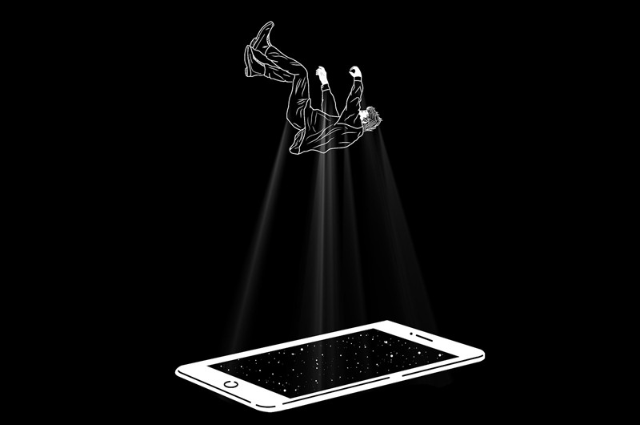
Today, we are submerged in an ocean of continuous digital contact. We are effortlessly pinged, messaged, and followed across continents by acquaintances and strangers alike. Yet, despite this unprecedented hyper-connectivity, modern society is parched, suffering from a profound and growing emotional isolation.
This is no longer merely a philosophical observation or a generational complaint; it is an empirically documented global crisis. Across the globe, millions experience the silent suffering of loneliness, an affliction that operates quietly but with devastating consequences for public health and social cohesion. This curious paradox—being simultaneously hyper-visible and entirely unseen—arises because technology increasingly substitutes deeply rooted human relationships with frictionless, superficial interactions. We have built an infrastructure of communication that routinely fails to deliver communion. The antidote to this crisis does not lie in a rejection of the digital world, but in a conscious, interdisciplinary redesign of our relationship with technology, prioritising authentic vulnerability over curated visibility.
The Evolutionary Imperative: Solitude Versus the Biological Alarm of Loneliness
To understand the architecture of this modern affliction, one must first draw a sharp philosophical and psychological distinction between solitude and loneliness.
Solitude is a chosen, enriching state of being alone with one’s thoughts; it is the fertile ground of creativity, introspection, and self-discovery. Loneliness, conversely, is a painful, involuntary psychological alarm system signalling a lack of belonging. It is not a character flaw or a failure of personality; rather, it is a primal, evolutionary reflex.
For our prehistoric ancestors, separation from the tribe meant almost certain death by starvation or predation. Consequently, human beings evolved so that the lack of social connection triggers an aversive biological signal—much like physical pain, hunger, or thirst—designed to propel the individual back to the safety of the group.
Just as physical pain protects us from tissue damage, the emotional pain of loneliness evolved to protect us from the fatal consequences of isolation.
However, when we are chronically lonely, the brain enters a self-preservation mode, making us hypervigilant to social threats. A lonely brain perceives the world as a hostile environment. In the digital age, this biological alarm is ringing incessantly. The tragedy of modern isolation is that the "food" we are consuming to satiate this evolutionary hunger—digital interactions, likes, and algorithmic validation—is emotionally devoid of nutrition. We are consuming empty social calories, leaving us perpetually starving for genuine connection while simultaneously overwhelmed by the noise of the crowd.
The Digital Illusion and the Attention Economy
Countering the traditional stereotype of the isolated, elderly individual, recent global data indicates a staggering demographic shift in who suffers most from isolation. Adolescents and young adults now frequently report the highest rates of loneliness globally. How can the most digitally connected generation in human history be the most emotionally isolated?
The answer lies in the fundamental architecture of modern technology and the attention economy. Driven by surveillance capitalism, digital platforms are engineered using persuasive algorithms and intermittent variable rewards that prioritise compulsive engagement over meaningful exchange.
These platforms conflate a "network" with a "community." A network connects nodes for the efficient transfer of information; a community demands mutual obligation, shared history, and emotional investment.
Social media sells a simulacrum of friendship where quantifiable metrics—likes, retweets, and follower counts—replace the messy, unquantifiable beauty of deep conversation. This environment breeds a relentless culture of comparison and the Fear of Missing Out (FOMO). Bombarded by carefully curated, hyper-edited identities, individuals are left feeling deeply inadequate and fundamentally disconnected from the unpolished reality of human existence. When a person scrolling through a feed feels the pang of exclusion, their brain’s evolutionary hypervigilance is triggered, paradoxically making them more likely to withdraw from real-world, face-to-face interactions out of a fear of rejection. They are trapped in a digital panopticon, constantly observing and being observed, yet profoundly alone.
A Silent Global Public Health Emergency
We can no longer afford to view emotional isolation merely as a fleeting psychological discomfort or a melancholic phase; it is a systemic public health emergency with catastrophic physiological consequences. Because humans are biologically hardwired for connection, chronic loneliness triggers severe, prolonged biological stress responses. The body treats social isolation as a mortal threat, elevating cortisol levels, increasing systemic inflammation, and deteriorating immune function.
Major public health organisations and global medical professionals have laid bare the physical cost of our isolation, noting that lacking social connection raises the risk of premature death by a margin comparable to smoking up to 15 cigarettes a day. The medical data is staggering: chronic loneliness is associated with a significantly higher risk of heart disease, stroke, and the development of dementia in older adults.
Furthermore, loneliness fundamentally alters our restorative processes. While it does not necessarily shorten sleep duration, it makes sleep significantly less restful due to tiny, subconscious micro-awakenings throughout the night. The lonely brain, sensing it is unprotected by a tribe, refuses to fully shut down, remaining perpetually on guard against ancient, invisible predators. The economic ramifications are immense, costing billions in lost productivity, excess hospitalisations, and specialised healthcare needs for those whose physical health has been eroded by a broken heart and an isolated mind.
The Collapse of Physical Community
The glowing screen of the smartphone is only half the story; our physical and social architectures have also been fundamentally rewired over the past few decades. We have traded the historical, communal safety of neighbourhoods and civic organisations for the frictionless convenience of extreme individualism.
The decline of "third spaces"—the physical environments outside of home (the first space) and work (the second space) such as civic centres, public parks, local diners, libraries, and community organisations—has eroded the natural physical arenas where casual, low-stakes human interactions flourish. We have outsourced our communal reliance to market services and digital applications. We no longer ask a neighbour for a cup of sugar; we order groceries via an app. We no longer debate local politics at the town hall; we shout into the void of a localised social media group. By optimising our physical lives for ultimate convenience and efficiency, we have systematically eliminated the daily social friction that used to weave the fabric of community. We have built cities and suburbs of strangers.
Intimacy in the Modern Era: Fractured Workplaces and Homes
This structural atomization permeates every demographic and environment, profoundly altering the two places we spend the majority of our time: the workplace and the home.
In the professional sphere, the rise of remote work has introduced unprecedented flexibility, but it has also brought a hidden epidemic of digital fatigue and the erosion of spontaneous workplace camaraderie. While remote work eliminates the commute, it also eradicates the organic social interactions—the coffee machine conversations, the walk-and-talks, the shared meals—that build essential workplace relationships. Daily loneliness compounds into chronic isolation, affecting cognitive performance, motivation, and mental health. We are communicating via endless video calls and instant messaging software, but we are rarely connecting.
Within the home, the fundamental unit of society is similarly fracturing. It is now a ubiquitous, tragic tableau to find a family or a group of friends seated in the same room, bathed in the disparate glow of individual screens, emotionally miles apart. The phenomenon of ignoring one’s physical companions in favour of a device has severely degraded the quality of domestic relationships. One of the most acute and painful forms of modern loneliness is feeling completely invisible within a marriage or partnership, where the visceral intimacy of shared presence has been usurped by the routine, hypnotic scrolling of a device.
Simultaneously, older generations suffer from a brutal digital divide. As essential services, banking, healthcare, and family communication increasingly migrate online, those who lack digital literacy are left stranded, exacerbating traditional social isolation and rendering basic civic participation alienating.
The Mirage of Synthetic Companionship
As this crisis deepens, the technology industry’s proposed solution is, predictably, to apply more technology. We are witnessing the rapid rise of artificial intelligence and virtual companions—chatbots explicitly designed to simulate friendship, emotional support, and even romance.
The appeal is obvious. For socially anxious individuals or marginalised groups lacking immediate physical support, an AI that is available 24/7 and possesses infinite patience can provide a temporary emotional crutch. However, relying on artificial intelligence for human companionship presents a perilous ethical and psychological frontier.
A synthetic companion may flawlessly simulate empathy, but it requires no mutual vulnerability, no compromise, and assumes no emotional risk. Synthetic companions are always validating and rarely argumentative, creating wildly unrealistic expectations that actual human relationships can never match. True connection is intrinsically tied to human frailty. It requires the courageous act of being known—flaws, contradictions, and all—by another conscious being who possesses the free will to reject you, but chooses to stay. Outsourcing our emotional needs to an algorithm threatens to atrophy our capacity for real, resilient human relationships. We risk creating a society that prefers the flawless compliance of a machine to the beautiful, necessary friction of a human being.
A Philosophical Reckoning of Modern Loneliness
Long before the advent of modern mobile technology, foundational philosophical thought established a critical distinction in how human beings relate to one another. Broadly speaking, we operate in one of two modes: a transactional approach, where others are treated as objects to be used, observed, or managed; and a holistic approach, where another individual is encountered as a complete, complex human being. The digital age has not eliminated human contact; rather, it has multiplied our transactional encounters—reducing people to profiles, data points, and audiences—while starving the rarer, more demanding experience of genuine human connection.
This reframing is essential because it resists the temptation to treat loneliness merely as a technical malfunction, something correctable by healthier algorithms or better interface design. It suggests the crisis is deeply relational: society has not simply become distracted; we have altered the fundamental posture with which we approach one another. A conversation held while half-watching a screen is not just a lesser version of a meaningful encounter—it is an entirely different act, one that treats the other person as background noise rather than an active presence.
Seen this way, the modern epidemic of loneliness is not a story that begins with social media. It is simply the latest chapter in a much longer historical drift toward mediated relationships. The erosion of community life—the decline of neighbourhood associations, local clubs, and civic gatherings—can be traced to modernisations that long predate the internet, such as suburban sprawl, the rise of television, and commuter culture. Each of these innovations promised unprecedented convenience but exacted a quiet tax on communal reliance. What distinguishes the current digital age is not that it invented isolation, but that it perfected its packaging. It wraps transactional, superficial interactions in a language of connection so persuasive that society frequently mistakes the packaging for the substance itself.
This perspective radically shifts how we must approach solutions. If loneliness were purely a technological problem, the fix would be straightforward: stricter screen-time limits, enhanced privacy controls, and redesigned platforms. While these measures hold value, they merely treat the symptom rather than the underlying behavioural posture. An individual can disconnect from every application and remain entirely transactional in their marriages, friendships, and daily encounters—treating even face-to-face acquaintances as obstacles, audiences, or utilities. Conversely, someone heavily reliant on digital tools can still engage others with full, undivided attention if they cultivate the discipline to do so.
The deeper work, therefore, is not primarily regulatory but formational. It requires teaching people, from childhood onward, the increasingly forgotten skill of encountering another person as a whole being rather than a function. This is precisely where core institutions—schools, families, workplaces, and community organisations—carry a responsibility that no software update can discharge. For instance, a classroom or a meeting room that restricts device usage is not merely protecting attention spans; it is actively preserving the critical conditions under which individuals can practice authentic, undivided engagement with their peers.
Reclaiming the Human Experience: A Blueprint for Reconnection
Addressing the loneliness epidemic requires a massive, multifaceted societal recalibration. We cannot code our way out of a crisis of the human soul. Reversing this trend demands global action, integrating social connection into all public policies—from digital access to health, education, and urban planning.
At the institutional level, we must enact bold boundaries. Regulatory bodies must heavily scrutinise the addictive, dopamine-driven designs of technology companies, holding them accountable for user well-being and the psychological toll of their platforms. Educational institutions must take immediate, pragmatic steps to protect developing minds. Implementing strict, phone-free policies during the school day is not a punishment; it is a vital intervention that forces a return to face-to-face peer interaction, allowing students to navigate the necessary social friction that builds emotional resilience. Furthermore, urban planners, architects, and civic leaders must heavily invest in rebuilding and subsidising physical community spaces that encourage people to gather outside the mandates of consumerism.
At the individual level, a cultural revolution is required. We must relearn the lost art of intentional presence. This begins with embracing "digital minimalism"—the philosophy of evaluating which technological tools add genuine value to our lives and ruthlessly discarding those that merely harvest our time and attention. We must view our devices as tools to facilitate real-world meetups, rather than as destinations in themselves.
There is a burgeoning, hopeful rise in empathy among people who are acutely aware of the emotional wasteland modern habits have created. By tapping into this innate human desire for genuine connection, we can foster a culture that actively values the small, real-world risks of human interaction. The solutions are often analogue and dauntingly simple: striking up a conversation with a stranger in a coffee shop, joining a local club, calling a friend without texting for permission first, or simply making the conscious choice to leave the smartphone in another room during a meal.
In a digital economy built entirely on the relentless harvesting and monetisation of our attention, giving someone your undivided, uninterrupted presence is no longer just an act of politeness; it is the ultimate act of rebellion. The digital age has miraculously given us the tools to broadcast our voices to the entire globe. It is now up to us to remember how to sit in silence and truly listen to the person right beside us.
Hope, Hope again: The light that loneliness cannot extinguish
Loneliness can make the world seem silent, but hope has a voice that no silence can silence. Even when no hand reaches out, no message arrives, and no one seems to understand, that small bird within the soul continues to sing. Its song is not loud, yet it is persistent. It reminds us that isolation is a season, not a destiny.
Stand firm. Let loneliness become your teacher rather than your prison. Let every setback sharpen your resolve, every tear deepen your compassion, and every solitary step strengthen your character. The greatest journeys are often walked alone before they inspire the world.
“Hope is the thing with feathers
That perches in the soul,
And sings the tune without the words,
And never stops at all.” — Emily Dickinson
Like Dickinson's bird, let hope perch within you—unseen, unwavering, and unbroken. For as long as that quiet song endures, you have not been defeated. Keep walking. Keep believing. Keep rising. The dawn always begins in darkness....