
Image by Amore Seymour from Pixabay
Not long ago, waiting used to be lonely.
You waited for the bus by watching people pass. You stood in grocery store queues staring at magazine covers. You sat outside classrooms before lectures began, making awkward conversation or simply existing in silence.
Now, waiting has almost disappeared.
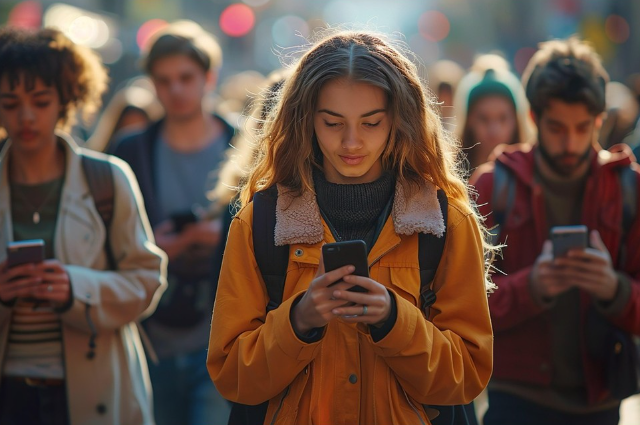
The moment the lift takes too long, or the train is delayed, a familiar reflex takes over. Almost without thinking, we reach for our phones. Within seconds, we're replying to messages, watching videos, reading the news, or catching glimpses of lives unfolding hundreds of kilometres away.
I started noticing this one afternoon while waiting for a train. Nearly everyone on the platform was looking down, including me.
There was something oddly comforting about having something to do. But it also made me wonder when I had last stood in a queue long enough to notice the people around me.
We live in the most connected era in human history. A video call can bridge continents. A voice note can cross oceans in seconds. We have more ways to communicate than any generation before us.
Yet loneliness has become one of the defining experiences of modern life.
At first, that feels like a contradiction. It isn't.
The problem has never been communication.
It belongs.
Psychologists define loneliness not as being alone, but as the gap between the relationships we have and the relationships we long for. That definition explains why someone can feel lonely in a crowded lecture hall, at a family dinner, or while replying to messages all day. Loneliness has very little to do with how many people surround us and everything to do with whether we feel understood by them.
Research suggests this gap is becoming increasingly common. The World Health Organisation estimates that around one in six people worldwide experiences loneliness. At the same time, the Harvard Study of Adult Development, which has followed participants for more than eighty years, continues to reach the same conclusion: few things shape our health and happiness more than the quality of our relationships.
We often describe loneliness as a modern epidemic. In reality, the need beneath it is ancient.
Long before cities, careers, or smartphones, survival depended on other people. Belonging was never optional. It meant protection, cooperation, and survival. Although the world has changed dramatically, our brains still respond to connection as something essential.
The question, then, is not why loneliness exists.
The more interesting question is why it persists in a world that has made communication so effortless.
Communication has never been the difficult part.
Belonging is.
The difference between the two is easy to overlook because it is built into ordinary moments we rarely stop to think about.
A friendship rarely begins with a life-changing conversation.
More often, it begins with "See you tomorrow."
It grows because two classmates keep leaving the lecture hall together. Because neighbours cross paths often enough that a smile becomes a greeting, and a greeting slowly becomes a conversation. Because the person behind the café counter notices when you order something different for the first time in months.
None of these interactions feels particularly important while they are happening.
Together, they become the quiet evidence that we are known.
Sociologist Ray Oldenburg called the places that encourage these encounters *third places*: the cafés, libraries, parks, neighbourhood bakeries, barber shops, and community centres that sit somewhere between home and work. They are places people return to without needing a special occasion. Familiarity grows almost by accident, through repeated encounters that slowly turn strangers into familiar faces.
The value of these places is easy to underestimate because they rarely appear in photographs or headlines. Yet they provide something increasingly difficult to find: unstructured time shared with other people.
Not every meaningful conversation is planned.
Some begin while waiting for a coffee.
Others happen because two people reach for the same book in a library or find themselves sitting on the same park bench every Saturday morning.
These exchanges may last only a few minutes, but they remind us of something surprisingly powerful. We are part of a community, even if only for a moment.
Research supports this idea. Sociologist Mark Granovetter argued that our lives are shaped not only by close friendships but also by "weak ties"—the acquaintances, neighbours, colleagues, and familiar faces we encounter regularly. These relationships may not know our deepest fears or biggest dreams, but they create a sense of continuity. They remind us that we belong to a place larger than ourselves.
Modern life has not erased these moments. It has simply become very good at competing with them.
Many of us move quickly from one commitment to the next. We order coffee before we arrive. Groceries appear at our doorstep. Conversations that once happened while waiting now happen through notifications. Convenience has made daily life faster, but speed has quietly changed the rhythm of how relationships form.
Trust cannot be rushed.
Neither can familiarity.
Nobody becomes part of our lives after a single conversation. We begin to trust people because we have seen them enough times that they become part of our ordinary routines. The classmate who always sits two rows ahead. The florist who remembers which flowers you buy every spring. The elderly man who walks the same dog past your house each evening.
These people may never become our closest friends.
Yet if they suddenly disappeared, our world would feel strangely different.
That is the quiet work of belonging.
It is built so gradually that we often only notice it once it is gone.
There is another quiet change that has shaped modern life.
It isn't the smartphone itself.
It is what happened to the small pockets of time that once existed between everything else.
Waiting for the train. Standing in line for coffee. Sitting outside a classroom before the lecture begins. Walking home without headphones. These moments were never remarkable, but they were rarely empty. They invited people to notice the world around them, strike up conversations, or simply let their minds wander.
Today, those moments are increasingly filled before they have a chance to unfold.
Almost instinctively, we reach for our phones. Within seconds, we are reading the news, replying to messages, watching videos, or scrolling through carefully curated snapshots of other people's lives. There is nothing inherently wrong with any of these habits. Smartphones have transformed how we learn, work, travel, and stay connected with the people we love.
But every convenience comes with a trade-off.
The attention economy thrives by ensuring that our next moment is never empty. Every swipe leads to another recommendation. Every notification invites another glance. Success is measured not only by how many people use a platform, but by how long they stay.
Attention has become one of the most valuable resources in the digital age.
The irony is that attention has always been one of the most valuable resources in human relationships, too.
Long before algorithms competed for it, attention was how we built trust. It was how we learned someone's habits, remembered their stories, noticed when they looked tired, or realised they hadn't been around for a few days. Giving someone our attention has always been another way of saying, "You matter."
When every spare moment is occupied, those opportunities become easier to overlook.
A delayed train no longer feels like shared waiting. It takes ten more minutes to scroll. A quiet café becomes another place to answer emails. Even boredom, once something to escape, served a purpose. It gave our minds room to wander, observe, and occasionally begin conversations we had never planned to have.
None of this suggests that we should abandon technology or romanticise a past that was far from perfect. The same devices that distract us also allow grandparents to watch their grandchildren grow up from another country, help students build friendships across continents, and connect people who might otherwise feel completely alone.
The challenge is not choosing between life online and life offline.
It is remembering that meaningful relationships still ask for the same things they always have: time, attention, and the willingness to remain present long enough for familiarity to grow.
Technology can introduce us.
It cannot linger on our behalf.
And perhaps that is what has quietly changed.
We have become remarkably good at staying in touch. We are still learning how to stay present.
The search for belonging often feels like something extraordinary.
We imagine it arriving through a life-changing friendship, a perfect relationship, or the moment we finally find "our people." But most lives are not transformed in dramatic ways. They are shaped quietly, through ordinary routines that repeat until they become part of us.
The Harvard Study of Adult Development, one of the longest-running studies of human well-being, has spent more than eighty years asking a deceptively simple question: what makes for a good life? The answer has remained remarkably consistent. More than wealth, achievement, or status, it is the quality of our relationships that predicts how healthy and happy we become.
Those relationships rarely begin with grand gestures.
They begin with small acts of attention.
The classmate who saves you a seat.
The barista starts preparing your usual order before you reach the counter.
The neighbour who asks where you've been after not seeing you for a week.
These moments seem almost insignificant while they are happening.
Only later do we realise they were quietly weaving us into the fabric of a place.
Perhaps that is why loneliness feels so unsettling. It is not simply the absence of the company. It is the feeling that we have become untethered from the ordinary rhythms that remind us we matter to one another.
The solution, then, may not lie in finding more people.
It may lie in noticing the people already around us.
Not because every stranger is waiting to become a friend, but because communities are built through recognition long before they are built through intimacy.
Waiting for the train.
Standing in line for coffee.
Walking the same route home.
Returning to the same library every Saturday afternoon.
These moments are easy to dismiss because they seem too ordinary to matter. Yet they are the moments in which belonging quietly takes root.
We have become remarkably good at making sure no moment is left empty.
Perhaps the moments we have been trying to escape were never empty at all.
They were simply waiting for us to notice each other.
Maybe belonging has never been something we find.
Maybe it is something we create, one ordinary moment of attention at a time.