
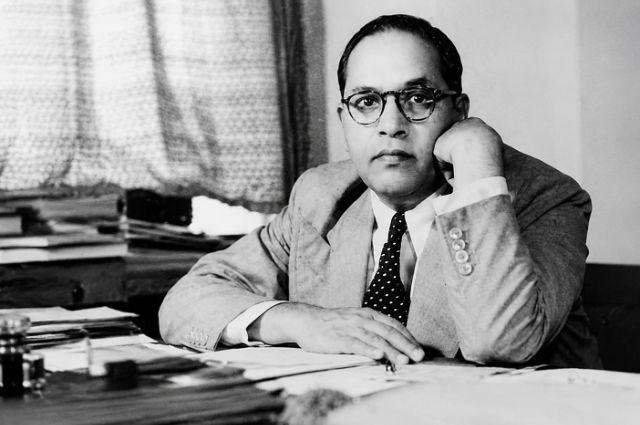
History often celebrates extraordinary leaders for the monuments they built, the wars they won, or the political power they commanded. Yet some individuals earn their place in history not through inherited privilege but through an unwavering determination to challenge injustice itself. Their greatest victories are not over rival kingdoms or political opponents but over centuries of discrimination, prejudice, and exclusion. Among such remarkable figures stands Dr Bhimrao Ramji Ambedkar—a man whose life transformed the moral and constitutional foundations of modern India.
Long before he became the chief architect of the Indian Constitution, Ambedkar was simply a little boy who experienced rejection in its harshest forms. He belonged to a community that society considered "untouchable," a label that denied millions of people even the most basic human dignity. His intelligence was undeniable, but in a deeply hierarchical society, brilliance alone was not enough to overcome the barriers of caste. He was often refused water because of his birth. Teachers hesitated to touch his notebooks. Classmates avoided sitting beside him. Public spaces that others entered freely became places of humiliation for him.
For many children, such repeated rejection would have crushed confidence and extinguished hope. But Ambedkar responded differently. Every insult strengthened his resolve. Every closed door inspired him to seek another path. Instead of allowing discrimination to define his future, he transformed education into his greatest weapon. Books became his companions, knowledge became his shield, and learning became the bridge that carried him beyond the limitations imposed by society.
His journey from a marginalised child in colonial India to one of the world's most respected constitutional thinkers was neither quick nor easy. It demanded extraordinary perseverance, intellectual discipline, and moral courage. Despite facing prejudice at every stage of his life, Ambedkar pursued higher education with exceptional dedication, earning degrees from some of the world's most prestigious institutions, including Columbia University in the United States and the London School of Economics. These academic achievements were remarkable not merely because of their prestige but because they were accomplished by a man whom society had once considered unworthy of sitting inside a classroom with other children.
Education, however, was never Ambedkar's final destination. He believed that knowledge carried responsibility. Rather than seeking personal comfort or wealth, he returned to India determined to challenge the deeply rooted inequalities that had oppressed millions for centuries. Through his scholarship, legal expertise, political leadership, and relentless advocacy, he became one of the most influential voices for social justice in Indian history. His vision extended beyond the upliftment of one community; he dreamed of building a nation where every individual, regardless of caste, religion, gender, or social background, could live with dignity and equal opportunity.
This vision reached its highest expression when India achieved independence in 1947. As the Chairman of the Drafting Committee of the Constituent Assembly, Dr B. R. Ambedkar played a central role in shaping the Constitution of India. The Constitution became more than a legal document; it was a moral commitment to liberty, equality, justice, and fraternity. It outlawed untouchability, guaranteed fundamental rights, established democratic institutions, and laid the foundation for one of the world's largest constitutional democracies. Through these principles, Ambedkar sought to ensure that future generations would not endure the humiliation that had marked his own childhood.
Even decades after his death, Ambedkar's influence continues to shape India's democratic institutions, legal system, educational policies, and human rights discourse. His ideas inspire movements for equality across the world, reminding societies that genuine progress cannot be measured solely by economic growth or political power but by the dignity afforded to every human being. His life demonstrates that education can challenge entrenched prejudice, that law can become an instrument of justice, and that determined individuals can transform the destiny of entire nations.
The story of Dr B. R. Ambedkar is therefore not merely the biography of a great leader. It is the story of resilience overcoming humiliation, knowledge confronting ignorance, and hope triumphing over centuries of discrimination. It is the journey of a child rejected by society who would ultimately be remembered by history as one of the principal architects of modern India's constitutional democracy.
A Child Born into a Divided Society
On 14 April 1891, in the military cantonment town of Mhow in present-day Madhya Pradesh, a child was born into a family that could scarcely have imagined the profound impact he would one day have on the destiny of a nation. He was named Bhimrao Ramji Ambedkar, the youngest surviving son of Ramji Maloji Sakpal and Bhimabai Sakpal. His father served in the British Indian Army and strongly believed that education was the most powerful means through which his children could rise above the social barriers imposed upon them. Yet even with discipline, honesty, and a government job, the family could not escape the cruel realities of India's rigid caste system.
The Ambedkars belonged to the Mahar community, a community that, under the prevailing caste hierarchy of the time, was treated as "untouchable." This social label was not merely an insult; it was a system of exclusion that affected nearly every aspect of daily life. It determined where a person could live, where they could draw water, which temples they could enter, what occupations they could pursue, and even whom they could interact with. A person's birth, rather than ability or character, dictated the opportunities available to them. For countless families like Ambedkar's, discrimination was not an occasional experience—it was an everyday reality.
Although the British administration had opened limited opportunities for education and employment, social prejudice remained deeply rooted. Schools admitted children from marginalised communities only reluctantly. Public wells were often inaccessible. Social interaction across caste boundaries was discouraged, and acts of discrimination were accepted as normal by large sections of society. In such an environment, a child's dreams were often crushed before they had the chance to take shape.
Bhimrao's early years were marked by frequent movement because of his father's military service. Despite these relocations, Ramji Sakpal ensured that his children learned to read and write. He understood that while wealth could be lost and social status denied, education had the power to reshape a person's future. Every evening, he encouraged his children to study with discipline, often reminding them that knowledge was the only inheritance no one could take away.
Tragedy struck the family at an early stage. Bhimrao's mother, Bhimabai, passed away when he was still a young boy. Her death left an emotional void that deeply affected the family. The responsibility of raising the children fell largely upon relatives, while Ramji continued striving to secure their education despite limited financial resources. Life became increasingly difficult, yet the hardships only strengthened the family's determination to value learning above all else.
When the family later settled in Satara, young Bhimrao entered school with hopes similar to those of any other child. He was eager to learn, curious about the world, and possessed an exceptional memory. However, the classroom quickly became the place where he first encountered the brutal realities of caste discrimination.
Unlike many of his classmates, Bhimrao was not treated as an equal student. He was often required to sit separately from other children, usually on a piece of gunny sack that he had to carry himself because the school would not provide one. Teachers frequently avoided touching his notebooks or belongings, fearing that physical contact would violate prevailing social customs. If he forgot to bring his mat, he was expected to remain standing or sit on the bare floor, isolated from the rest of the class.
The discrimination extended far beyond seating arrangements. Access to drinking water, something every child naturally needed during a long school day, became another source of humiliation. Bhimrao and other children from so-called "untouchable" communities were not permitted to touch the water vessel. If the school peon was present, he would pour water from a height while they cupped their hands beneath the stream. If the peon was absent, they often remained thirsty throughout the day because touching the vessel themselves was forbidden. Such experiences revealed how deeply prejudice had become embedded in everyday life.
For a young child, these repeated acts of exclusion were painful and confusing. He had committed no wrongdoing, yet he was constantly reminded that society considered him inferior simply because of the family into which he had been born. Many children in similar circumstances abandoned school altogether, convinced that education was not meant for them. The system itself seemed designed to discourage their aspirations.
But Bhimrao responded differently.
Instead of allowing humiliation to extinguish his desire to learn, he immersed himself even more deeply in his studies. Every insult strengthened his determination to prove that intelligence, integrity, and hard work were not determined by caste. He realised that while society could deny him respect, it could not prevent him from acquiring knowledge. Books became a refuge from prejudice, and education gradually transformed from a personal ambition into a mission that would define his entire life.
Those who saw only a quiet boy sitting alone in the corner of a classroom could never have imagined that he would one day draft the Constitution of an independent India. Yet within that isolated child was already growing an extraordinary conviction: that no society could truly call itself civilised while denying equality to its own people. The lessons he learned in those classrooms were not only lessons in reading and writing—they were lessons in injustice, dignity, and the urgent need for social transformation.
The child whom society forced to sit apart would one day stand at the very centre of India's constitutional history, shaping laws that promised equality to every citizen, regardless of caste, creed, gender, or background. The pain of his childhood would not become a source of bitterness; instead, it would become the foundation of his lifelong struggle for justice.
The Humiliation That Forged an Unbreakable Resolve
For many people, childhood memories are filled with friendships, laughter, and the excitement of discovering the world. For young Bhimrao Ambedkar, however, many of those memories were overshadowed by experiences of exclusion and humiliation. The discrimination he faced was not limited to the classroom; it followed him into public spaces, on journeys, and in everyday interactions. Society constantly reminded him that, regardless of his intelligence or character, his birth determined how he would be treated.
One of the most well-known incidents from Ambedkar's childhood illustrates the harsh reality of caste discrimination in colonial India. On one occasion, Bhimrao, along with his brothers and relatives, travelled by train to meet their father, who had been transferred to another town. Having informed their father in advance, they expected him to receive them at the railway station. Unfortunately, due to a communication problem, he never arrived.
The children found themselves stranded at the station, uncertain about what to do next. After waiting for hours, they requested a bullock-cart driver to take them to their destination. At first, the driver agreed, believing them to be ordinary passengers. However, during the journey, he learned that the children belonged to the Mahar community.
His attitude changed instantly.
Fearful of violating the rigid social customs of the time, the driver refused to continue transporting them. According to several accounts, he either abandoned them on the roadside or demanded that the children themselves handle the cart while he walked behind it to avoid direct contact. The journey became an ordeal marked by fear, exhaustion, and humiliation. The children, who had done nothing wrong, were punished solely because of the caste into which they had been born.
For Bhimrao, the incident left a lasting impression. It was not simply the inconvenience of being stranded; it was the reality that prejudice could override ordinary human compassion. In a society governed by caste, kindness often gave way to discrimination, and humanity was sacrificed in the name of social hierarchy.
Another painful experience involved something as basic as drinking water. During school hours, Bhimrao and other students from so-called "untouchable" communities were forbidden from touching the common water pot. If the school peon happened to be present, he would pour water into their hands from a distance. If the peon was absent, they remained thirsty throughout the day. A simple act that most children took for granted became a daily reminder of their exclusion.
These experiences gradually taught Bhimrao that discrimination was not accidental—it was systematic. It was woven into institutions, customs, and social attitudes. The injustice he witnessed was not directed at him alone but affected millions of people across the country. Entire communities were denied education, dignity, employment, religious freedom, and equal participation in public life.
Many individuals confronted with such relentless prejudice might have surrendered to despair. Some accepted discrimination as an unavoidable reality, while others abandoned their hopes altogether. But Bhimrao refused to accept that injustice was destiny. Instead of allowing humiliation to break his spirit, he began to ask difficult questions.
Why should birth determine a person's worth?
How could a society claim to value morality while denying equality?
Could education and law become instruments to transform such a deeply unequal system?
These questions did not leave him. They became the intellectual foundation of his life's mission. Rather than responding with hatred or revenge, Ambedkar chose a more demanding path—the pursuit of knowledge. He believed that lasting social change required reason, education, and constitutional reform rather than anger alone.
Books became his closest companions during these formative years. Whenever he found an opportunity to study, he devoted himself completely to learning. His remarkable memory, analytical mind, and relentless curiosity soon distinguished him from many of his classmates. Teachers who looked beyond caste recognised his exceptional academic ability, while a few mentors encouraged him to continue his education despite overwhelming obstacles.
Among those who positively influenced his early life was a compassionate teacher named Mahadev Ambedkar. Impressed by the young student's intelligence and dedication, the teacher developed a genuine affection for him. According to widely accepted accounts, it was from this teacher that Bhimrao adopted the surname "Ambedkar," replacing his family's original surname, Sakpal, with the name by which the world would later know him. Though seemingly small, this moment symbolised the importance of individuals who chose humanity over prejudice.
As Bhimrao grew older, he became increasingly convinced that education alone could not solve India's social problems unless society itself changed. He understood that millions of talented children were being denied opportunities simply because of their birth. The injustice he experienced was not personal misfortune; it was evidence of a system that needed fundamental transformation.
The humiliations of his childhood did not make him weaker. They gave him clarity. Every insult strengthened his determination to build a future in which no child would be denied water, education, respect, or opportunity because of caste. The wounds of discrimination became the source of an extraordinary moral vision—one that would eventually influence the laws, institutions, and democratic values of independent India.
Years later, when Dr B. R. Ambedkar stood before the Constituent Assembly to help shape the Constitution of India, he carried with him not only the knowledge of a distinguished scholar but also the memories of a little boy who had once been denied the basic dignity that every human being deserves. Those painful memories would ensure that the Constitution he helped create placed justice, liberty, equality, and fraternity at the very heart of the Indian Republic.
The child whom society had tried to silence was steadily preparing to become one of the most powerful voices for equality in modern history. His next battlefield would not be against poverty alone, but against ignorance, prejudice, and institutional discrimination—and his greatest weapon would be education.
Education: The Weapon That Changed His Destiny
If discrimination defined Bhimrao Ambedkar's childhood, education became the force that transformed his future. While society sought to convince him that his birth determined his limits, he chose to believe that knowledge could break every barrier. At a time when very few children from marginalised communities completed even primary education, Ambedkar dared to dream of becoming one of the most educated men in the country. It was an extraordinary ambition, not because he lacked intelligence, but because the social and economic obstacles before him seemed almost impossible to overcome.
Despite the humiliation he experienced in school, Bhimrao remained an exceptional student. He possessed an extraordinary memory, a disciplined mind, and an insatiable curiosity. He did not study merely to pass examinations; he studied to understand the world around him. History, economics, politics, philosophy, literature, and law fascinated him because he believed that knowledge offered answers to the problems society had accepted for centuries without question.
His father, Ramji Sakpal, continued to encourage his son's education despite severe financial hardships. Having served in the British Indian Army, Ramji valued discipline and believed that learning was the only inheritance capable of changing the destiny of future generations. Even when the family struggled to meet everyday expenses, he ensured that Bhimrao had access to books and encouraged him to devote himself to his studies. This unwavering support played a crucial role in shaping the young scholar's determination.
As Bhimrao progressed through school, he achieved milestones that were almost unheard of for someone from his social background. In 1907, he passed the matriculation examination from Elphinstone High School in Bombay (now Mumbai), becoming one of the first students from the Mahar community to achieve this distinction. The accomplishment was celebrated by members of his community, who saw in the young student a symbol of hope. His success demonstrated that talent existed everywhere, even if opportunity did not.
The following year, he enrolled at Elphinstone College, affiliated with the University of Bombay. Entering college was itself a remarkable achievement. Higher education in colonial India remained accessible to only a small section of society, and students from so-called "untouchable" communities were exceedingly rare. Financial difficulties, social prejudice, and the absence of institutional support forced many talented students to abandon their education long before reaching university. Bhimrao, however, refused to give up.
College life was far from easy. Scholarships were limited, family resources were scarce, and discrimination did not disappear simply because he entered higher education. Yet Ambedkar remained focused. He understood that every examination he passed represented more than personal success; it challenged the widespread belief that intellectual ability belonged only to privileged sections of society.
A turning point in his educational journey came when Sayajirao Gaekwad III, the enlightened ruler of the princely state of Baroda, recognised his exceptional talent. Believing in the importance of education, the Maharaja awarded Ambedkar a scholarship to pursue higher studies abroad. For a young man who had once struggled even to drink water in school, this opportunity seemed almost unimaginable. It opened the doors to some of the world's finest academic institutions and marked the beginning of a new chapter in his life.
In 1913, Ambedkar sailed to the United States to study at Columbia University in New York City. Leaving India was more than a geographical journey—it was an intellectual and emotional transformation. For the first time, he found himself in an environment where his caste did not define every social interaction. At Columbia, he was evaluated primarily for his academic ability rather than his birth. The freedom to study, debate, and interact with people from different countries broadened his understanding of democracy, economics, sociology, and political philosophy.
At Columbia University, Ambedkar studied under some of the leading scholars of his time, including the renowned philosopher John Dewey, whose ideas on democracy, education, and social justice deeply influenced him. Dewey's belief that democracy was not merely a form of government but a way of life resonated strongly with Ambedkar. These ideas would later shape his own vision of an India founded on equality, constitutional morality, and human dignity.
Ambedkar immersed himself in his studies with extraordinary dedication. He spent long hours in libraries, read extensively across multiple disciplines, and developed a reputation as a brilliant and hardworking student. His research explored economics, public finance, sociology, history, and political science, reflecting his belief that solving India's social problems required an interdisciplinary understanding of society. In 1915, he earned a Master of Arts (M.A.) degree, followed by advanced research that laid the foundation for his later academic achievements.
His intellectual journey did not end in America. After completing his studies at Columbia, Ambedkar moved to England, where he enrolled at the London School of Economics (LSE) and also joined Gray's Inn to study law. Balancing two demanding academic programs simultaneously required exceptional discipline. Financial constraints forced him to interrupt his studies and return to India temporarily, but he never abandoned his goals. Years later, after saving enough money and receiving additional support, he returned to London and completed both his legal and academic qualifications.
By the time Ambedkar concluded his education abroad, he had earned degrees and professional qualifications that placed him among the most accomplished scholars of his generation. More importantly, he had acquired a profound understanding of democracy, economics, constitutional law, and human rights. His education was no longer simply a personal achievement—it had become preparation for a much larger mission.
While many highly educated individuals pursued comfortable careers and personal success, Ambedkar viewed knowledge differently. He believed that education carried a moral responsibility. The privileges he had gained through learning were meaningful only if they could be used to improve the lives of those who had been denied similar opportunities.
Throughout his life, Ambedkar remained convinced that education was the most effective instrument of social transformation. He famously urged people to "Educate, Agitate, Organise," emphasising that education must come first because an informed society is better equipped to challenge injustice. Ignorance, he believed, allowed oppression to survive, while knowledge empowered individuals to demand equality and protect their rights.
The little boy who had once been forced to sit separately in a classroom had now become one of the most highly educated Indians of his time. Yet his greatest challenge still lay ahead. Returning to India with world-class education and remarkable intellectual achievements, he hoped that society would judge him by his abilities rather than his birth.
What awaited him, however, was a painful reminder that academic excellence alone could not erase centuries of deeply rooted prejudice. His next chapter would reveal that the struggle for equality had only just begun.
Returning Home: A Scholar Confronts the Same Old Prejudice
Armed with degrees from some of the world's most prestigious institutions, Dr Bhimrao Ramji Ambedkar returned to India with hope, confidence, and a vision for the future. He had mastered economics, law, political science, and public administration. He had studied under distinguished professors, interacted with scholars from across the globe, and developed a deep understanding of democracy and social justice. By every academic standard, he was among the finest educated Indians of his generation.
Yet the India to which he returned remained imprisoned by the same rigid social hierarchy he had left behind.
His remarkable qualifications could not erase the caste into which he had been born.
In accordance with the terms of the scholarship provided by the Maharaja of Baroda, Ambedkar joined the Baroda State Service in 1917 as Military Secretary to the ruler. It was a prestigious appointment and a significant achievement for any young scholar. On paper, he held a respected government position. In reality, however, his education and official rank mattered little to many of those around him.
The discrimination began almost immediately.
Finding accommodation became an exhausting struggle. Hotels, inns, and boarding houses refused to rent him a room after learning his caste. Desperate for a place to stay, Ambedkar concealed his identity and found temporary lodging in a Parsi inn. For a brief period, he believed he had finally escaped the prejudice that had haunted him since childhood.
But the relief was short-lived.
When the management discovered his identity, he was ordered to leave immediately. According to historical accounts, he was insulted and threatened until he packed his belongings and left. Once again, he found himself standing alone with nowhere to go—not because he lacked education, money, or respectable employment, but because society refused to look beyond his birth.
The humiliation did not end there.
Even inside government offices, where professionalism should have prevailed, Ambedkar encountered hostility. Some colleagues refused to sit near him. Office staff avoided handing documents directly to him, choosing instead to toss files onto his desk from a distance. Water was often denied to him, echoing the painful experiences of his school days. It was a devastating realisation: the brilliant student who had earned international recognition was still treated as "untouchable" in his own country.
These experiences left Ambedkar deeply disheartened.
He later reflected that despite all his achievements abroad, society continued to judge him solely by caste. His education had transformed his intellect, but it had not transformed the attitudes of those who believed social hierarchy was more important than human dignity.
Unable to continue working under such degrading conditions, Ambedkar resigned from his position and left Baroda. Some might interpret this as a failure, but in reality, it marked a turning point in his life. The experience convinced him that individual success alone could never solve the problem of caste discrimination. Even if one person managed to rise through education, millions of others remained trapped in the same oppressive system.
He reached a profound conclusion: the struggle was no longer personal—it had become national.
Ambedkar realised that lasting change required more than academic excellence. It demanded organised social movements, legal reforms, political representation, and constitutional safeguards. The injustice he had experienced since childhood was not the result of isolated acts of prejudice; it was sustained by deeply embedded social structures. Those structures could not be dismantled through personal achievement alone.
Determined to challenge this system, Ambedkar turned toward public life. He began writing extensively on issues of caste, equality, labour rights, economics, and democracy. His articles were fearless, logical, and supported by rigorous scholarship. He criticised social practices that denied millions of Indians their basic human rights and argued that no nation could call itself truly civilised while tolerating institutional discrimination.
To amplify the voices of marginalised communities, Ambedkar founded newspapers such as Mooknayak ("Leader of the Voiceless") in 1920 and later Bahishkrit Bharat ("Excluded India"). Through these publications, he encouraged oppressed communities to speak for themselves rather than waiting for others to represent their interests. He believed that social transformation required awareness, education, and collective action.
His speeches attracted growing audiences across the country. Unlike many leaders of his time, Ambedkar did not ask people to accept their suffering with patience. Instead, he urged them to question injustice, reject discrimination, and demand equal rights as citizens. His message was revolutionary because it challenged centuries of unquestioned social customs.
He repeatedly emphasised that political freedom would remain incomplete unless it was accompanied by social equality. An independent nation, he argued, could not truly be free if millions of its citizens continued to live under the burden of caste-based oppression. Democracy was meaningful only when every individual enjoyed equal dignity before the law and equal opportunities in society.
It was during these years that Ambedkar emerged not merely as a scholar but as a powerful social reformer and national leader. His extraordinary ability to combine intellectual reasoning with practical activism distinguished him from many of his contemporaries. He understood both the philosophical foundations of justice and the everyday realities faced by ordinary people.
The young boy who had once been denied water in school was now giving voice to millions who had been denied justice for generations. His struggle was no longer about proving his own worth; it was about ensuring that future generations would never have to endure the humiliation he had experienced.
This commitment would soon lead him into some of the most important political debates of colonial India. Through movements, negotiations, and constitutional advocacy, Dr B. R. Ambedkar would emerge as one of the foremost defenders of equality and human rights—setting the stage for the greatest chapter of his life: helping to shape the Constitution of an independent India.
The Voice of the Voiceless: Leading the Fight for Equality
By the early 1920s, Dr B. R. Ambedkar had come to a clear conclusion: the oppression of millions of people could not be ended by the success of a single individual. His own education had proved that talent existed beyond the boundaries of caste, yet his experiences after returning to India showed that personal achievement alone could not dismantle a system rooted in centuries of social discrimination. If meaningful change was to occur, it had to come through organised movements, public awareness, legal reform, and political representation.
With this conviction, Ambedkar dedicated his life to becoming the voice of those whom society had long refused to hear.
He began by creating platforms through which marginalised communities could express their concerns. In 1920, he launched the newspaper Mooknayak ("Leader of the Voiceless"), followed by Bahishkrit Bharat ("Excluded India"). These publications were more than newspapers; they became instruments of social awakening. Through editorials, essays, and speeches, Ambedkar challenged the deeply entrenched belief that inequality was a natural or divinely sanctioned part of society. He argued that no civilisation could claim to be just while denying millions of people the basic rights enjoyed by others.
Unlike many reformers who relied primarily on emotional appeals, Ambedkar built his arguments on history, economics, law, and reason. He believed that lasting reform required intellectual clarity as much as moral courage. Every article he wrote sought to expose the contradictions of a society that spoke of spirituality while tolerating discrimination, and every speech encouraged people to replace fear with self-respect.
His message resonated deeply with communities that had lived for generations under the burden of social exclusion. For many, Ambedkar represented something they had rarely experienced before—a leader who understood their suffering because he had lived it himself.
One of the defining moments of this period came in 1927 with the Mahad Satyagraha in Maharashtra. Although public water tanks were legally open to all citizens, people from so-called "untouchable" communities were often prevented from using them. The denial of drinking water symbolised a broader denial of human dignity.
Ambedkar decided that this injustice could no longer go unchallenged.
On 20 March 1927, he led thousands of followers to the Chavdar Tank in Mahad. There, he publicly drank water from the tank, asserting that access to public resources was a fundamental right of every citizen. The act itself was simple, yet its significance was revolutionary. It challenged centuries of discriminatory customs and declared that no human being should be considered impure because of birth.
The reaction was swift and hostile. Many members of the orthodox sections of society condemned the movement, and violence erupted against participants. Yet Ambedkar remained unwavering. He understood that every major struggle for justice encountered resistance from those who benefited from the existing order. Rather than retreating, he encouraged his followers to continue their peaceful pursuit of equality.
Later that year, during another gathering at Mahad, Ambedkar presided over the public burning of the Manusmriti, an ancient legal text that had historically been interpreted by many as supporting caste-based hierarchy. The symbolic act was not directed against faith itself but against social practices and interpretations that justified inequality. Through this protest, Ambedkar declared that no tradition, however ancient, should be accepted if it denied human dignity and equal rights.
His leadership extended beyond symbolic protests. Ambedkar believed that political representation was essential for achieving social justice. He argued that marginalised communities needed a meaningful voice in legislative bodies so that laws affecting their lives would not be decided solely by privileged groups. Without political participation, he believed, equality would remain an empty promise.
This conviction brought him into some of the most important constitutional discussions of colonial India. During the Round Table Conferences held in London between 1930 and 1932, Ambedkar represented the interests of the Depressed Classes before the British Government. His speeches demonstrated exceptional legal knowledge, political insight, and moral conviction. He insisted that democracy could not survive if large sections of society remained socially and politically excluded.
One of the most significant controversies of this period involved the proposal for separate electorates for the Depressed Classes. The British Government initially accepted the idea under the Communal Award of 1932. However, Mahatma Gandhi, who feared that separate electorates would permanently divide Hindu society, began a fast while imprisoned in Yerwada Jail.
The resulting negotiations between Gandhi and Ambedkar led to the historic Poona Pact of 1932. Under the agreement, separate electorates were replaced by reserved seats for the Depressed Classes within a joint electoral system. Although Ambedkar accepted the compromise under difficult circumstances, he later expressed disappointment that it did not fully achieve the political safeguards he had originally sought. Nevertheless, the Poona Pact became a landmark moment in India's constitutional and political history, highlighting Ambedkar's central role in shaping debates about representation and equality.
Throughout the 1930s and 1940s, Ambedkar continued to write extensively on caste, economics, labour rights, religion, and constitutional democracy. His works—including Annihilation of Caste, one of the most influential critiques of the caste system ever written—challenged readers to examine the moral foundations of Indian society. He argued that genuine democracy required not only political institutions but also social equality and mutual respect among citizens.
His influence gradually expanded beyond marginalised communities. Scholars admired his intellectual brilliance. Lawyers respected his legal expertise. Workers appreciated his advocacy for labour rights, including improved working conditions, fair wages, and social security measures. Political leaders increasingly recognised that Ambedkar's understanding of law, governance, and constitutional principles was unmatched.
By the mid-1940s, Dr B. R. Ambedkar had established himself as one of India's foremost thinkers, reformers, and constitutional experts. The child who had once been denied a place in the classroom was now participating in discussions that would determine the future of an independent nation.
History was preparing him for his greatest responsibility.
When India achieved independence in 1947, the newly formed nation faced an enormous challenge: creating a Constitution that would unite a country of extraordinary diversity while protecting the rights of every citizen. Few people possessed the scholarship, legal expertise, political experience, and moral vision required for such a task.
Among them, one name stood above the rest—Dr. Bhimrao Ramji Ambedkar. The boy once rejected by society was about to become one of the principal architects of modern India's constitutional democracy.
Architect of a New Nation: Drafting the Constitution of India
When India achieved independence on 15 August 1947, the country celebrated the end of nearly two centuries of British colonial rule. Yet freedom also brought enormous responsibilities. The nation was deeply divided by poverty, illiteracy, communal violence, caste discrimination, and the traumatic consequences of Partition. More than five hundred princely states had to be integrated, millions of refugees required rehabilitation, and democratic institutions had to be built almost from scratch. Above all, India needed a Constitution that could unite a nation of extraordinary diversity while protecting the rights and dignity of every citizen.
Creating such a Constitution was one of the most challenging political and intellectual tasks in modern history.
The leaders of independent India understood that this responsibility demanded not only legal expertise but also profound knowledge of political philosophy, economics, comparative constitutional law, and social justice. Among the members of the Constituent Assembly, few possessed qualifications comparable to those of Dr B. R. Ambedkar. His education at Columbia University and the London School of Economics, his legal training, his scholarship in economics and political science, and his years of advocacy for marginalised communities had established him as one of the country's foremost constitutional thinkers.
Recognising his exceptional abilities, the Constituent Assembly appointed Dr Ambedkar as the Chairman of the Drafting Committee on 29 August 1947. The decision was significant not only because of his intellectual brilliance but also because of what it represented. The boy who had once been denied water in school, forced to sit apart from his classmates, and humiliated because of his caste was now entrusted with writing the supreme law of a newly independent nation.
History had come full circle.
The responsibility before Ambedkar was immense. The Constitution would determine how India would be governed, how power would be distributed, how citizens' rights would be protected, and how justice would be delivered. It would influence the lives of millions for generations to come. Every provision had to balance liberty with order, diversity with unity, and individual rights with national interests.
Ambedkar approached the task with extraordinary dedication. He believed that a Constitution should not merely organise the machinery of government; it should embody the moral values of a nation. It had to protect the weak from the powerful, ensure equality before the law, and prevent the abuse of authority. A democratic state, in his view, could survive only if its Constitution safeguarded the dignity of every individual.
The Drafting Committee carefully studied constitutional systems from around the world. They examined the parliamentary traditions of the United Kingdom, the federal structure of the United States, the Directive Principles inspired by the Constitution of Ireland, emergency provisions influenced by Germany, and various legal principles from Canada, Australia, and other democracies. Yet the Indian Constitution was never intended to be a simple copy of foreign models. Ambedkar adapted these ideas to suit India's unique historical, social, and cultural realities.
One of his greatest concerns was ensuring that the mistakes of history would not be repeated. Having personally experienced discrimination throughout his life, he knew that political independence alone could not guarantee justice. A nation could be free from foreign rule and still deny freedom to its own people. Therefore, the Constitution had to establish legal protections strong enough to prevent discrimination based on caste, religion, gender, race, or place of birth.
This vision became the foundation of the Fundamental Rights, one of the Constitution's most important sections. These rights guaranteed equality before the law, freedom of speech and expression, freedom of religion, protection against discrimination, and the right to constitutional remedies. For the first time in Indian history, every citizen, regardless of social background, was recognised as equal before the law.
Perhaps no constitutional provision reflected Ambedkar's personal journey more powerfully than Article 17, which abolished untouchability and declared its practice in any form to be illegal. For centuries, millions of Indians had endured humiliation under this oppressive system. Through Article 17, independent India made a clear constitutional commitment that such discrimination had no place in a democratic republic.
For Ambedkar, this was not merely a legal reform.
It was a moral declaration that the dignity of every human being was inviolable.
The Constitution also established the principle of universal adult franchise, granting every adult citizen the right to vote regardless of wealth, education, caste, religion, or gender. At a time when many newly independent nations limited voting rights through property or literacy qualifications, India chose one of the world's most inclusive democratic systems. Ambedkar strongly supported this decision because he believed that democracy could not exist if political participation remained restricted to privileged groups.
Another cornerstone of his constitutional vision was the independence of the judiciary. Ambedkar argued that courts must remain free from political influence so they could protect citizens' rights without fear or favour. The Constitution therefore created an independent Supreme Court with the authority to interpret the Constitution and ensure that governments acted within constitutional limits.
Equally important was his emphasis on constitutional methods for achieving social change. Ambedkar consistently warned against replacing one form of injustice with another. While he had spent his life opposing discrimination, he believed that lasting reform must be achieved through democratic institutions, public debate, legislation, and constitutional processes rather than violence. In one of his most memorable addresses to the Constituent Assembly, he cautioned citizens against abandoning constitutional methods once independence had been achieved. Democracy, he argued, required patience, dialogue, and respect for the rule of law.
He also introduced the concept of constitutional morality—the belief that the success of a Constitution ultimately depends not only on its written provisions but also on the conduct of those entrusted with implementing it. Even the finest Constitution, he warned, could fail if administered by irresponsible leaders, while an imperfect Constitution could succeed under honest and principled governance. Laws alone could not preserve democracy; citizens and leaders alike needed to respect constitutional values.
Throughout the drafting process, Ambedkar worked tirelessly. The Constituent Assembly debated thousands of amendments over nearly three years. Every clause was examined, questioned, and revised. Ambedkar patiently defended the Drafting Committee's decisions, responded to criticism with logical arguments, and remained committed to producing a Constitution that balanced competing interests without compromising democratic ideals.
On 26 November 1949, the Constituent Assembly adopted the Constitution of India. It came into force on 26 January 1950, marking the birth of the Republic of India.
For Ambedkar, the moment carried profound personal significance.
Nearly six decades earlier, he had entered a classroom where he was not allowed to sit beside other children. Now he had helped create a Constitution that guaranteed equality before the law for every citizen of the nation. The child whom society had once considered untouchable had become the principal architect of the legal framework governing the world's largest democracy.
Yet Ambedkar did not regard the Constitution as a magic solution capable of eliminating injustice overnight. He understood that laws could prohibit discrimination, but changing hearts and minds required continuous effort. Social reform, education, and public awareness remained essential. Democracy, he believed, was not simply a political system but a way of living together with mutual respect, equality, and fraternity.
In his final speech to the Constituent Assembly, Ambedkar issued a timeless warning. Political democracy, he said, could not survive unless it was supported by social democracy—a society founded on the principles of liberty, equality, and fraternity. If India continued to tolerate deep social inequalities while claiming to be politically democratic, the nation's democratic institutions would remain vulnerable.
Those words remain as relevant today as they were in 1949.
The Constitution was Ambedkar's greatest achievement, but it was never intended to be his final message. He envisioned an India where every citizen could live with dignity, where opportunity was determined by ability rather than birth, and where justice was not a privilege reserved for a few but a right guaranteed to all.
The Constitution gave India its legal foundation. Ambedkar's ideas gave it its moral compass. His work transformed not only the structure of the Indian state but also the aspirations of millions who had long been denied equality. The rejected child had become the guardian of a nation's democratic conscience, proving that the power of knowledge, perseverance, and justice could reshape the destiny of history itself.
Beyond the Constitution: Champion of Equality, Labour Rights, and Women's Empowerment
Although history remembers Dr B. R. Ambedkar primarily as the principal architect of the Constitution of India, limiting his legacy to constitutional drafting alone would overlook the extraordinary breadth of his contributions. He was not merely a constitutional expert or a legal scholar; he was a visionary reformer who sought to transform Indian society in every sphere. His work extended far beyond the walls of the Constituent Assembly, touching the lives of workers, women, farmers, students, and millions of people who had long been denied equality and justice.
For Ambedkar, political democracy could never succeed without social and economic democracy. A Constitution could provide rights on paper, but those rights would remain meaningless if people continued to suffer from poverty, discrimination, exploitation, and inequality. Therefore, even after the Constitution was adopted, he continued to advocate reforms that would make democracy a lived reality rather than merely a constitutional promise.
One of Ambedkar's greatest strengths was his ability to connect legal principles with everyday life. He understood that justice was not confined to courtrooms or legislative debates. It was reflected in whether a worker received fair wages, whether a woman enjoyed equal rights within her family, whether a child could attend school without discrimination, and whether an ordinary citizen could live with dignity regardless of caste or social status.
A Pioneer of Labour Reforms
Long before labour rights became a major subject of public discussion in India, Ambedkar recognised that industrial progress should never come at the expense of workers' welfare. During his tenure as the Labour Member of the Viceroy's Executive Council between 1942 and 1946, he introduced several reforms that significantly improved working conditions across the country.
One of his most notable achievements was supporting the reduction of factory working hours. At a time when labourers often worked excessively long shifts under harsh conditions, Ambedkar advocated the principle of an eight-hour working day. This reform represented a major step toward protecting workers from exploitation and aligning India's labour standards with emerging international practices.
He also promoted maternity benefits, employee welfare measures, compensation for workplace injuries, health protections, and improved working conditions in factories and mines. Ambedkar believed that economic development should not be measured solely by industrial output but also by the well-being of the people whose labour sustained that development.
His concern for workers extended beyond urban industries. He paid close attention to agricultural labourers, recognising that millions of Indians depended on agriculture for their livelihood. He argued that economic inequality could threaten democracy as seriously as political oppression. Unless workers were treated fairly, he believed, true freedom would remain incomplete.
A Visionary Advocate for Women's Rights
Among Ambedkar's most remarkable yet often underappreciated contributions was his commitment to women's equality. At a time when women in many parts of India faced severe legal and social discrimination, he argued that no society could claim to be progressive while denying equal rights to half its population.
His belief in gender equality was not merely theoretical. It shaped his legislative work, public speeches, and constitutional vision. The Constitution guaranteed equality before the law regardless of gender, prohibited discrimination, and affirmed equal opportunities for all citizens. However, Ambedkar believed that constitutional guarantees alone were insufficient. Personal laws governing marriage, inheritance, and property also required reform.
This conviction led him to champion the Hindu Code Bill, one of the most ambitious attempts to modernise family law in independent India. The proposed legislation sought to grant women greater rights in matters of inheritance, divorce, adoption, and property ownership. For centuries, many women had been denied these legal protections, leaving them economically and socially vulnerable.
The bill encountered fierce opposition from conservative sections of society. Many argued that such reforms would disrupt long-established traditions. Ambedkar, however, remained firm. He insisted that customs could not be allowed to override justice. In his view, a democratic nation committed to equality had a moral obligation to ensure that women enjoyed the same legal rights as men.
When the government delayed the passage of the Hindu Code Bill, Ambedkar expressed profound disappointment. Believing that the reform was essential to India's democratic future, he resigned as the country's first Law Minister in 1951. His resignation reflected a principle that guided his entire life: public office held value only when it could be used to advance justice.
Although the bill was not enacted in its original form during his tenure, many of its key principles were incorporated into later legislation. Today, Ambedkar is widely recognised as one of the foremost pioneers of women's legal rights in modern India.
Education as the Foundation of Freedom
Throughout his life, Ambedkar remained convinced that education was the most powerful instrument of social transformation. His own journey—from a boy denied basic dignity to one of the world's most accomplished scholars—stood as living proof of education's transformative potential.
He encouraged young people, especially those from marginalised communities, to pursue knowledge relentlessly. His famous call—
"Educate, Agitate, Organise."
- was not merely a slogan but a comprehensive philosophy of social change.
- Education, he argued, awakened critical thinking.
- Critical thinking challenged injustice.
- Or action transformed society.
Ambedkar repeatedly reminded students that ignorance strengthened systems of oppression, while education empowered individuals to question unfair traditions and demand equal treatment. He encouraged libraries, schools, colleges, and scholarships because he believed that lasting reform began in the classroom.
Democracy Beyond Elections
Ambedkar's understanding of democracy extended far beyond elections and political institutions. He believed that democracy was fundamentally a way of living together with mutual respect. A society divided by hatred, discrimination, and inequality could never fully realise democratic ideals, regardless of how often elections were held.
He warned against the concentration of power in any single individual or institution. Citizens, he believed, must remain vigilant in defending constitutional values. Freedom required responsible leadership, independent institutions, and an informed public capable of holding governments accountable.
One of his most enduring ideas was that liberty, equality, and fraternity were inseparable principles. Liberty without equality could allow the powerful to dominate the weak. Equality without liberty could suppress individual freedom. Fraternity—the sense of shared humanity and mutual respect—was necessary to sustain both. Together, these principles formed the moral foundation of the Constitution and of Ambedkar's political philosophy.
A Life Devoted to Human Dignity
What made Ambedkar extraordinary was not only the positions he held or the laws he helped create but also the consistency of his moral vision. Whether speaking about caste discrimination, workers' rights, women's equality, education, or constitutional governance, he returned repeatedly to one central idea: every human being deserves dignity.
His struggle was never driven by personal revenge against those who had discriminated against him. Instead, it was motivated by the hope of building a society in which future generations would never experience the humiliation that had shaped his own childhood.
For Ambedkar, justice was not an abstract legal concept. It was the ability of an ordinary citizen to drink from a public well without fear, to enter a school without discrimination, to earn a fair living through honest work, to inherit property regardless of gender, and to participate equally in the democratic life of the nation.
These principles transformed him from a leader of marginalised communities into a statesman whose ideas continue to influence debates on democracy, equality, human rights, and constitutional governance around the world.
Yet, despite all his remarkable achievements, Ambedkar's personal journey was approaching its final and most deeply spiritual chapter. After decades of challenging caste discrimination through law, politics, and social reform, he began to search for a path that would fully reflect his belief in equality, compassion, and human dignity. That search would ultimately lead to one of the most significant decisions of his life—his embrace of Buddhism, a step that would inspire millions and become one of the defining moments of modern Indian history.
Embracing Buddhism and a Legacy That Lives On
By the early 1950s, Dr B. R. Ambedkar had achieved what few individuals in history ever could. He had earned some of the world's highest academic qualifications, become one of India's leading legal scholars, fought tirelessly for the rights of marginalised communities, served as the nation's first Law Minister, and played a central role in drafting the Constitution of India. Yet, despite these remarkable accomplishments, he remained deeply troubled by one question: Could social equality truly be achieved if millions of people continued to live under the shadow of caste discrimination?
For Ambedkar, the struggle was no longer merely political or legal—it had become profoundly moral and spiritual.
He had spent decades arguing that every human being deserved equal dignity. He had challenged discriminatory customs through scholarship, legislation, public movements, and constitutional reform. However, he increasingly felt that social attitudes changed more slowly than laws. While the Constitution prohibited untouchability and guaranteed equality before the law, centuries of prejudice could not disappear overnight.
Years earlier, in 1935, Ambedkar had made a declaration that shocked many across India. Addressing a gathering at Yeola in Maharashtra, he famously said:
"I was born a Hindu, but I will not die a Hindu."
This was not a statement of anger against individuals or communities. Rather, it reflected his conviction that no social or religious system should deny the equal dignity of human beings. Over the following two decades, Ambedkar carefully studied several religions, including Hinduism, Buddhism, Christianity, Islam, and Sikhism. His approach was scholarly rather than emotional. He examined their philosophical teachings, ethical principles, and views on equality, justice, and human dignity.
After years of study and reflection, he concluded that Buddhism most closely aligned with the values he had championed throughout his life. He admired the teachings of Gautama Buddha, which emphasised compassion, rational inquiry, non-violence, moral responsibility, and the inherent equality of all human beings. Buddhism, in his view, rejected hereditary hierarchy and encouraged individuals to develop wisdom through ethical conduct and critical thinking.
On 14 October 1956, at Deekshabhoomi in Nagpur, Dr Ambedkar formally embraced Buddhism in a historic public ceremony. Alongside him, hundreds of thousands of followers also accepted the Buddhist faith, making it one of the largest religious conversion movements in modern history. The event symbolised far more than a change of religious identity. It represented a collective affirmation of equality, dignity, and freedom from social discrimination.
Following the ceremony, Ambedkar administered Twenty-Two Vows to his followers, encouraging them to reject practices that supported caste discrimination and to embrace ethical living, compassion, and equality. For him, conversion was not an act of rejection alone—it was a declaration of hope. He envisioned a society in which every individual could live without fear of humiliation or exclusion.
Even during the final months of his life, Ambedkar's commitment to scholarship never diminished. Despite declining health, he continued writing extensively. One of his final and most influential works, The Buddha and His Dhamma, presented his understanding of Buddhist philosophy and remains an important text for many followers of Buddhism today.
Years of relentless work, however, had taken a heavy toll on his health. Long hours of reading, writing, public speaking, and political engagement, combined with chronic illnesses, gradually weakened him. Yet he continued working until almost the very end, believing that his responsibility to society outweighed personal comfort.
On 6 December 1956, Dr B. R. Ambedkar passed away at his residence in Delhi at the age of sixty-five.
News of his death spread rapidly across the country.
Millions of people mourned not only the loss of a distinguished constitutional scholar but also the passing of a leader who had devoted his entire life to the cause of justice. Those who had once looked to him for hope gathered in large numbers to pay their final respects. For countless ordinary citizens, Ambedkar had become a symbol of courage, education, and human dignity.
Yet death did not mark the end of his influence.
In many ways, it marked the beginning of his enduring legacy.
Today, Dr B. R. Ambedkar is remembered as one of the most influential architects of modern India. His portrait hangs in schools, universities, government offices, courts, and the Parliament of India. His birthday, 14 April, is observed across the nation with seminars, public gatherings, educational programs, and tributes celebrating his contributions to democracy and social justice. Memorials, museums, and research institutions dedicated to his life continue to inspire new generations of students and scholars.
His writings remain central to discussions on constitutional law, democracy, economics, human rights, social justice, and public policy. Universities around the world study his ideas on equality and constitutional governance. Legal scholars continue to examine his interpretation of democratic institutions, while social reformers draw inspiration from his unwavering commitment to justice.
In 1990, the Government of India posthumously honoured him with the Bharat Ratna, the country's highest civilian award. The recognition acknowledged not only his role in drafting the Constitution but also his lifelong struggle to create a society founded upon liberty, equality, and fraternity.
Perhaps Ambedkar's greatest achievement cannot be measured by awards, monuments, or official titles.
His true legacy lies in the opportunities that millions of people enjoy today because of the principles he defended. Every child who enters a school without discrimination, every citizen who exercises the right to vote, every individual who seeks justice through the courts, and every person who believes that dignity belongs equally to all reflects, in some measure, the constitutional vision that Ambedkar helped create.
His life demonstrates that history is not shaped only by those born into privilege. Sometimes, the most transformative leaders emerge from the very communities that society has long ignored. The obstacles they overcome become the source of their greatest strength, and the injustices they endure inspire them to build a more just world for others.
Dr B. R. Ambedkar's journey—from a child denied water because of his caste to the principal architect of the Constitution of the world's largest democracy—is one of the most extraordinary stories in modern history. It is a story of perseverance over prejudice, knowledge over ignorance, and justice over discrimination.
He proved that education could defeat oppression, that law could become an instrument of equality, and that courage could rewrite the destiny of a nation.
The child rejected by society was not merely remembered by history.
A Legacy Beyond Time
History remembers countless kings, conquerors, and political leaders, but only a few individuals fundamentally change the moral direction of a nation. Dr Bhimrao Ramji Ambedkar belongs to that rare category. His achievements were not built upon inherited privilege, military victories, or political dynasty. Instead, they were earned through extraordinary perseverance, intellectual brilliance, and an unwavering commitment to justice.
Born into a society that denied him dignity because of his caste, Ambedkar refused to accept discrimination as his destiny. Every obstacle became an opportunity to grow stronger. Every act of humiliation deepened his determination to seek knowledge. Every injustice he witnessed inspired him to challenge the social structures that had oppressed millions for centuries. His life demonstrates that the greatest revolutions are often fought not with weapons but with ideas, education, and the courage to question injustice.
His journey from a child forced to sit separately in school to the Chairman of the Drafting Committee of the Constitution of India remains one of the most inspiring transformations in modern history. It illustrates that talent can emerge from any community when given the opportunity and that education has the power to break barriers that prejudice attempts to preserve. Ambedkar's academic achievements were remarkable in themselves, but he never pursued knowledge for personal glory. He regarded education as a tool to empower society, uplift the marginalised, and create a more just nation.
The Constitution of India stands as his greatest institutional legacy. It is far more than a legal document; it is a declaration that every citizen deserves liberty, equality, justice, and dignity. Through its Fundamental Rights, the abolition of untouchability, constitutional safeguards for disadvantaged communities, an independent judiciary, and universal adult franchise, Ambedkar laid the foundation for one of the world's largest and most inclusive democracies. His constitutional vision continues to protect the rights of more than a billion people and serves as a guiding framework for democratic governance.
Yet Ambedkar's influence extends well beyond constitutional law. His advocacy for labour welfare improved the lives of countless workers. His campaign for women's rights challenged deeply rooted inequalities within society and inspired reforms that continue to shape modern India. His writings on economics, education, democracy, religion, and social justice remain subjects of scholarly discussion around the world. Even today, policymakers, jurists, academics, and social reformers continue to engage with his ideas while addressing contemporary challenges.
Perhaps Ambedkar's most enduring message lies in his belief that democracy is not sustained by elections alone. It survives only when citizens treat one another with respect, when institutions uphold justice without discrimination, and when society values equality as deeply as it values freedom. His warning that political democracy cannot survive without social democracy remains profoundly relevant in every generation. Laws may prohibit injustice, but it is the responsibility of society to ensure that equality becomes a lived reality rather than merely a constitutional promise.
His famous call—"Educate, Agitate, Organise"—continues to inspire people across the world. These three words summarise the philosophy that guided his entire life. Education develops awareness, organised action transforms society, and peaceful constitutional struggle protects democratic values. They remind us that lasting change begins not with anger but with knowledge, discipline, and collective responsibility.
Dr B. R. Ambedkar's story is ultimately the story of human resilience. It proves that circumstances at birth do not determine the limits of human potential. A child rejected by society because of inherited prejudice grew into one of the greatest scholars, jurists, economists, and nation-builders of the twentieth century. He transformed his personal suffering into a universal struggle for human dignity and left behind a legacy that continues to inspire millions across India and beyond.
More than seventy-five years after the adoption of the Constitution, Ambedkar's vision remains unfinished—not because it failed, but because every generation must choose whether to uphold the ideals it contains. Equality, justice, liberty, and fraternity are not achievements secured once and for all; they are responsibilities that demand constant vigilance and commitment.
Dr B. R. Ambedkar did not simply overcome discrimination.
He transformed it into a movement for justice.
He did not merely write a Constitution.
He gave a nation the moral framework to pursue equality.
And in doing so, the child once rejected by society became a timeless symbol of courage, wisdom, and hope—remembered not only by history but by every generation that continues the struggle for a more just and humane world.
References
- Dr Babasaheb Ambedkar: Writings and Speeches, Government of Maharashtra.
- Annihilation of Caste, 1936.
- The Buddha and His Dhamma, 1957 (posthumous).
- Waiting for a Visa.
- The Essential Writings of B. R. Ambedkar.
- Ambedkar: Towards an Enlightened India.
- Dr Ambedkar: Life and Mission.
- Parliament of India – debates and Constituent Assembly records.
- National Archives of India – constitutional and historical records.
- Ministry of Social Justice and Empowerment – official publications on Dr B. R. Ambedkar.
- https://www.youtube.com
- https://www.youtube.com
- https://www.youtube.com
- https://youtu.be