
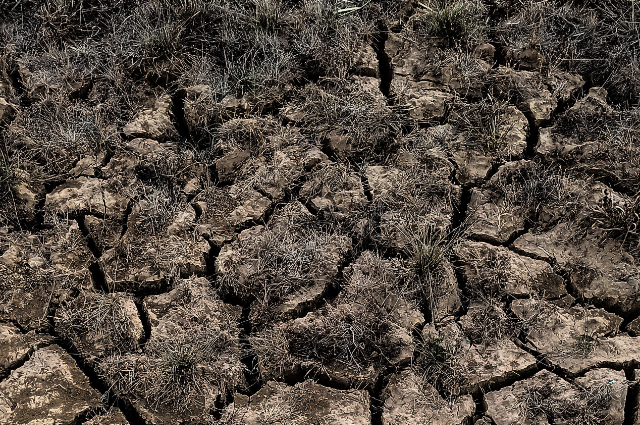
Water has always been more than a natural resource. It is the foundation upon which civilisations rise, agriculture flourishes, economies grow, and human life itself survives. From the fertile valleys of the Nile and the Indus to the great river basins of the Ganges and the Brahmaputra, the story of human civilisation is, in many ways, the story of water. Wherever rivers flowed, communities prospered. Wherever rain nourished the soil, cultures evolved, and societies flourished. Conversely, when water disappeared, settlements declined, fields turned barren, migration increased, and entire regions struggled to survive.
The twenty-first century has transformed water from a symbol of abundance into one of humanity's greatest concerns. According to global scientific assessments, billions of people experience water stress for at least part of every year. Climate change has intensified droughts, altered rainfall patterns, accelerated groundwater depletion, and increased the frequency of extreme weather events. Rapid urbanisation, population growth, industrial expansion, and unsustainable agricultural practices have placed unprecedented pressure on freshwater resources. Across continents, governments invest billions of dollars in dams, reservoirs, pipelines, desalination plants, and irrigation projects in an effort to secure water for future generations. Yet despite technological advancement and large-scale infrastructure, water scarcity continues to threaten food security, public health, economic stability, and environmental sustainability.
India reflects this global challenge with particular intensity. Home to nearly one-fifth of the world's population but possessing only a small share of the planet's freshwater resources, the country faces enormous pressure in managing water sustainably. Seasonal dependence on the monsoon makes many regions highly vulnerable to irregular rainfall. In some years, devastating floods submerge villages and destroy crops, while in others,s severe droughts leave reservoirs empty, rivers reduced to narrow streams, and agricultural land cracked beneath the relentless summer sun. Rural communities dependent on rain-fed agriculture often bear the greatest burden of these climatic uncertainties.
For decades, discussions about India's water crisis have focused on engineering solutions, government policies, and technological innovation. Massive irrigation canals, interlinking of rivers, groundwater extraction, and large reservoirs have dominated public debate. While these measures have undoubtedly contributed to water management in many regions, they have also revealed an important reality: lasting water security cannot be achieved through infrastructure alone. Sustainable management depends equally on community participation, responsible resource use, ecological restoration, and local leadership.
This realisation has become increasingly important as climate scientists warn that future water challenges will become even more severe. Rising temperatures accelerate evaporation, shrinking groundwater reserves threaten agriculture, and unpredictable rainfall makes traditional farming increasingly difficult. International organisations, including the United Nations, now recognise water conservation as one of the defining development challenges of the twenty-first century. Ensuring access to clean and reliable water is no longer merely an environmental objective; it is essential for poverty reduction, public health, food production, gender equality, education, and sustainable economic growth.
Amid these daunting global concerns, some places offer hope rather than despair. They demonstrate that determined communities, guided by scientific understanding and collective responsibility, can reverse even the most severe environmental degradation. Their experiences remind us that sustainable development does not always emerge from billion-dollar projects or complex technologies. Sometimes, it begins with ordinary people deciding that they will no longer wait for others to solve their problems.
One such place is Hiware Bazar, a small village in the Ahmednagar district of Maharashtra. Today, it is internationally recognised as one of India's greatest success stories in water conservation and rural transformation. Visitors arriving in the village are greeted by green fields, prosperous farms, well-managed water resources, and a community that has become a model for sustainable development. At first glance, it is difficult to imagine that this same village was once synonymous with drought, poverty, crop failure, migration, and despair.
Only a few decades ago, Hiware Bazar presented a dramatically different picture. Rainfall was scarce and poorly managed. Wells frequently ran dry before the agricultural season ended. Crop production declined year after year, leaving farmers trapped in debt and uncertainty. Many families abandoned agriculture altogether and migrated to nearby towns in search of work. Alcoholism, unemployment, and social division further weakened community life. The village seemed caught in a cycle of environmental degradation and economic hardship from which there appeared to be no escape.
Yet history often changes when a community chooses to believe that decline is not inevitable.
The transformation of Hiware Bazar did not begin with an expensive mega-project or an extraordinary natural discovery. It began with a change in mindset. Under the leadership of Popatrao Pawar and through the active participation of villagers, Hiware Bazar embraced a simple yet revolutionary principle: instead of searching endlessly for new sources of water, the community would learn to conserve every drop of the water it already received. Rainwater harvesting, watershed development, groundwater recharge, afforestation, crop planning, voluntary labour, and collective decision-making gradually replaced dependence and resignation. Year after year, these efforts restored not only water resources but also agriculture, livelihoods, social harmony, and hope.
The success of Hiware Bazar has since attracted the attention of policymakers, researchers, environmentalists, economists, and development practitioners from around the world. It is frequently cited as one of India's finest examples of community-led rural development, demonstrating how environmental conservation and economic prosperity can reinforce one another. More importantly, it challenges one of the most persistent myths surrounding development—that meaningful progress must always originate from outside the community. Hiware Bazar proves that when local people unite around a shared vision, they possess the capacity to transform even the harshest circumstances.
This article explores the remarkable true story of Hiware Bazar—from its years of devastating water scarcity to its emergence as a global model of sustainable water management. It examines the environmental, social, economic, and scientific foundations of this transformation while highlighting the leadership, cooperation, and resilience that made it possible. More than the story of one village, it is the story of how collective determination can overcome challenges that once appeared impossible, offering valuable lessons for water-stressed communities across India and the world.
A Village on the Edge of Collapse
Today, Hiware Bazar is celebrated as one of India's most successful examples of rural transformation. Its lush green fields, productive farms, well-managed water resources, and prosperous households attract visitors from across the country and around the world. Researchers study its development model, government officials recommend its practices, and environmental experts cite it as evidence that community participation can solve even the most difficult environmental challenges. However, this remarkable success becomes truly meaningful only when one understands where the village began.
Just a few decades ago, Hiware Bazar presented an entirely different picture. Located in the Ahmednagar district of Maharashtra, the village lies within a semi-arid region where rainfall is both limited and unpredictable. Although the average annual rainfall was not insignificant, the village suffered from a much deeper problem—the inability to capture, store, and use rainwater efficiently. During the monsoon, precious rainwater rushed down the surrounding hills and disappeared through streams and drainage channels before it could recharge wells or nourish the soil. Within a few months of the rainy season ending, the village once again found itself struggling with severe water shortages.
The consequences of this poor water management were devastating. Agriculture, the primary source of livelihood for most families, became increasingly uncertain. Farmers depended almost entirely on rainfall, leaving them vulnerable to every failed monsoon. Crops withered before reaching maturity, harvests declined, and household incomes shrank year after year. Fields that had once produced food gradually turned into dry, cracked land where cultivation became an increasingly risky undertaking.
Water scarcity soon affected every aspect of daily life. Wells that once supported families throughout the year began drying up long before the next rainy season. Women and children often walked considerable distances in search of drinking water, spending hours each day collecting a resource essential for survival. The lack of reliable water placed enormous pressure on households, reducing the time available for education, income generation, and community development.
As agricultural productivity declined, economic hardship spread throughout the village. Farmers accumulated debt while struggling to meet basic household expenses. Many families found it impossible to support themselves through farming alone. Seasonal migration became increasingly common as men travelled to nearby towns and cities in search of temporary employment. Some worked as daily wage labourers on construction sites, while others accepted low-paying jobs that offered little security. Families were separated for months at a time, and the village slowly lost many of its young and productive workers.
Economic decline also created serious social challenges. Unemployment and frustration contributed to rising alcoholism, weakening family relationships and increasing financial difficulties. Public spaces deteriorated, community participation declined, and collective confidence gradually disappeared. Many villagers came to believe that poverty and water scarcity were permanent realities that could not be changed. Hope itself became one of the village's rarest resources.
The environmental degradation surrounding Hiware Bazar further intensified these problems. Years of deforestation had reduced the natural vegetation covering nearby hills. Without trees and grasses to slow rainwater, soil erosion accelerated during every monsoon. Fertile topsoil was washed away, leaving behind less productive land. Groundwater recharge declined significantly because rainwater flowed rapidly across the surface instead of slowly infiltrating the earth. Each year, the village lost not only water but also the fertile soil essential for successful agriculture.
Overgrazing by livestock compounded the situation. Large numbers of freely grazing animals consumed young vegetation before it could regenerate naturally. As plant cover declined, the land became increasingly vulnerable to erosion and moisture loss. The ecological balance that once sustained agriculture gradually weakened, creating a cycle in which environmental degradation and economic hardship reinforced one another.
The absence of effective local planning made recovery even more difficult. Individual farmers attempted to solve their own problems independently, but water is a shared resource that cannot be managed successfully through isolated efforts alone. Wells, streams, rainfall, and groundwater connect entire communities. Without cooperation, individual actions often produced limited results. The village lacked a common vision for managing its natural resources, and this absence of collective action prevented meaningful progress.
Government development programmes occasionally reached the village, but their impact remained limited because the underlying environmental challenges persisted. Infrastructure alone could not restore groundwater, prevent soil erosion, or rebuild community confidence. Sustainable development required something more fundamental—a transformation in the way villagers understood and managed their relationship with the land.
By the late 1980s, Hiware Bazar had become widely recognised as one of the most backward villages in the region. Agricultural production remained low, employment opportunities were scarce, migration continued to increase, and water shortages affected nearly every household. The future appeared uncertain, and many believed that the village would continue declining year after year.
Yet history often reaches a turning point precisely when circumstances appear most hopeless.
In 1989, a young graduate named Popatrao Pawar returned to his native village. Like many educated young people, he had opportunities to pursue a different path elsewhere. Instead, he made a decision that would transform not only his own life but also the destiny of an entire community. Encouraged by fellow villagers, Pawar agreed to contest the election for the position of Sarpanch (village head). At the time, few could have imagined that this quiet decision would mark the beginning of one of India's most remarkable rural development stories.
Unlike many leaders who focus first on infrastructure or financial assistance, Pawar began by carefully observing the village's deepest problem. He concluded that poverty, unemployment, migration, and social distress were all connected by a single underlying issue: water. Without reliable water, agriculture would never recover. Without productive agriculture, livelihoods would remain fragile. Without economic security, social progress would remain out of reach.
This simple but powerful insight changed everything.
Rather than searching for quick solutions, Pawar and the villagers chose to address the root cause of their difficulties. They realised that every drop of rain falling on the surrounding hills represented an opportunity rather than a loss. If they could capture that water, recharge the groundwater, restore vegetation, and manage natural resources collectively, the village could gradually rebuild itself from the ground up.
It was an ambitious vision. Success would require discipline, scientific planning, community participation, and years of sustained effort. There would be no instant miracles. The transformation of Hiware Bazar would begin not with machines or massive investments, but with a shared belief that lasting change was possible when an entire community worked together toward a common goal.
That belief would soon reshape the landscape, revive agriculture, restore dignity, and turn one of India's most drought-stricken villages into a global symbol of hope.
The Leader Who Changed Everything – Popatrao Pawar's Vision
When people speak about the transformation of Hiware Bazar, they often mention check dams, watershed development, rainwater harvesting, and agricultural reforms. While these initiatives were undoubtedly essential, they were not the true beginning of the village's success. Before the land could be transformed, the mindset of the people had to change. The most valuable resource that Hiware Bazar needed was not water—it was leadership capable of uniting an entire community around a common purpose.
That leadership emerged in the form of Popatrao Babanrao Pawar, a young graduate who had never imagined becoming the architect of one of India's most celebrated rural development models. Born and raised in Hiware Bazar, Pawar understood the village's struggles not through reports or statistics but through personal experience. He had witnessed dry wells, failed crops, unemployment, migration, and the gradual erosion of hope among the villagers. Like many educated young people from rural India, he had opportunities to pursue a more comfortable life elsewhere. Instead, he chose to return to the village that had shaped his childhood.
In 1989, at the age of twenty-eight, Pawar was elected Sarpanch of Hiware Bazar. His election marked the beginning of a new chapter in the village's history. Unlike many local leaders who concentrated primarily on securing government grants or announcing ambitious projects, Pawar began with a simple but fundamental question: Why had previous development efforts failed?
The answer, he realised, was not merely the absence of money or infrastructure. The deeper problem was the absence of collective responsibility. Development initiatives had often been implemented without active participation from the people they were intended to benefit. Individual farmers worked independently, government schemes operated in isolation, and villagers lacked a shared vision for managing their common resources. As long as everyone acted separately, lasting progress would remain impossible.
Pawar therefore decided that the first task was not to build structures but to rebuild trust.
He began organising regular Gram Sabha meetings, encouraging every household to participate in discussions about the future of the village. These meetings became forums where problems were openly discussed, ideas were debated, and decisions were taken collectively rather than imposed from above. Every family was encouraged to contribute suggestions, voice concerns, and share responsibility for implementing agreed-upon plans. This participatory approach gradually strengthened social unity and restored confidence that the village could shape its own destiny.
One of Pawar's most important contributions was changing the way people viewed development itself. Instead of waiting for external agencies to solve local problems, he encouraged villagers to recognise their own capacity for action. His message was simple yet powerful: the village must first help itself before expecting help from others. This philosophy inspired a remarkable sense of ownership over every development activity that followed.
To translate this vision into action, Pawar promoted the tradition of shramdaan, or voluntary community labour. Villagers worked together to dig trenches, repair pathways, construct small water-harvesting structures, plant trees, and restore degraded land. Men, women, and young people participated according to their abilities. These collective efforts achieved far more than physical improvements. They strengthened social bonds, reduced dependence on external contractors, and created a shared sense of pride in every accomplishment.
At the same time, Pawar recognised that environmental restoration required discipline as well as participation. Together with the villagers, several important community rules were introduced. Open grazing on vulnerable hillsides was restricted to allow vegetation to regenerate. Large-scale tree cutting was discouraged. Water-intensive cropping in unsuitable areas was carefully regulated. These decisions were not always easy. Some families initially resisted restrictions that affected their traditional practices. However, because the rules were developed collectively through village meetings, most residents gradually accepted them as necessary sacrifices for the common good.
One particularly significant reform involved the management of water resources. Rather than allowing unrestricted extraction of groundwater, the community began treating water as a shared asset that required careful planning. Farmers were encouraged to grow crops according to the amount of water available instead of attempting to cultivate water-intensive crops that the village could not sustainably support. This approach represented a major shift from short-term individual gain toward long-term community welfare.
Pawar also understood that successful development required accurate information. The village began carefully studying rainfall patterns, groundwater levels, land slopes, and soil conditions before implementing conservation measures. Decisions were increasingly based on observation, local knowledge, and scientific advice rather than assumptions. This combination of traditional wisdom and modern watershed principles became one of the defining characteristics of Hiware Bazar's development model.
Equally remarkable was Pawar's leadership style. He rarely portrayed himself as the sole architect of the village's success. Instead, he consistently emphasised that transformation belonged to the entire community. Every completed project, every restored field, and every recharged well reflected the combined efforts of hundreds of villagers working toward a shared objective. This humility strengthened public trust and encouraged even greater participation.
As confidence grew, the atmosphere within Hiware Bazar began to change. People who had once viewed drought as an unavoidable fate started believing that it could be overcome. Families that had previously worked in isolation began cooperating on common projects. Young people who had considered leaving the village discovered new reasons to remain. Hope, which had almost disappeared during the years of decline, slowly returned.
The most remarkable aspect of this transformation was that it began before a single major watershed structure had been completed. The true revolution occurred within the minds of the villagers. They no longer saw themselves as helpless victims of drought. Instead, they became active participants in rebuilding their environment and their economy.
With a united community, disciplined leadership, and a clear long-term vision, Hiware Bazar was finally prepared to tackle its greatest challenge—water scarcity itself. The next step would involve reshaping the landscape through scientific watershed management, rainwater harvesting, soil conservation, and ecological restoration. These initiatives would not only recharge the village's groundwater but would also demonstrate that sustainable development begins by working with nature rather than against it.
The foundation had been laid. The people were united. The vision was clear.
Now the real transformation could begin.
Capturing Every Drop – The Science Behind Hiware Bazar's Water Revolution
When people first hear the story of Hiware Bazar, many assume that its transformation was the result of abundant rainfall or a massive government-funded irrigation project. Neither assumption is correct. The village receives only moderate rainfall, and it has no large river flowing through it. Its remarkable success came from a far simpler but far more powerful idea: every drop of rain that falls on the village should remain within the village for as long as possible.
This philosophy became the foundation of Hiware Bazar's water revolution. Instead of searching for new sources of water, the villagers decided to make better use of the water nature already provided. Every monsoon brought thousands of litres of rainwater to the surrounding hills and agricultural land. In earlier years, most of this precious water rushed down the slopes, carrying fertile soil with it before disappearing into streams and rivers. Within a few weeks, the land was dry again, wells began to empty, and farmers once more faced uncertainty. The villagers realised that rainfall was not their greatest problem. Their greatest problem was water management.
Understanding the Watershed
To solve this challenge, experts and villagers first studied the village's watershed. A watershed is an area of land where all rainwater naturally drains toward a common outlet, such as a stream, river, or lake. Every hill, slope, field, and stream in Hiware Bazar formed part of a single interconnected system. If rainwater could be slowed down before leaving the watershed, much of it would gradually seep into the ground instead of flowing away.
This simple scientific understanding completely changed the development strategy of the village.
Instead of treating floods and runoff as unavoidable natural events, villagers began viewing them as opportunities to store water beneath the earth. Groundwater became their invisible reservoir.
Slowing the Speed of Water
The first major task involved reducing the speed at which rainwater flowed across the landscape.
When heavy rain falls on barren hillsides, water travels rapidly downhill, eroding soil and carrying valuable nutrients away. Fast-moving water has little time to infiltrate the ground. However, when its movement is slowed, the soil absorbs significantly more moisture, allowing underground aquifers to recharge naturally.
To achieve this, villagers constructed a network of contour bunds, earthen embankments, and continuous contour trenches across the slopes.
These structures followed the natural contours of the hills rather than cutting across them. During rainfall, the bunds acted like small barriers that interrupted the flow of water. Instead of rushing downhill, rainwater spread slowly across the land and gradually entered the soil.
The effect was remarkable.
Fields that had once lost both water and fertile soil during every monsoon began retaining moisture for much longer periods. Farmers noticed that crops survived longer even after rainfall had stopped because the soil now held significantly more water than before.
Check Dams: Small Structures, Massive Impact
One of the most effective interventions was the construction of check dams.
Unlike large dams built across major rivers, check dams are relatively small barriers constructed across seasonal streams or drainage channels. Their purpose is not to store enormous lakes of water but to reduce the speed of flowing water.
Whenever rainwater reached these structures, it slowed down, spread across the surrounding area, and gradually seeped underground.
This process achieved several important objectives simultaneously:
- It recharged groundwater.
- It reduced soil erosion.
- It prevented valuable rainwater from leaving the village too quickly.
- It supplied nearby wells with additional underground water.
Over time, dozens of such structures created a connected system that dramatically improved water availability throughout the watershed.
Percolation Tanks and Recharge Structures
Another important innovation involved the construction of percolation tanks.
These shallow reservoirs temporarily stored monsoon runoff and allowed it to infiltrate slowly into underground aquifers.
Unlike conventional reservoirs where water is stored on the surface, percolation tanks focus on storing water beneath the ground.
Underground storage offers several advantages.
Water stored below the surface experiences almost no evaporation compared to open reservoirs. It remains naturally filtered through layers of soil and rock and becomes available through wells throughout the year.
In a region where summer temperatures often exceed forty degrees Celsius, minimising evaporation became one of the most effective methods of water conservation.
Bringing the Hills Back to Life
The villagers soon realised that engineering structures alone could not solve the water crisis.
Healthy vegetation was equally important.
Large-scale afforestation became another key to minimising Hiware Bazar's transformation.
Thousands of indigenous trees were planted across degraded hillsides. Existing forests were protected from illegal cutting, while unrestricted grazing was carefully controlled to allow young vegetation to regenerate naturally.
The impact extended far beyond increasing greenery.
Tree roots stabilised loose soil, preventing erosion during heavy rainfall. Fallen leaves decomposed into organic matter, improving soil fertility and water retention. Tree canopies reduced evaporation by shading the ground, while forests encouraged rainfall infiltration by creating porous soil rich in biolostabilisedvity.
Within a few years, the once-barren hills gradually turned green again.
The recovering vegetation functioned like a giant natural sponge, absorbing rainfall and releasing it slowly into streams and groundwater.
Water Budgeting: Using Only What Nature Can Provide
Perhaps the most innovative aspect of Hiware Bazar's development model was the introduction of water budgeting.
Most communities calculate financial budgets before spending money.
Hiware Bazar applied the same principle to water.
Every year, villagers estimated:
- how much rainfall had been received,
- how much groundwater had been recharged,
- how much water was available for agriculture,
- and how much could be safely used without exhausting future supplies.
Based on these calculations, farmers decided which crops could be cultivated sustainably.
If available water was limited, water-intensive crops such as sugarcane were discouraged.
Instead, farmers shifted toward crops requiring less irrigation while producing higher economic returns.
This prevented excessive groundwater extraction and ensured that water resources remained available throughout the year.
Few villages in India had adopted such a disciplined approach to natural resource management.
Agriculture Begins to Recover
As groundwater levels gradually rose, wells that had remained dry for years started filling again.
Farmers who had once depended on a single uncertain crop each year found themselves able to cultivate multiple crops.
Vegetable farming expanded.
Fruit orchards appeared across previously barren fields.
Milk production increased as fodder became more readily available for livestock.
Household incomes rose steadily.
The transformation was not sudden.
It resulted from years of disciplined planning, scientific watershed management, and community cooperation.
Every successful harvest reinforced public confidence that the village was moving in the right direction.
A Living Example of Sustainable Development
Environmental scientists frequently emphasise that sustainable development requires balancing ecological protection with economic progress.
Hiware Bazar became one of India's clearest demonstrations of this principle.
The village did not choose between environmental conservation and economic growth.
Instead, it achieved economic progress because it restored its environment.
Healthy forests protected water.
Healthy water resources supported agriculture.
Prosperous agriculture strengthened the local economy.
A stronger economy improved education, healthcare, housing, and quality of life.
Each improvement reinforced the next, creating a cycle of sustainable development rather than environmental decline.
More Than Engineering
The water structures built in Hiware Bazar were undoubtedly important.
But the true success of the village cannot be explained by engineering alone.
Thousands of villages possess check dams, trenches, and reservoirs.
Far fewer possess the community discipline required to maintain them year after year.
What distinguished Hiware Bazar was not merely its infrastructure but its collective commitment.
Every trench dug, every tree planted, every drop of rainwater conserved reflected a shared understanding that water belongs not only to the present generation but also to those yet to come.
By capturing every drop of rainfall and treating water as a precious shared resource rather than an unlimited commodity, Hiware Bazar accomplished what many experts had once considered impossible.
The village had not merely solved a water crisis.
It had fundamentally changed its relationship with nature.
And that transformation was about to reshape every aspect of village life—from agriculture and employment to education, health, migration, and prosperity.
From Drought to Prosperity – How Water Changed Every Life
The success of Hiware Bazar was never measured merely by the number of check dams constructed or the volume of groundwater recharged. Those achievements were important, but they were only the beginning of a much larger transformation. The true success of the village became visible in the lives of its people. As water returned to the land, hope returned to the community. The revival of natural resources triggered a chain reaction that reshaped agriculture, strengthened the local economy, improved education, reduced migration, enhanced public health, and restored the dignity of an entire village.
This transformation illustrates one of the most important principles of sustainable development: water is not simply an environmental resource; it is the foundation upon which every aspect of rural life depends. When water is managed wisely, it influences food production, employment, education, healthcare, social stability, and economic prosperity simultaneously. Hiware Bazar became a living example of this interconnected reality.
Agriculture: The Return of Prosperity
The first and most visible change occurred in agriculture.
For years, farming in Hiware Bazar had been an uncertain gamble. Farmers planted crops with hope but harvested disappointment. Irregular rainfall and declining groundwater meant that cultivation depended almost entirely on the success or failure of the monsoon. A single dry season could destroy an entire year's income.
As watershed management improved groundwater recharge, this uncertainty gradually disappeared.
Wells that had once remained dry for months began retaining water throughout much of the year. Farmers could now irrigate their fields more reliably, reducing dependence on unpredictable rainfall. More importantly, they no longer had to abandon cultivation after a single crop.
Multiple cropping gradually became possible.
Instead of producing only rain-fed cereals, farmers diversified into vegetables, pulses, fodder crops, and fruit orchards. Improved irrigation enabled them to cultivate crops with greater market value while carefully respecting the village's water budget. Agricultural productivity increased steadily, and household incomes rose alongside it.
This growth was not driven by excessive water consumption but by efficient water use. Farmers learned that sustainable agriculture depends not on extracting more groundwater but on managing available water intelligently.
Economic Revival
As agricultural production expanded, the village economy experienced remarkable growth.
Families that had previously struggled to meet daily expenses found themselves earning stable incomes. Investments in better seeds, improved farming techniques, dairy production, and small enterprises became increasingly common.
Livestock also benefited from improved water availability.
The regeneration of vegetation provided abundant fodder for cattle and goats. Dairy farming emerged as an important supplementary source of income, reducing dependence on crop production alone. Milk production increased significantly, creating additional employment opportunities and strengthening household financial security.
Small businesses gradually appeared within the village.
Shops expanded.
Agricultural services improved.
Transportation increased.
The circulation of income within the local economy stimulated further development, demonstrating how environmental restoration can generate broad economic benefits.
Reverse Migration: When People Came Back Home
Perhaps one of the most extraordinary indicators of Hiware Bazar's success was reverse migration.
In many drought-prone villages across India, young people leave in search of employment because agriculture can no longer support their families.
Hiware Bazar witnessed the opposite phenomenon.
As farming became profitable again, many villagers who had migrated to nearby towns and cities began returning home.
This reversal carried profound significance.
Migration is often viewed as an inevitable consequence of rural poverty.
Hiware Bazar proved that when villages create sustainable livelihoods, people willingly return to their communities.
The village no longer lost its youth to economic necessity.
Instead, educated young people increasingly participated in agriculture, rural entrepreneurship, and community development.
Education: Investing in the Next Generation
Improved economic conditions also transformed education.
When families struggle for survival, children's education often becomes a secondary priority.
As household incomes increased, parents gained the financial ability to keep their children in school.
School attendance improved.
Students had greater access to educational materials.
Families became increasingly aware that long-term development depended not only on natural resources but also on human capital.
The village began investing in both.
Education was no longer viewed as a luxury.
It became an essential component of future prosperity.
Better Health and Improved Living Standards
Reliable water availability produced significant improvements in public health.
Access to cleaner water reduced the risk of many water-related illnesses.
Improved agricultural production strengthened household nutrition by increasing the availability of fresh vegetables, fruits, and dairy products.
As incomes rose, families invested in better housing, sanitation, and healthcare.
Daily life became more secure.
Women, who had previously spent hours collecting water from distant sources, gained valuable time for education, household activities, and income-generating work.
Children experienced healthier childhoods because clean water and nutritious food became more accessible.
These improvements demonstrated that water conservation influences human well-being far beyond agriculture alone.
Social Transformation
Economic recovery also strengthened social harmony.
During periods of severe scarcity, competition for limited resources often creates conflict.
When water became more reliable and livelihoods improved, cooperation replaced many of the tensions that had previously divided the community.
The tradition of collective decision-making through the Gram Sabha continued to play a central role.
Villagers increasingly recognised that shared prosperity depended upon shared responsibility.
Community rules regarding groundwater use, grazing, afforestation, and crop planning remained effective because people understood their long-term benefits.
Trust became one of the village's greatest assets.
Environmental Recovery
The landscape surrounding Hiware Bazar changed dramatically.
The once-barren hills gradually became covered with vegetation.
Groundwater levels rose.
Streams flowed for longer periods.
Birds and wildlife began returning to areas that had previously lost much of their ecological diversity.
The village became greener with each passing year.
Environmental recovery and economic development progressed together rather than in opposition.
This harmony became one of Hiware Bazar's defining characteristics.
National and International Recognition
As news of the village's transformation spread, Hiware Bazar attracted attention from across India and beyond.
Government officials, researchers, students, environmentalists, economists, and journalists visited the village to study its development model.
Many arrived expecting to find an expensive technological solution.
Instead, they discovered something far more valuable: a community united by discipline, scientific planning, and collective responsibility.
The village became a case study in watershed management, rural development, and sustainable resource governance.
Development experts frequently cited Hiware Bazar as evidence that community participation can produce lasting environmental and economic results.
Its success influenced rural development programmes in several parts of India and inspired countless other villages to adopt similar water conservation practices.
Prosperity with Responsibility
Despite increasing prosperity, Hiware Bazar remained committed to its original principles.
The community understood that environmental success could easily be reversed through careless resource use.
Groundwater continued to be monitored.
Water-intensive crops remained carefully regulated.
Tree plantation and environmental conservation remained ongoing responsibilities rather than one-time projects.
The village refused to treat water abundance as permission for wasteful consumption.
Instead, prosperity strengthened its commitment to sustainability.
This disciplined approach distinguished Hiware Bazar from many communities that experience temporary improvements but later return to unsustainable practices.
A Model for Rural India
Today, Hiware Bazar is widely recognised not simply as a successful village but as a living model of integrated rural development.
Its achievements demonstrate that environmental conservation, economic growth, social progress, and democratic participation are not competing goals.
When guided by wise leadership and active community engagement, they reinforce one another.
The journey from drought to prosperity was neither easy nor quick.
It required decades of consistent effort, countless hours of voluntary labour, difficult collective decisions, and unwavering faith in the power of cooperation.
Yet the results speak for themselves.
Fields that once lay barren now produce abundant harvests.
Families that once migrated in search of work now build prosperous futures within their own village.
Children who once grew up surrounded by scarcity now inherit a community recognised as one of India's finest examples of sustainable development.
Hiware Bazar did far more than overcome water scarcity.
It proved that when a community learns to value every drop of water, it also learns to value every human life that depends upon it.
The village did not simply conserve water; it recognised, restored confidence, rebuilt dignity, revived opportunity, and demonstrated that true development begins when people choose to become guardians of their own future rather than passive observers of their circumstances.
Lessons for the World – Why the Hiware Bazar Model Matters Today
The story of Hiware Bazar is not merely the story of one successful village in Maharashtra. It is a blueprint for sustainable development in an age of climate uncertainty. Around the world, governments are investing billions of dollars to address water scarcity, restore degraded ecosystems, and strengthen rural economies. Yet many regions continue to struggle despite substantial financial resources and technological advancement. Hiware Bazar offers an important reminder that sustainable development is not achieved through infrastructure alone. It succeeds when environmental science, responsible leadership, and active community participation work together toward a common purpose.
The village demonstrates that the solution to complex environmental problems often lies not in creating new natural resources but in managing existing ones more wisely. Rainfall in Hiware Bazar did not suddenly increase after the village began its transformation. Instead, the community learned to conserve, distribute, and utilise available water efficiently. This distinction carries profound significance for countries facing increasing water stress due to climate change. In many regions, the challenge is not simply the quantity of rainfall but the inability to capture and store it effectively.
Climate Change and Water Security
Climate change has become one of the defining challenges of the twenty-first century. Rising global temperatures have altered rainfall patterns, intensified droughts, accelerated glacier melting, and increased the frequency of extreme weather events. According to scientific assessments, many regions are expected to experience greater uncertainty in water availability during the coming decades.
For rural communities dependent on agriculture, these changes present serious risks. Crops require predictable access to water, while livestock, forests, and ecosystems depend upon stable hydrological cycles. When rainfall becomes erratic, communities that rely entirely on seasonal precipitation become increasingly vulnerable.
Hiware Bazar demonstrates how climate resilience can be built at the local level. By restoring groundwater, protecting forests, reducing soil erosion, and conserving rainwater, the village strengthened its ability to withstand periods of below-average rainfall. Rather than reacting to drought after it occurred, the community prepared for it through long-term planning and ecological restoration.
This preventive approach offers valuable lessons for regions experiencing similar climatic challenges.
Sustainable Development Begins with Nature
One of the most remarkable features of Hiware Bazar is its understanding that environmental conservation and economic development are not opposing objectives.
For decades, development policies often viewed forests, rivers, and natural ecosystems primarily as resources to be exploited for economic growth. Hiware Bazar adopted the opposite philosophy. The village invested first in restoring its natural environment, confident that economic prosperity would follow.
History proved this decision correct.
Healthy watersheds improved groundwater recharge.
Improved groundwater strengthened agriculture.
Successful agriculture generated higher incomes.
Higher incomes improved education, healthcare, housing, and quality of life. This sequence demonstrates that environmental restoration is not a barrier to development but one of its strongest foundations.
The village therefore offers an important lesson for policymakers: protecting natural ecosystems should be viewed as an investment in long-term economic prosperity rather than as an obstacle to progress.
Community Participation: The Missing Ingredient
Many development programmes fail because they depend almost entirely on external agencies. Infrastructure may be constructed, but local communities often remain passive recipients rather than active participants.
Hiware Bazar followed a fundamentally different approach.
Every major decision emerged through the Gram Sabha, where villagers collectively discussed problems, debated solutions, and accepted shared responsibility for implementation. Community rules regarding groundwater extraction, crop selection, tree protection, and grazing were respected because they were created through public participation rather than imposed by outside authorities.
This model illustrates one of the most important principles of democratic development: people are far more likely to protect resources when they have participated in creating the rules that govern them.
The lesson extends beyond water management.
Whether addressing education, public health, sanitation, renewable energy, or climate adaptation, lasting success depends upon meaningful community ownership.
Leadership That Serves Rather Than Commands
The transformation of Hiware Bazar also highlights the importance of ethical leadership.
Popatrao Pawar did not attempt to solve every problem personally.
Instead, he empowered the community to solve its own challenges.
His leadership emphasised consultation rather than authority, participation rather than dependency, and long-term planning rather than short-term popularity.
In many parts of the world, leadership is measured by the number of projects announced or the amount of money spent.
Hiware Bazar suggests a different measure.
Successful leadership is reflected in the ability to inspire people to work together for the common good.
This principle remains relevant not only for village governance but also for national policy, corporate management, educational institutions, and civil society organisations.
Water as a Shared Responsibility
Another important lesson emerging from Hiware Bazar concerns the ethical use of natural resources.
Modern societies frequently treat water as an unlimited commodity.
Groundwater is extracted faster than nature can replenish it.
Rivers are polluted.
Wetlands disappear.
Rainwater flows unused into the sea.
The consequences are increasingly visible across the world.
Hiware Bazar adopted a different philosophy.
The village recognised that water belongs not only to those living today but also to future generations.
Every decision concerning agriculture, construction, and groundwater extraction was guided by the principle of sustainability.
This intergenerational perspective reflects one of the central ideas behind modern environmental ethics: humanity must meet present needs without compromising the ability of future generations to meet their own.
Alignment with the United Nations Sustainable Development Goals
Although Hiware Bazar's transformation began long before the adoption of the United Nations Sustainable Development Goals (SDGs) in 2015, its achievements closely align with many of these global objectives.
The village contributes directly to:
- SDG 1: No Poverty, by increasing rural incomes.
- SDG 2: Zero Hunger, through improved agricultural productivity.
- SDG 6: Clean Water and Sanitation, by promoting sustainable water management.
- SDG 8: Decent Work and Economic Growth, by creating rural employment opportunities.
- SDG 13: Climate Action, through watershed restoration and climate resilience.
- SDG 15: Life on Land, by protecting forests, biodiversity, and ecosystems.
- SDG 17: Partnerships for the Goals, through cooperation between communities, technical experts, and government institutions.
This demonstrates that sustainable development is not merely an international policy framework but a practical reality that communities can achieve through coordinated local action.
A Model That Can Inspire Others
It would be unrealistic to assume that every village can replicate Hiware Bazar exactly.
Different regions possess different climates, soils, cultures, and economic conditions.
However, the principles underlying its success are universal.
Communities everywhere can:
- Conserve rainwater.
- Restore degraded ecosystems.
- Protect forests.
- Recharge groundwater.
- Promote participatory governance.
- Practice sustainable agriculture.
- Encourage voluntary community participation.
- Plan development according to available natural resources.
These principles can be adapted to local conditions across India and around the world.
Hope in an Age of Environmental Crisis
Environmental news is often dominated by stories of shrinking rivers, disappearing forests, declining biodiversity, and worsening climate disasters.
Such reports are important because they highlight urgent challenges.
Yet societies also need stories of success.
Hiware Bazar represents one of those rare success stories.
It reminds humanity that environmental damage is not always irreversible.
With scientific understanding, responsible leadership, public participation, and sustained commitment, degraded landscapes can recover.
Communities can become more resilient.
Economies can become more sustainable.
Hope can become reality.
The Enduring Legacy of Hiware Bazar
Perhaps the village's greatest contribution lies not in its physical infrastructure but in the philosophy it represents.
It teaches that genuine development begins when people stop asking, "Who will solve our problems?" and start asking, "What can we do together?"
Its check dams may one day require repairs.
Its trees will continue growing.
Its fields will evolve with changing agricultural practices.
But the principles that transformed Hiware Bazar will remain relevant for generations.
Those principles are simple:
Nature must be protected.
Water must be respected.
Leadership must unite.
Communities must participate.
Development must remain sustainable.
These lessons extend far beyond the boundaries of one village in Maharashtra.
They speak to every community confronting drought, environmental degradation, or economic uncertainty.
In a century where water is expected to become one of humanity's most valuable resources, Hiware Bazar stands as living proof that the greatest solutions often begin not with extraordinary technology, but with ordinary people choosing to act together.
Its story is ultimately a reminder that sustainable development is not built one project at a time.
It is built one decision, one community, and one drop of water at a time.
When a Village Changed Its Destiny, One Drop at a Time
The story of Hiware Bazar is much more than the history of a village overcoming drought. It is the story of ordinary people who refused to believe that poverty, water scarcity, and environmental degradation were permanent features of their lives. At a time when many communities accepted drought as an unavoidable fate, the people of Hiware Bazar chose a different path. Instead of waiting for miracles, they decided to create one through determination, discipline, and collective action.
Their journey teaches an important truth: water crises are often not caused solely by the absence of rainfall but by the absence of sustainable water management. For years, the village received seasonal rain, yet most of it flowed away unused. Wells dried up, crops failed, families migrated, and hope slowly disappeared. The problem was not only nature—it was the way human beings interacted with nature.
The transformation began when the villagers stopped asking how they could bring more water to the village and started asking how they could protect every drop that already fell on their land. This simple change in perspective became the foundation of an extraordinary revolution. Check dams, contour trenches, percolation tanks, afforestation, groundwater recharge, crop planning, and voluntary labour were not isolated projects; they were parts of a single vision that recognised water as the heart of rural life.
The remarkable achievement of Hiware Bazar also reminds us that environmental restoration and economic prosperity are not opposing goals. Too often, development is presented as a choice between protecting nature and improving human lives. The experience of this village proves that the two are deeply connected. By restoring forests, conserving soil, and managing water wisely, the community revived agriculture, increased incomes, improved education, strengthened public health, reduced migration, and restored social harmony. Nature did not stand in the way of progress—it became the very foundation of progress.
Another lesson that emerges from this story is the extraordinary power of community participation. Throughout history, many development programmes have relied heavily on external funding, government agencies, or technological solutions. While these resources are important, Hiware Bazar demonstrates that lasting change cannot be imposed from outside. It must grow from within the community itself. The villagers accepted shared responsibility for their natural resources, participated in collective decision-making, and contributed voluntary labour to projects that benefited everyone. Because they saw themselves not as beneficiaries but as partners in development, they protected the gains they had achieved.
Leadership also played a defining role in this transformation. Popatrao Pawar did not promise quick success or temporary relief. Instead, he inspired the village to think beyond immediate needs and work toward a future that would benefit generations to come. His leadership was based not on authority but on trust, dialogue, and shared responsibility. He demonstrated that true leadership is measured not by the number of projects completed but by the number of people empowered to shape their own future.
The importance of Hiware Bazar extends far beyond Maharashtra or even India. Around the world, communities are confronting increasingly severe droughts, shrinking groundwater reserves, unpredictable rainfall, and the growing impacts of climate change. Governments continue to invest in infrastructure, scientists develop innovative technologies, and international organisations promote sustainable development. Yet the experience of Hiware Bazar offers a timeless reminder that no policy or technology can succeed without community commitment. Sustainable development begins when people understand that natural resources are not limitless gifts but shared responsibilities.
For young people, the village offers a message of hope and possibility. Many believe that solving global challenges requires extraordinary power or immense financial resources. Hiware Bazar tells a different story. It shows that lasting change begins with ordinary citizens who are willing to work together, respect science, protect nature, and remain committed even when progress appears slow. The villagers did not transform their future in a single year. Their success was built through decades of consistent effort, patience, and faith in a common vision.
The story also encourages us to reconsider how we define progress. Modern society often measures success through economic growth, industrial expansion, or technological innovation. While these achievements are valuable, they cannot be sustained if the natural systems that support human life continue to decline. Clean water, fertile soil, healthy forests, and resilient ecosystems are forms of wealth just as important as financial prosperity. Hiware Bazar teaches us that genuine development is achieved when economic progress strengthens the environment rather than destroys it.
Perhaps the most inspiring aspect of this story is that its central lesson is beautifully simple. The village did not possess extraordinary natural advantages. It did not discover hidden rivers or receive endless financial support. Its greatest resource was the willingness of its people to work together for a shared purpose. They proved that even the most difficult challenges can be overcome when communities replace helplessness with responsibility and division with cooperation.
Today, visitors who walk through the green fields of Hiware Bazar see more than successful farms or well-managed water systems. They see evidence that hope can be engineered through collective effort. Every check dam, every restored hillside, every flowing well, and every thriving field tells the story of people who refused to surrender to circumstances. Their achievement is not merely an environmental success—it is a human success.
As the world searches for solutions to water scarcity, climate change, and sustainable development, the lessons of Hiware Bazar become increasingly relevant. They remind us that the future of our planet will not be shaped only by international agreements or scientific breakthroughs. It will also depend upon the everyday decisions made in villages, towns, farms, schools, and communities across the world. Every conserved drop of water, every planted tree, every restored ecosystem, and every act of responsible citizenship contributes to a more sustainable future.
Ultimately, Hiware Bazar did not simply defeat water scarcity.
It defeated the belief that ordinary people are powerless to change their destiny.
Its greatest achievement was not the construction of check dams or the recharge of groundwater.
Its greatest achievement was proving that when a community unites around a shared vision, respects nature, and works with patience and determination, even the harshest landscape can become a place of hope.
The story of Hiware Bazar therefore leaves us with a question that extends far beyond one village in Maharashtra.
If one community could transform its future by valuing every drop of water, what could the rest of the world achieve if it chose to do the same?
References:
- Centre for Science and Environment. (2010). The laboratory of development: Hiware Bazar's model of watershed management. https://www.cseindia.org/the-laboratory-of-development-686
- Down To Earth. (2009). Hiware Bazar water balance sheet 2007: From scarcity to surplus. https://www.indiawaterportal.org
- Food and Agriculture Organisation of the United Nations. (2020). Global Forest Resources Assessment 2020. Rome: FAO.
- Food and Agriculture Organisation of the United Nations. (2022). The State of the World's Forests 2022. Rome: FAO.
- Government of India. Ministry of Jal Shakti. (2025). Institutionalising water budgeting: Insights from Hiware Bazar. Press Information Bureau.
- Government of India. Ministry of Rural Development. Integrated Watershed Management Programme (IWMP): Guidelines.
- Government of Maharashtra. Adarsh Gaon Yojana (Ideal Village Scheme): Guidelines and Implementation Reports.
- Gram Panchayat Hiware Bazar. (2017). A Success Story of Comprehensive Watershed Development Programme. https://www.cgwb.gov.in
- India Water Portal. (2016). Hiware Bazar: A water-led transformation of a village. https://hindi.indiawaterportal.org
- India Water Portal. (2012). Water conservation, sustainable agriculture, challenges for rural development in Maharashtra and possible solutions: Talk by Popatrao Pawar.
- Intergovernmental Panel on Climate Change. (2023). Climate Change 2023: Synthesis Report. Geneva: IPCC.
- International Union for Conservation of Nature. (2021). Forest Landscape Restoration: Principles and Practice.
- Millennium Ecosystem Assessment. (2005). Ecosystems and Human Well-being: Synthesis. Washington, DC: Island Press.
- National Geographic. (2010). Lessons from the field: Rainwater harvesting in Hiware Bazar, India.
- National Institution for Transforming India (NITI Aayog). (2017). Gram Panchayat Hiware Bazar: A Success Story of Comprehensive Watershed Development Programme. https://www.nitiforstates.gov.in
- Observer Research Foundation. (2012). Integrated agriculture and rural development for tomorrow's Maharashtra: Talk by Popatrao Pawar.
- Policy Circle. (2019). Hiware Bazar: A model for India's impoverished villages to emulate.
- Press Information Bureau. (2025). National Water Mission: Institutionalising water budgeting through community participation.
- Ravindranath, N. H., Joshi, N. V., Sukumar, R., & Saxena, A. (2006). Impact of Climate Change on Forests in India. Current Science, 90(3), 354–361.
- Shah, T. (2009). Taming the Anarchy: Groundwater Governance in South Asia. Routledge.
- Singh, K. (2009). Rural Development: Principles, Policies and Management. Sage Publications.
- United Nations. (2015). Transforming Our World: The 2030 Agenda for Sustainable Development.
- United Nations Development Programme. (2020). Human Development Report 2020.
- United Nations Environment Programme. (2021). Becoming #GenerationRestoration.
- World Bank. (2018). Sustainable Water Management for Rural Development.
- World Resources Institute. (2022). Global Forest Watch: Forest Monitoring and Restoration.
- World Wildlife Fund. (2022). Living Planet Report 2022.
- Central Ground Water Board. (2017). Community-led Groundwater Recharge: The Hiware Bazar Experience.
- National Water Mission. (Government of India). Water Budgeting and Participatory Water Governance.
- Convention on Biological Diversity. (2020). Global Biodiversity Outlook 5.
- Ahmednagar District Administration. Hiware Bazar: Model Village Profile.
- Pawar, P. B. (Various public lectures). Watershed Management and Sustainable Rural Development.
- Centre for Science and Environment. Rainwater Harvesting and Community Water Management in India.
- International Water Management Institute. (IWMI). Participatory Watershed Development in South Asia.
- National Rainfed Area Authority. Integrated Watershed Development and Rural Livelihoods.