
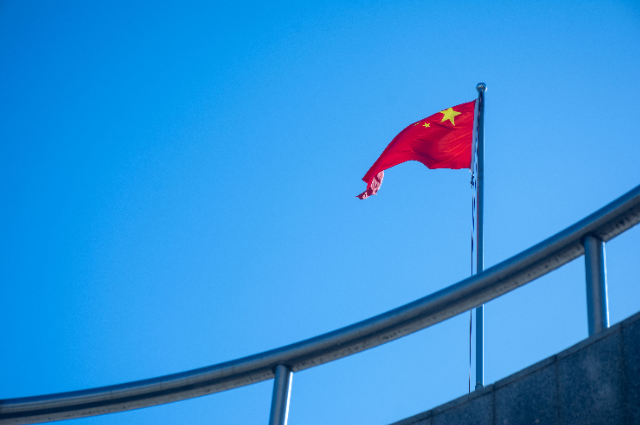
When world leaders gather at the annual G7 summit, one absence is impossible to ignore. China is the world's second-largest economy, the largest trading partner for dozens of countries, and arguably the most significant geopolitical rival to the United States. Yet while presidents and prime ministers from seven wealthy democracies sit around the table, Beijing remains out of sight, often whilst everybody inside the room discusses i.
The context speaks more to the history and purpose of the G7 than to China’s power itself.
The Group of Seven was born out of crisis. In the wake of the 1973 oil shock, leaders of the world's largest advanced industrial economies began meeting informally to coordinate responses to economic turbulence(Oudiz & Sachs, 1984). It started as the gathering of six nations: the United States, the United Kingdom, France, West Germany, Italy, and Japan. In 1976, Canada joined, expanding into the coalition now known as the G7.
Unlike the United Nations, the World Trade Organisation, or the International Monetary Fund, the G7 is not a formal international organ. There are no headquarters, no permanent secretariat, and no treaty underpinning its existence. The lack of binding votes and constitutional amendments highlights the group's remarkably unbureaucratic nature by international standards. It is essentially a very exclusive annual group chat for governments (The spread of informal governance practices in G-summitry, 2020, pp. 1-16).
The European Union also participates in summit discussions, although it is not counted as a formal member.
Because the G7 emerged as a group of Western-aligned industrial economies, its membership has remained stable. The only major change came in the 1990s when Russia was invited to join, creating the short-lived G8. Moscow's inclusion reflected hopes that post-Soviet Russia would integrate more closely with the West. (Mingst, 2026).
Those hopes aged about as well as most optimistic predictions from the 1990s. Following Russia's annexation of Crimea in 2014, the other members suspended Moscow indefinitely. Since then, the forum has reverted to the G7. (The Moscow Times, 2014) China, meanwhile, has never been a member.
This is no doubt surprising given China's economic weight. If we are to measure by purchasing power, China is the world's largest economy. It manufactures more goods than any other country and plays a central role in global supply chains. On paper, its exclusion seems hard to justify (Richter, 2025).
But the G7 was never designed to represent the world's largest economies. If it were, countries such as China, India, and Brazil would almost certainly have permanent seats. Instead, membership reflects the country's historical continuity, political alignment, and democratic governance. The seven members share broadly similar political systems and views on international institutions. They also tend to benefit from the same strategic systems. While disagreements are common, the group generally presents itself as a coalition of liberal democracies committed to a rules-based international order. (CFR, 2025)
China's one-party political system places it outside that tradition. More importantly, many of the issues dominating recent G7 agendas concern China's growing influence.
Discussions around trade dependency, industrial policy, technology security, supply-chain resilience, and military tensions in the Indo-Pacific frequently centre on Beijing itself.
Inviting China as a full participant would create a slightly awkward situation of discussing China with China.
That does not mean China is absent from summit diplomacy.
Each year, the country hosting the summit controls both the agenda and the guest list. Hosts routinely invite non-member nations to participate in selected sessions. These invitations allow the G7 to engage with major regional powers and emerging economies without expanding the core membership.
For the 2026 summit hosted by France, invitations have been extended to India, Brazil, Egypt, Kenya, and South Korea. These countries will attend portions of the summit and participate in discussions on specific issues. However, they are guests rather than members.
That distinction matters.
Guest countries have no permanent seat at the table, no role in setting future agendas, and no claim to membership rights. Think less "new cast member" and more "special guest appearance."
In practice, however, formal membership is not always the most important aspect of a G7 gathering.
Much of the summit's real diplomatic value lies outside the official meetings. The annual gathering creates opportunities for dozens of bilateral discussions between leaders who might otherwise struggle to coordinate schedules. Agreements are often advanced in private conversations held on the sidelines rather than during plenary sessions.
For invited countries, these side meetings can be as valuable as participation in the summit itself. A visiting leader may secure meetings with the American president, European leaders, Japanese officials, and international institutions within a single trip.
This is one reason invitations to the G7 remain highly sought after despite the group having no voting power. The summit may be exclusive, but networking opportunities are excellent. It’s like parents sending their kids to elite private schools; it’s as much for the connections as it is for the results.
China's absence, therefore, is not an oversight. It reflects the forum's origins as a club of advanced democratic economies and its continuing role as a host, in whose living room countries can coordinate their positions on global issues. While Beijing's economic importance is undeniable, the G7 has never aimed to be a miniature version of the global economy.
As long as the organization remains defined by its history and political identity rather than economic size alone, China will likely continue to influence discussions from outside the room.
In years from now, that may be the most powerful position of all.
References:
- Oudiz, G. & Sachs, J. D. (1984). Macroeconomic Policy Coordination among the Industrial Economies. Brookings Papers on Economic Activity 1984, pp. 1-75. https://www.brookings.edu
- (2020). The spread of informal governance practices in G-summitry. Political Science 72(1), pp. 1-16. https://doi.org
- Mingst, K. (2026). Group of Seven | Member Countries, Structure, Established, & Summits | Britannica. Britannica. https://www.britannica.com
- (March 25, 2014). Russia Suspended From G8 Over Crimea Annexation. The Moscow Times. https://www.themoscowtimes.com
- Richter, F. (2025). China Is the World's Manufacturing Superpower. Statista. https://www.statista.com