
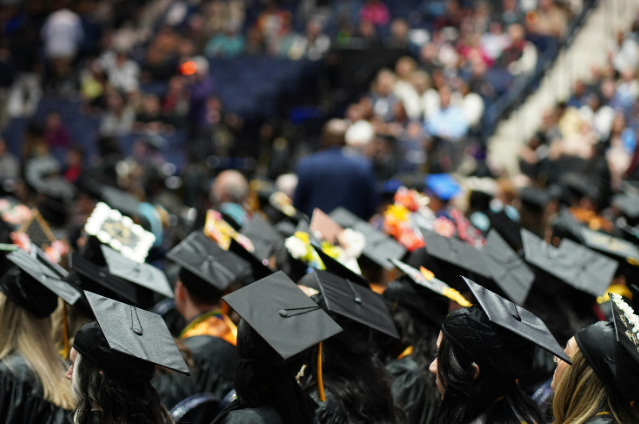
The atmosphere at Stanford Stadium on June 14, 2026, was thick with the usual pageantry of graduation, the sun-drenched bleachers, the sea of caps and gowns, and the heavy, humid expectation of a keynote address from one of Silicon Valley’s most powerful titans. But as Google CEO Sundar Pichai approached the podium to address the graduating class, the veneer of academic celebration shattered.
As the university president introduced the leader of the world’s most pervasive technology company, a wave of motion rippled through the stadium. Roughly 200 graduates stood in unison, turned their backs on the stage, and began a silent, purposeful exit. The polished, rehearsed silence of the ceremony was soon punctured by a rising, rhythmic chant: "Free, free Palestine."
The target: Project Nimbus and the ethics of code
The demonstration, meticulously planned weeks in advance by the Stanford chapter of Students for Justice in Palestine, was not a vague expression of dissent; it was a precise, targeted strike against Project Nimbus.
The $1.2 billion contract a tripartite deal between Google, Amazon, and the Israeli government has become the rallying cry for a generation of tech-literate activists. For these graduates, the deal represents a definitive ethical red line: the provision of cloud computing and advanced AI tools to the Israeli military, which protesters argue makes the tech giant a direct participant in the ongoing humanitarian crisis in Gaza.
As the students exited, their banners told the story of a workforce that refuses to be bought by signing bonuses or prestige. Signs reading "Genocide Runs on Google" and "No Tech for Apartheid" transformed the graduation floor into a front line of the culture war. The protest brought into sharp relief a question that has haunted Silicon Valley for years: Does a company’s responsibility end at the bottom line, or does it extend to the real-world applications of its infrastructure?
Pichai’s Calculated Evasion
Sundar Pichai, a Stanford alumnus himself, stood at the microphone as the walkout unfolded. He didn’t stop. He didn't acknowledge the protestors with a pause, a nod, or a rebuttal. Instead, he leaned into a strategy of surgical deflection.
Aware that his peers in the industry had been ruthlessly heckled at other elite universities earlier that spring for touting the "AI revolution", Pichai made a choice that felt almost desperate in its avoidance: He spoke not a word about artificial intelligence.
"People have been giving me a lot of advice … about what not to say," he joked at the start of his address, referencing his own name and the current climate. He pivoted quickly to safe, timeless commencement tropes: the immigrant’s journey from Chennai, the value of "choosing optimism," and the call to "do what excites you." He attempted to frame the moment as a celebration of family, perseverance, and the classic Silicon Valley "hustle."
But the imagery told a different story. As the speech played on, many of the students who had walked out were already convening at a "People’s Commencement" held under the shade of nearby oaks. There, the energy was defiant and celebratory, with music by Marvin Gaye and Nina Simone replacing the corporate veneer of the main stage.
A house divided: The moral conflict
The incident has ignited a fierce, predictable firestorm, highlighting the widening chasm between Silicon Valley’s institutional elite and the grassroots activism defining the next generation of tech talent.
The critique levelled by venture capitalist Vinod Khosla captured the frustration of the "old guard." Khosla didn't mince words, labelling the protest "biased, idiotic, short-sighted and very selfish." His position represents the prevailing sentiment among many industry veterans: that these students are squandering their privilege and failing to grasp the immense, world-improving potential of the technology they are protesting. To this camp, the protest was a performative distraction from the actual work of progress.
Conversely, the defence offered by Congressman Ro Khanna provided a counter-narrative. Khanna championed the students' right to challenge authority, framing the protest not as a failure of manners, but as a necessary exercise of the very critical thinking that a university education is intended to foster. For these students, the protest was an act of moral clarity in a world where corporate profit is increasingly untethered from human consequences.
The shift in the Silicon Valley paradigm
When the ceremony concluded, a BBC journalist pressed Pichai for a comment on the disruption. The CEO didn’t break stride, offering no response and continuing his walk toward the exit.
His silence spoke volumes. It was a fitting end to a day that proved one thing: the era where tech leaders could command a stage and the future without being held to account for the geopolitics of their code is officially over. The Stanford walkout wasn't just about one contract; it was a symptom of a larger, systemic shift. As major tech giants become the backbone of state infrastructure, their operations are increasingly treated as political acts.
For the graduates who left the stadium, the walkout was an opening salvo in a longer career battle. They are entering a workforce that is no longer content to treat "ethics" as a footer in a Terms of Service agreement. Whether or not these companies can survive this new level of scrutiny depends on whether they view this as a PR nightmare to be managed, or a fundamental moral question that requires a change in direction. For now, the rift only continues to grow.
References:
While there are no papers on this specific 2026 protest, the following academic sources provide context on the history of tech-sector activism and the ethical debates surrounding AI in academia:
- On the history of student activism against tech companies on campus:
Statt, N., & Glaser, A. (2019). The Techlash Has Come to Stanford. Slate. (Discusses the long-standing tension between Silicon Valley firms and student bodies at universities like Stanford). - On the role of social movements in AI ethics:
von Struensee, S. (2021). The Role of Social Movements, Coalitions, and Workers in Resisting Harmful Artificial Intelligence and Contributing to the Development of Responsible AI. SSRN Electronic Journal. https://doi.org - On the integration of AI into university curricula and ethics:
Chun, J. (2023). The Crisis of Artificial Intelligence: A New Digital Humanities Curriculum for Human-Centred AI. International Journal of Humanities and Arts Computing, 17(1), 1–17.
https://doi.org