
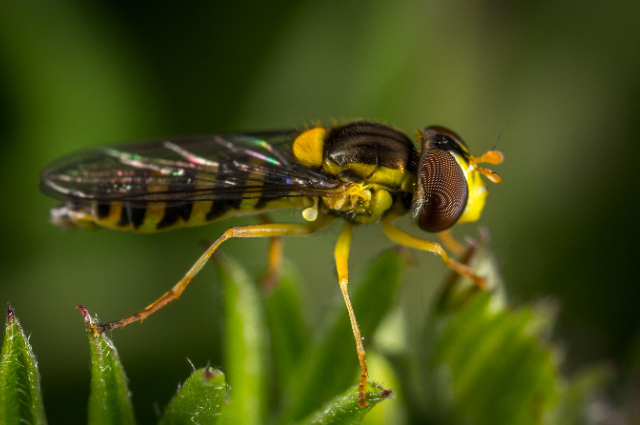
There aren’t a lot of creatures that are as viscerally horrifying as the New World screwworm. Scientifically known as Cochliomyia hominivorax, the New World Screwworm is a parasitic blow fly that lays eggs in animals’ open wounds and other body openings, such as the eyes and nose. The larvae laid down by female blowflies are considered especially dangerous because, unlike maggots, which are associated with decay, screwworm larvae feed on living flesh. What makes the larva particularly dangerous is how quickly it can become deadly. In just under a week, the larva can feed on animal skin, causing severe weight loss and making the wound exceptionally painful for the animal. Furthermore, it produces a really foul odour, which not only attracts other female flies to lay eggs in the wound but, if the infection is left untreated, can kill the animal in just a week.
While the infestation had previously been eradicated, it seems to have made a comeback and was first found in a calf in Texas, as reported by the New York Times. Dr Caleb Hubbard, a veterinary entomologist from New Mexico State University (NMSU), called the screwworm infestation a big problem. For much of the twentieth century, this parasite was one of the greatest threats to livestock across the Americas. The US Department of Agriculture estimated that farmers lost millions of dollars each year during the outbreak. It was particularly a problem for farmers since infections can be hard to detect, develop in even the tiniest of cuts and require the animals to be thoroughly checked physically every day, which is not possible.
Although there is still a chance of treatment for closely observed livestock, the story for wildlife is quite different. Dr Hubbard, in his interview on the MeatEater podcast, discussed the 2016 outbreak in the Florida Keys that killed endangered Key deer. According to Dr Hubbard, if these flies get into wildlife, there is a possibility of the infestation running rampant. The parasite does not discriminate, making wildlife, livestock and even pets at risk. While much rarer, the infection can be transmitted to humans and be deadly.
An Unlikely Scientific Breakthrough
During the first major outbreak, the breakthrough came from entomologists Edward F. Knipling and Raymond C. Bushland. They decided to use the Sterile Insect Technique (SIT), which was first tested on the island of Curaçao in the 1950s. It involved developing sterile male screwworm flies and releasing them into the wild. Since the females only mate once in their lives, when they came in contact with these sterile male flies, they were unable to lay eggs and spread the infestation further. The program was expanded across America and was one of the largest biological control programs ever attempted. By 1966, the infestation had been eliminated from the United States.
This was one of the greatest successes in applied entomology, and unlike widespread pesticide use, the use of sterile insects left ecosystems largely intact while targeting only one species.
Disease eradication has a way of sounding final. In reality, it often depends on constant maintenance. However, the screwworm was never eradicated globally. The eradication effort included gradually pushing south through a coordinated international effort until a permanent biological barrier was established in Panama. To maintain this barrier every week, millions of sterile flies were released over the region to prevent fertile flies from crossing into Central America and eventually North America. However, maintaining this barrier requires continuous funding, surveillance and cooperation between multiple countries. Any disruption, either due to political issues, reduced monitoring, changing environmental conditions or the movement of infected animals across borders, creates an opportunity for the parasite to spread once again.
When Eradication Isn’t Forever
Rather than a single failure, the resurgence is believed to result from several factors. Thus, even though for a while, the infection was essentially kept at bay through a combination of sterilisation efforts and the biological barrier of the Darién Gap in 2023, infection cases began surging again across Panama and Costa Rica. In recent years, officials have documented northward movement through Central America. By 2024 and 2025, outbreaks had spread into southern Mexico, prompting the United States to suspend imports of certain live cattle from affected regions while veterinary authorities intensified surveillance.
However, parasites are not controlled by geographic boundaries that humans deem permanent. Furthermore, there are multiple possible reasons for the reemergence of diseases. One of the easiest ways for diseases to spread is through humans, whose increased global travel allows pathogens and parasites to cross borders more easily. On top of that, the changing climate plays a role as well. While scientists do warn against blaming every emerging problem on climate change, the evidence seems to speak for itself. Warmer temperatures lengthen breeding seasons, improve survival rates in regions that were previously too cold, and alter the distribution of wildlife hosts. Just as the food we eat and grow has evolved, so have the pests that infect it. Warming climates are reshaping where insects, parasites and disease vectors can survive. This means that regions that were once naturally protected by colder winters may no longer offer the same level of protection. Therefore, as global temperatures rise, it's important to understand that disease surveillance is as important as disease treatment.
Containing the Outbreak
In the wake of this resurgence, state officials have taken several measures to curb the issue. Both Mexican and American authorities not only increased surveillance efforts but also temporarily suspended imports of live cattle, horses, and bison from affected areas to contain the issue. The government also urged farmers and veterinarians to report suspicious wounds immediately, as early detection remains one of the most effective ways of preventing further spread. Federal officials have stated that by working together and following the animal treatment plan, they believe they can prevent this pest from becoming a problem. In a joint statement to the USDA, John Boozman and Glenn Thompson said, “We have successfully eradicated this threat to livestock, wildlife and animal health before, and we’re confident we will do so again.”
References:
- The New York Times – "The Flesh-Eating Fly America Thought It Had Beaten Is Back"
- CNN – "Why the New World Screwworm Outbreak Has Scientists Concerned"
- CDC – About New World Screwworm
- USDA National Agricultural Library – Stop Screwworms Exhibition
- MeatEater Podcast – Episode 835: Attack of the Screw Worms (Interview with Dr Caleb Hubbard)
- USDA APHIS – Using the Sterile Insect Technique to Stop Screwworm Spread
- USDA APHIS – Animal Health Officials Respond to Second Detection of New World Screwworm
- USDA APHIS – USDA Shifts Sterile Fly Dispersal Efforts to Defend the U.S. Border
- USDA APHIS – Current Status of New World Screwworm
- Senate Agriculture Committee – Boozman and Thompson Statement on New World Screwworm