
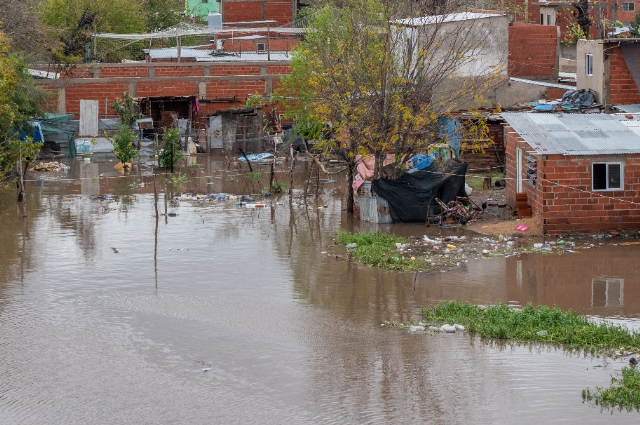
Kerala buried R Rajesh with state honours and a promise to finish his house. Three disasters in eight years tell us more about how much the state truly owed him.
R Rajesh was a 36-year-old swimming and rappelling instructor from Kalliyoor, Thiruvananthapuram, who died saving a 61-year-old farmer, Benny, by giving away his own life jacket to protect the old farmer from the raging currents of the Kariyankode River in Kannur. However, this act of quiet heroism by an ordinary citizen was not an isolated event. Rajesh was a veteran volunteer rescuer who had actively put himself in harm’s way during the 2018 Kerala floods and the 2024 Wayanad landslides. But while Rajesh’s heroism deserves celebration, we must also ask the larger institutional question: why did a swimming instructor have to risk his life, with no guarantees, not once but three times?
While Tragedies are celebrated literary stories with epic heroes and their unforgettable sacrifices, real life does not end with ballads and a legacy of heroism. In real life, heroes leave a family behind, and no state tribute or admiring article changes that. They leave behind people who grieve a loss they were not prepared for and are rarely compensated for. Nothing is ever enough to compensate for a life lost, but the families of official responders at least have institutional frameworks, pensions and service benefits to fall back on, to sort out one part of a life destroyed by an unexpected death. Such safety nets are rarely available to the families of volunteer responders, who are instead left to the mercy of the community's goodwill or "post-tragedy" government announcements.
On the afternoon of August 1, Rajesh did not find himself battling the torrential waves of the Kariyankode River out of duty or professional responsibility. He was merely a swimmer close enough to save a 61-year-old farmer stranded on an islet in the middle of an unexpected flash flood. Rajesh was not even from Kannur. He had only been in the district for about a month, working as an instructor at the Meenthulli Waterfalls adventure site. Along with two others, Shibin and a rafter named Jithin, he swam roughly 40 metres of overflowing river to reach Benny, who by then was clinging to a shrinking patch of land about 50 metres from the bank. On the way back, holding the safety rope at the rear of the line, he lost his grip in the current and was swept away. While Benny reached the shore alive, Rajesh’s body was found three days later near the Pulingome Bridge.
The rescue went awry for more than just unfortunate events or bad luck in the midst of a disaster. If a volunteer rescuer has to choose between his own safety and that of the victim, then there is obviously a gap in resources that we are oblivious to. However, Rajesh is not the first, and he will not be the last. In 2018, more than 2000 fishermen loaded their boats onto trucks and drove inland to Pathanamthitta, Alappuzha and Chengannur as local rescuers. By the state’s own admission, these local fishermen saved more lives than the NDRF, the Navy, and Fire Services combined, yet their promised compensation either arrived too late or was not enough. In 2019, a 34-year-old man named Linu from Cheruvannoor, helping in rescue efforts, was taken in by the floodwater and all his elderly parents and brothers were left with a letter speaking of the inspiring legacy of their son by the finance minister and not much else.
Rajeev Chandrasekhar, the BJP state president and MLA for Nemom, remembered Rajesh in a similar vein. For the state, Rajesh was a man “who had answered the call of duty whenever Keralam needed him." However, by painting these incidents of tragic death as results of individual bravery and acts of superhuman resolve, the state and the media romanticise what is essentially the tragic result of a systemic emergency management deficit. While it’s true that Rajesh’s story is one of unparalleled selflessness, it would be remiss not to discuss why our system is so severely lacking in protecting those who protect everyone else. Rajesh’s relative Dinil, in his interview with Onmanorama, asked a pertinent question: “He helped everyone. Now who will help his wife and kids?” Andit's a question worth pondering over because who are Rajesh’s wife and the two children he left behind meant to rely on?
The family didn't just lose their father or husband; they also lost their home, their economic stability, their mode of survival. After everybody has sung the praise of a fallen hero, who will stick around long enough to sort through the wreckage left in the face of a lost life? While politicians can give condolences and state honour funerals, who will take care of the family left behind that the state did not deem necessary to safeguard? After all, extraordinary interventions like the state taking over the building of a house are rare and more symbolic gestures than a permanent, meaningful solution. While the state offered honours and the promise to finish a house for this Rajesh, will the next Rajesh, dying without any financial safety net from the government, get the same treatment, or would his story end with a news article and social media post?
I don't believe my cynicism is an extraordinary claim. The state is well aware of what it relies on. Governments depend on people like Rajesh, the informal workers of adventure and tourism, the fishermen, the local swimmers, for their hyper-local knowledge of terrain and water. Moreover, their ability to respond in the "golden hours" of a disaster before official machinery arrives is crucial for the state. Yet despite that reliance, the state would rather give ad hoc speeches and condolences than bear the financial burden of maintaining a comprehensive and permanent rescue apparatus. While the state is all too happy to praise these "superheroes" it depends on, there is still no pre-existing social security for the volunteers or their families to fall back on.
Even the heroes of fiction are better provisioned than these zero-pay frontline volunteers. Comic-book superheroes have sidekicks and teams. The heroes of Greek epic at least have armour, a god on their side, and a poet waiting to record what they did. All Rajesh had was a rope, a coconut tree and two friends. Apparently, in real life, courage and kindness to your fellow citizens are not things a government can financially commit to protecting. I wrote something similar a month ago about the Assam floods, about drowned villages and departments that knew and did not act, and I am conscious that writing it again, about a different river, in the same measured voice, risks becoming its own kind of ritual. But that is rather the point. Since writing is all I can do, no matter how redundant and almost insignificant it seems, I can at least battle through my lost faith to keep talking about such events so they don't get lost under performative gestures and public speeches.
The frustrating thing is that the framework already exists. The National Disaster Management Authority has been running the Aapda Mitra scheme since May 2016, precisely to address the gap in which members of the public, by virtue of proximity and local knowledge, are expected to jump headfirst into high-risk situations. It began as a pilot training 6,000 volunteers across 30 flood-prone districts and has since been scaled up to a target of one lakh volunteers across 350 districts. Kerala has trained volunteers in all 14 of its districts, with 12-day residential courses at the Thrissur Fire Academy. On paper, the scheme identifies, trains, and structurally integrates community volunteers into the formal disaster response system. It provides personal protective equipmentand emergency responder kits and gives each trained volunteer insurance cover of ₹5 lakh for three years. Like many theoretically well-established programmes, it looks excellent on paper. But if a man with Rajesh’s experience, three disasters deep, was still an informal volunteer with no cover and only one life jacket, then these schemes leave much to be desired in practice. The three-year insurance window alone tells you how the state values veteran volunteers who don't move on but keep coming back to support even eight years in.
As selfless as Rajesh was, his death does not end at being heroic. Perhaps that heroic sacrifice would not have been necessary had the state whose work he was doing valued him before he died. Perhaps his family would not have had to wait three days for his body to be recovered from the wreckage of his sacrifice. There is a systemic lack that needs to be addressed beyond grand gestures and condolences. Building a house for one family does not solve a systemic problem. It only tells the next family what it will take to be noticed.
References:
- "Hero to one family, heartbreak to his own: Rajesh dies saving 61-year-old Benny," Kerala Kaumudi, 4 August 2026
- "Kerala swimmer died saving a man from swollen river, gave his life jacket before being swept away," Onmanorama, 4 August 2026
- "Kerala hero dies after giving his life jacket to save 61-year-old in Kannur," WION, August 2026
- "Kerala flood volunteer Rajesh dies after handing life jacket to 61-year-old man," MSN/PTI, 5 August 2026
- "Hero of Kerala floods gives away life jacket, dies trying to save drowning farmer," National Press Union of India, 5 August 2026
- "Rajesh to be laid to rest with state honours, financial aid for shops destroyed in rain fury," Kerala Kaumudi, 5 August 2026
- "Kerala accords state honours to Rajesh who died during rescue operation, vows to complete unfinished house," Onmanorama, 5 August 2026
- "Body of Rajesh who lost life during rescue operations brought home, CM pays tributes," Kerala Kaumudi, 5 August 2026
- "Flood hero's farewell leaves Kerala in tears," IANS via Assam Tribune, 5 August 2026
- "Homeland bids tearful adieu to Rajesh; Funeral held with state honours," Kerala Kaumudi, 6 August 2026
- "CPI(M) alleges 'unpardonable disrespect' to body of flood rescuer Rajesh," The Pioneer, 6 August 2026
- Rajeev Chandrasekhar and V D Satheesan, posts on X, 4–5 August 2026