
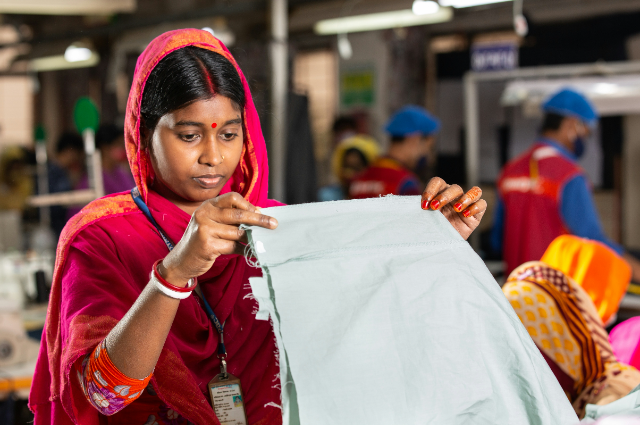
As a young girl, I remember the best days of my life were the last days of Navratri. I was a goddess, and goddesses were showered with money. My sister and I used to take our collections from the whole neighbourhood and put them in little pouches, and every year we would take out our savings, diligently count them and put them back in. I also remember when I was no longer allowed to be a goddess, because I was no longer a kanya. From then on, my job was to clean up after the puja, after the younger girls, after my dad. I was no longer revered or appreciated for being a girl, because at fourteen I had become a woman. And women, apparently, do not get the same reverence, or the free cash benefits, that young untainted girls do. I will be honest: at the time it was mostly the loss of my yearly income that bummed me out. But as I have grown up, I have come to view the whole tradition with much more sadness and scepticism.
Hinduism is perhaps one of the few major religions with as many goddesses as it has gods, and many of our festivals and religious holidays are owed to female deities. This Ashtami, for instance, in homes across the country, little girls will be invited in, seated in a row, have their feet washed by adults, be served food and have a red thread tied around their wrists, so that the household can gain the blessings of Durga, whose avatars these little girls are considered to be. Yet as the Navratri evenings pass, we forget all the promises made and the protection these little girls were meant to afford the homes that prayed to them. They go from being a reflection of the goddess back to being daughters, in a country that doesn't seem to care much about its daughters when they aren't actively being prayed to. So when I got the opportunity to write about Sharayu Daftary, I knew that, despite my wish for this piece to remain solely hers and about her achievements, we needed a larger conversation about the current treatment of women in this country.
Sharayu Daftary was born in 1933, in the bustling city of Bombay, into the Hirachand family. Her uncle, Walchand Hirachand, was a pioneer of Indian industry, known for building ships, aircraft and construction firms while most of India was still under the British Raj. Daftary went on to study economics at Elphinstone College and soon after, at the young age of nineteen, married Arvind Gaurishankar Daftary. However, Sharayu Daftary is not known because of her family but because of her own groundbreaking work in Indian business. Excluded from the family business because of her gender, Daftary decided to start her own. In 1958, at age 25, she founded Bharat Radiators. Without an advanced degree, with ₹2 lakh and the help of five workers, she built a company supplying components to India’s automobile industry. She remained its managing director for the rest of her life, and in 1971 she became the first woman president of the Automotive Components Manufacturers Association. Sharayu Daftary’s story is one of opening doors that had been locked to women in the name of customs and culture.
However, before we delve further into the accolades the exemplary Sharayu Daftary earned in her lifetime, it is important to understand how women have been confined to the home as a symbol of Indian customs and culture. In his essay “The Nationalist Resolution of the Women’s Question”, the historian Partha Chatterjee talks about a puzzle: how women’s rights in Indian society went from being central to social discourse to being regarded as an almost unnecessary conversation. He takes us back to nineteenth-century Bengal, where reformers like Raja Rammohun Roy and Ishwar Chandra Vidyasagar had fought loudly and proudly against sati, for widow remarriage, against child marriage and for women’s education. Then, towards the close of the century, it almost seemed as though we had solved every issue of women’s rights, with the way the conversation fell out of social discourse. What has perplexed historians, Chatterjee writes, is "the rather sudden disappearance of such issues from the agenda of public debate."
That is, of course, not because the issues were solved. As a child, I don’t think my brother was ever told to clear the table or help with household chores. Even as a 24-year-old, I am not allowed to walk 2 km to the gym after dark or roam around the university campus because, apparently, it is not safe. So, of course, the reality is that the puzzle has not been solved.
The common narrative goes that the early emancipation of women was brought about by Western ideals, and that the rise of nationalism during the independence movement then made the public view all Western ideology as a corruption of Indian culture and values. Chatterjee argues that this is not essentially what happened. Drawing on the historian Sumit Sarkar, he shows that even during the Western wave, the so-called Western-educated modern man did not wish for women’s emancipation so much as for a better way to be incorporated into Western society without being looked down upon. Faced with “social ostracism and isolation,” these men attempted “a limited and controlled emancipation of wives” as “a personal necessity for survival in a hostile social world.” In such a case, women’s freedom was viable only as long as it assisted the men. Sarkar argues that whatever has changed for women since has come “through objective socio-economic pressures, some post-independence legislation, rather than clear-cut ideology or really autonomous struggle.”
So Chatterjee argues that the women’s question did not fall silent because it was forgotten. It fell silent because nationalism had “resolved ‘the women’s question’ in complete accordance with its preferred goals.” The outer world of science, commerce, and the state could borrow from the West. The home, the nation's spiritual inner self, could not. And women were made the guardians of that home. One text Chatterjee quotes puts it with brutal neatness: “In the Arya system, the wife is a goddess. In the European system, she is a partner and companion.”
It is understandable that, at the turn of the nineteenth century, a thorough liberalisation of social and public institutions was impossible in a country bound by colonial laws. But I believe that is an excuse Indian politics and social discourse can no longer use. We have had seventy-nine years of our own constitution, our own courts and our own parliament. If women are still being sent back indoors in the name of culture, that is no longer the Raj’s doing. It is ours.
So while Daftary was praised for working factory floors in a sari, there was a time when Bengali women were called frivolous for wanting a blouse, a petticoat or a pair of shoes, all of which, as Chatterjee notes, were “considered vulgar, although they clothed the body far better” than the single length of sari that was then customary. They were mocked for reading novels, for needlework, for riding in open carriages and for Western cosmetics and jewellery, all supposedly picked up from the vapid, frivolous attitude of Western women. One nineteenth-century complaint that Chatterjee quotes grumbles that “the women do not learn English but try to become bibis,” and that in such homes “everything is done by servants and maids; [the women] only read books, sew carpets and play cards.”
But Daftary is revered exactly because she can be put on a pedestal, a trailblazer who opens locked doors. After ACMA, in 1981 she became the first elected president of the Indian Merchants’ Chamber, and for a while she was president-elect of both the Chamber and its Ladies’ Wing at once, which tells you exactly where the institution assumed a woman belonged. She returned to the Chamber for a second term in 2000. She was the first woman on FICCI’s executive committee and the first woman Rotarian in her local club. In 2004, she received the Padma Shri. She died in May 2025, in her nineties.
But what about the women who wanted “maids” to help with housework, or who indulged in “unnecessary” and expensive hobbies like needlework because they weren’t considered appropriate at the time? To gain respect and rights, do women always have to rewrite history, or can they simply demand what they want? Daftary lived a successful and inspiring life by upholding both her business values and her religious ones. “From my childhood, by education and example, I have been guided by the five principal tenets of Jainism,” she said: ahimsa, satya, asteya, aparigraha and brahmacharya. She edited Jain Bodhak, the fortnightly her grandfather had founded, and when the Vajpayee government declared 2001 a year for women, she used its pages to argue that gender equality is intrinsic to Jain dharma, which, as one profile summarised her, grants a woman as much dignity, freedom of thought and opportunity as a man. On marriage, she said that “a man and a woman are like the twin wheels of life’s carriage,” and that they “must nurture mutual respect and buffer each other at all times on their journey towards self-expression and fulfilment.” While this is definitely commendable, I do end up wondering whether she would have been given the same reverence had she left her husband or become an atheist.
Chatterjee argues that the nationalist narrative was very slick in the way it curbed women. Nationalists could not simply keep out the liberal influence of the Western world, so they created a division between the spiritual and the material. “The world is the external, the domain of the material; the home represents our inner spiritual self, our true identity,” he writes. The world was “typically the domain of the male,” while the home’s essence “must remain unaffected by the profane activities of the material world – and woman is its representation.” In the world, imitating the West was a necessity; at home, it was “tantamount to annihilation of one’s very identity.” So the spiritual was tied to homemaking: taking care of the family and unilaterally taking up the unpaid, unappreciated burden of maintaining a home and raising children. This was then framed as a pious duty, something only a woman's softer nature could do, because women, as one writer, Chatterjee, puts it, “express in their appearance and behaviour the spiritual qualities which are characteristic of civilised and refined human society.” It gave nationalism a religious reason to disregard women’s rights. Women could change their clothes and even their education, but “they must not lose their essentially spiritual [i.e. feminine] virtues; they must not, in other words, become essentially westernised.”
If this sounds like a history lesson, it is not. The idea of the home, and the woman inside it, as the last protected keeper of Indian culture is alive and well, and these days it calls itself Sanatan. This summer, from 20 June to 25 July 2026, young people sat at Jantar Mantar protesting the NEET paper leak, many under the banner of the Cockroach Janta Party, and they won: the education minister resigned. Then, once the protest was over, the hunt began, and perhaps the most depressing thing for me was that I was not surprised that it unfairly targeted women. After all, it is Delhi. What can we expect from the nation’s capital if not unrestricted abuse against its female citizens?
ThePrint described a Delhi content creator whose day began with scrolling through protest reels, identifying “opponents of Sanatan” and circulating their faces. One of his captions accused two young women of putting on “quite a show with their body displays.” Once they identified a woman, self-appointed “counsellors” turned up at her home. One man said he first counselled the parents, then told the young women what would happen to their future and their family until they apologised. One of the girls who apologised on camera was fifteen. Under videos of women protesters being hit by their own relatives, commenters wrote that if she had been given good sanskar, this would not have happened. Gurmehar Kaur of the Indian Youth Congress put it plainly: the goal is “to intimidate, humiliate, and force women to delete their accounts and stay quiet.”
Read that against Chatterjee, and it is almost the same script. A woman steps out of the home and into the “world”, and she is not listened to or debated with but sent back. Not by the law, but by men who believe they are protecting culture. The Bengali woman in her open carriage and the girl at Jantar Mantar are being scolded for the same thing.
Daftary also spoke of “our values and our culture”. She used those words to describe a marriage of equals and a woman’s right to self-expression. The men at the doors of those girls’ homes used them to justify a slap. And it is not new. In 2022, when the eleven men convicted of gang-raping Bilkis Bano and murdering her family walked out of jail, a BJP MLA who had sat on the panel that recommended their release said they were Brahmins, and Brahmins “have good sanskar.” He later said he had been misunderstood, and in January 2024 the Supreme Court struck down their release. But the sentence was said, by a legislator, about men convicted of rape.
So yes, we pray to women. We will wash small feet on Ashtami. We will pray to Durga and Kali, rage wars in the name of respect for our gods and goddesses, but then:
In November 2023, a student at IIT-BHU stepped out of her hostel at night with a friend and was, according to her complaint, gagged and stripped by three men. The accused held posts in the BJP’s IT cell in Varanasi, the same machinery that now turns its cameras on women protesters. The party said it expelled them. In 2024, two were granted bail, and one was reportedly welcomed home with garlands. In August 2024, a junior doctor was raped and murdered inside RG Kar Medical College in Kolkata, the hospital where she worked. The same month, in Badlapur, two kindergarten girls were allegedly abused by an attendant at their school. In June 2025, a student was gang-raped inside a law college in south Kolkata, and weeks later a woman was lured to a boys’ hostel at IIM Calcutta for what she was told was a “counselling session” and allegedly drugged and raped. In May 2023, at the same Jantar Mantar, India’s women wrestlers, who had accused a BJP MP of sexual harassment, were dragged into police buses on the day the new Parliament was inaugurated. The National Crime Records Bureau recorded 4,48,211 crimes against women in 2023, including 29,670 rapes, and those are only the cases the police chose to write down.
School, hostel, campus, workplace, protest site. There is no room on that list where a woman was safe because she was revered. Reverence and violence are not opposites here. They grow from the same root: the belief that a woman’s worth lies in staying where she has been put.
I think a lot about those little pouches of Navratri money now. For a few days a year I was worth something simply for being a girl, and then I grew up and was handed a broom. Daftary, too, was handed a door that would not open. She built her own room instead, without giving up her faith, her sari, or her marriage. Perhaps that is why the country could celebrate her: she never asked it to choose.
The young women at Jantar Mantar did not ask it to choose either. They simply expressed their thoughts as is their constitutional right in an independent country. For that, they were hunted, shamed and “counselled” back into their homes, in the name of the same culture Daftary drew her strength from. If her life proves anything, it is that Indian tradition was never only the goddess kept at home. It also made room for a woman who stood within dharma and said she was owed as much dignity, freedom of thought, and opportunity as any man.
Honouring Sharayu Daftary is not putting her on a pedestal beside the goddess. It is to reclaim the word sanskar and make it mean what it meant to her. Until then, every Ashtami we will worship girls in the morning, and spend the rest of the year teaching them a lesson.
References:
- “Ms Sharayu Daftary about the Jain influence”, Jain Samaj (archived); profile also reproduced in the Vardhaman Book on Jainism (jainqq.org)
- Sharayu Daftary, Wikipedia, and the sources it cites (Upper Crust India, CNN Travel, IMC Milestones)
- ISJS obituary tribute, May 2025
- Partha Chatterjee, “The Nationalist Resolution of the Women’s Question”, in Kumkum Sangari and Sudesh Vaid (eds), Recasting Women: Essays in Colonial History (1989), including its discussion of Sumit Sarkar
- Samridhi Tewari, “A sinister doxxing campaign is targeting women protesters”, ThePrint, 4 August 2026
- IFF complaint to the NCW and NCPCR, 7 August 2026
- “FIRs, doxxing: Hindutva X handles target CJP women protesters”, Siasat, citing The Wire
- “Bilkis rapists are 'Brahmins, have good values', says BJP MLA”, The Wire
- “IIT-BHU gangrape case: 2 BJP IT cell members granted bail”, Siasat; Factly on the party’s expulsion
- “IIM Calcutta student arrested for alleged rape inside hostel”, PTI via Careers360, 12 July 2025
- Protesting wrestlers detained at Jantar Mantar, Deccan Herald, 28 May 2023
- NCRB 2023: close to 4.5 lakh crimes against women, PTI via The Week, 30 September 2025
- Navratri 2026 dates and Kanya Pujan, Brut