
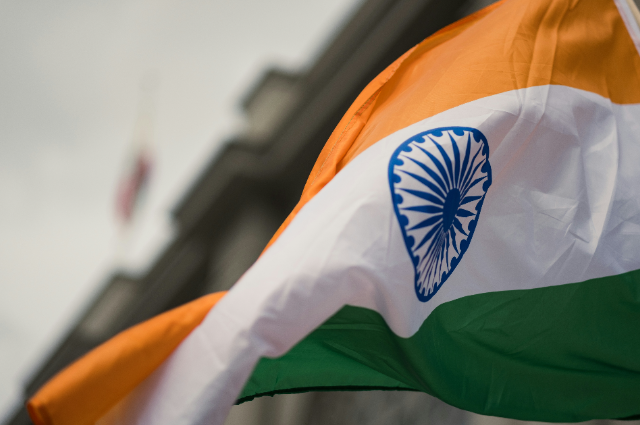
National anthems, like many nationalist or countrywide customs, are not only particular but also speak directly to a nation's identity. By law, people are sometimes required to respect, remember, and sing them to define who they are as a collective. But such anthems, like many other customs, are rarely as fixed a ritual as they appear. Over the years, several nations have contemplated what their anthems and customs say about them and whether it is time to move away from perhaps alienating narratives and identities created years ago.
One of the most famous examples of such struggles is the protest led by NFL quarterback Colin Kaepernick in 2016, when he decided to kneel during “The Star-Spangled Banner” to protest racial injustice and police violence against Black Americans. His protest was supported by several other players who bent the knee in solidarity to question the unity that this anthem demanded, which did not match the lived realities of the Black Americans constantly facing discrimination and violence. While this specific protest wasn’t so much about the specific words of the anthem but about what they represented, it did open wider conversations in a simpler vein. Francis Scott Key’s rarely sung third verse, written during the War of 1812, contains the line “No refuge could save the hireling and slave,” which many read as gloating over enslaved people who escaped to fight for the British. Historians still disagree on how literally to take it, but the point remains. Do the people mindlessly following a custom in the name of nationalist identity and respect even know the meaning and history of the words they sing and stand by?
Critics of the US Pledge of Allegiance, which had “under God” added to it in 1954 during the Cold War, have long argued that turning a civic duty pledge into a representation for various agendas, whether they be political or religious, has the same inherent question within it. Can a ritual meant to unify really be built through words that alienate and forget?
When countries do change the words
So while researching the debate around Jana Gana Mana, I did wonder if perhaps there have been other states battling with similar questions and predicaments, and if that has ever led to changes in what people usually consider to be an unchangeable monolith of tradition. Interestingly, I found that Canada made “O Canada” gender-neutral, replacing “in all thy sons command” with “in all of us command”, after a bill that had been debated for more than eighteen months. The original 1908 English lyric had in fact been gender neutral, and the “sons” only arrived around the First World War. Australia changed a single word in 2021, from “for we are young and free” to “for we are one and free”, because calling the country “young” erased Indigenous peoples whose culture on that land goes back tens of thousands of years. Germany is perhaps the most dramatic case. Its anthem today is only the third stanza of the Deutschlandlied, the one about unity, justice and freedom, while the infamous “Deutschland über alles” stanza, so closely tied to the Nazi era, was left behind.
Which at least answers the question of whether anthems are changeable or not, since anthems are apparently definitely editable when a country changes what its identity needs to be. Which makes the question about the Indian anthem and its lyrics even more interesting.
But the more I read about it, the more I realised the real question is not whether India can change its anthem, but rather who gets to decide when it does, and for whom. The Indian state’s refusal to touch Jana Gana Mana is usually presented as a neutral act of respect for Tagore and for tradition. Yet in the same years that every request to add or remove a single word has been turned away, the government has been busy rewriting almost everything around the anthem. For instance, when it is played, who must stand for it, etc. Which makes me think that it’s not the text that is frozen out of reverence, but because of a narrative of usefulness.
The map Tagore drew
In India, specifically, states from Kashmir to Assam and the rest of the Northeast have all been asking the same question: why these states are not featured in the anthem or why the state is not even considering adding them. The poem by Rabindranath Tagore, written in 1911 with the line “Punjab-Sindh-Gujarat-Maratha/Dravida-Utkala-Banga” that later turned into India’s national anthem, doesn’t really name any true places in India. Sung for the first time at the Calcutta session of the Indian National Congress, the places named are not really administrative units but broad regional and linguistic identities that, put together, sketch British India. Given that the poem describes the part of the subcontinent directly under the rule of the British Raj, it is not unexpected that the map of modern India barely resembles the names in the anthem today.
Back in 1911, Rajasthan did not exist and was instead referred to as Rajputana, which was a cluster of princely states under the British political agency. Similarly, Kashmir was also a princely state not officially belonging to British India then. However, similar things can’t be claimed for northeastern states since Assam was a British province in 1911 and still does not appear in the anthem. While I can’t claim to know what truly motivated Tagore when he wrote the poem, one common reading is that the India he imagined was seen very much from Bengal, and shaped more by lyrical harmony than by any specific political agenda.
However, if we analyse the same history, it does make me question whether such a poignant poem written by one of the biggest social activists of the time had no political agenda, and that its choice of places had nothing more behind it than lyrics. On 12 December 1911, at the Delhi Durbar, King George V announced that the 1905 partition of Bengal was being annulled, the very partition Tagore had so publicly protested against, and that the capital would move from Calcutta to Delhi. When the poem was sung at the Congress session later that month, the same session also welcomed the king, which is where the long-running rumour that Tagore wrote it in praise of George V comes from. Although Tagore denied such claims, a poem that places “Banga” back inside a united India in the very month Bengal was put back together does not really read like a poem written for lyrical harmony alone. So how far can we really argue that it was a poem first and an anthem later? And once it became an anthem, didn’t it open itself up to the cultural questions and demands that come with having to reflect the country as it stands today?
And then there is the question of Sindh. While states like Kashmir and Assam have been asking why they have been left out, the question with Sindh has always been why it is still in. Unlike the North-East or Kashmir, Sindh was very much a part of British India in 1911, so its place in the line made sense at the time. But unlike Punjab and Bengal, which were split in 1947, Sindh went entirely to Pakistan. This leaves the Indian anthem in the rather strange position of naming a province that is not even in the country, while regions actually present in India remain unnamed.
When the Constituent Assembly adopted Jana Gana Mana on 24 January 1950, President Rajendra Prasad said it was the anthem “subject to such alterations in the words as the Government may authorise as occasion arises.” So the intention clearly had never been to freeze the text in the name of Tagore or reverence, so why has the request consistently been denied over the years?
Taking Sindh to court
Unsurprisingly, people have tried to amend it in pretty much every forum available. The most famous attempt was in 2005, when an advocate named Sanjeev Bhatnagar asked the Supreme Court to delete “Sindh” since it now named a part of a foreign country, and even suggested “Kashmir” in its place. The Court, however, did not simply dismiss the petition, and its position has not changed since. It called it “publicity interest litigation” and fined him ₹10,000 for it. What I find more interesting than the dismissal, though, is the reasoning. The bench held that an anthem is not a chronicle that defines a nation’s territory, that “Sindh” refers not only to a place but to a people, a river and a culture, and that tampering with the poem would be disrespectful to Tagore. More than anything, this feels like the Court admitting that the anthem is less a statement of the country’s identity and more a way of paying respect to a poet who died decades ago. Which makes me question whether that is really justifiable, when an anthem is meant to present the identity of a country’s people rather than simply pay tribute to its author.
Six years later, a retired professor, Shreekanth Malushte, went to the Bombay High Court with a much more curious argument. Relying on a Right to Information reply from the Ministry of Home Affairs, he claimed that the text officially adopted in 1950 actually said “Sindhu”, the river, and not “Sindh”, the province, and that India has essentially been singing two versions of its own anthem all along. The court pointed out that the Supreme Court itself had quoted the word as “Sindh” and asked the government to clarify. Nothing changed in how the anthem is sung, but it does make you wonder how fixed a text can be if even the government is not entirely sure what it says or represents.
Shiv Sena MP Arvind Sawant raised a similar issue in the Lok Sabha in 2016, and in 2018 Congress MP Ripun Bora moved a private member’s resolution in the Rajya Sabha to replace “Sindh” with “Northeast India”, calling Sindh part of a hostile country. Setting aside the whole political debate on India’s relationship with Pakistan, Bora’s resolution offered, in theory, a simple solution to an age-old issue: the Northeast’s absence would be fixed by Sindh’s removal. But it also makes me wonder whether there is really no way for the country’s history to be in conversation with its present. Why can nothing be added to the anthem without treating it like a frame with a fixed number of seats, where one place has to be pushed out for another to get in?
Why the word stays
So why has “Sindh” survived every single one of these challenges? The two reasons most often given are consistency and belonging. The argument has been that since the poem was written back in 1911, it apparently does not match India much at all, and Sindh is far from the only problem. There is no state called Utkal since it is now known as Odisha. Similarly, Dravida is not the name of a state but rather a whole southern linguistic and cultural world. Maratha is a people rather than Maharashtra, and Banga now spans two countries. So the argument, however, has always been that if one outdated name is taken out, then the same logic would demand taking them all out, at which point Tagore’s poem might as well be rewritten. However, the question I keep coming back to is this: even if these names don’t match the modern ones, they still represent real cultures and places of the subcontinent. That is a recognition denied to regions like the Northeast and Kashmir, which are not referred to at all, not even metaphorically.
The second reason, as noted, is about belonging. Partition divided Punjab and Bengal, so Punjabis and Bengalis in India at least kept a piece of their homeland, a state that still carries its name. Sindhis kept nothing. The historian Uttara Shahani argues that because Sindh was never partitioned, Sindhis in India were left without any historic territory to claim, and that this has shaped their entire relationship with the Republic. When the 2005 case was heard, several Sindhi organisations intervened, led by Ram Jethmalani, who tied Sindh to the Indus Civilisation and to the very name of India. For a community scattered across the country, that one word in the anthem is perhaps the last public acknowledgement that they belong here at all. However, the reasons may not be as purely altruistic as they are made out to be. Shahani points out that by detaching “Sindh” from territory, the Court quietly implied that Sindh belonged to a secular India in a way it never could to Pakistan. Which makes one question whether the word is kept out of respect for Tagore and the historic identity of the Sindhi people, or because it gives the state a moral claim over Pakistan, its so-called sworn enemy, that it is quite happy to keep.
Frozen words, moving rituals
If the anthem really were untouchable, you would expect the customs and rituals around it to be just as fixed. However, they are not. In November 2016, the Supreme Court, on a petition by Shyam Narayan Chouksey, made it mandatory for cinema halls to play the anthem before every film and for everyone present to stand. At the risk of sounding like an anti-national naxal, this always seemed a little ridiculous to me, the kind of thing you expect from an overly nationalist state, where national pride is turned into a prop for political agendas and used to force a unified identity that is probably not as unified as the state might claim. While it’s true that after about a year the Court made it optional again, it can’t be forgotten that for that year, standing up in a dark cinema hall became a public test of who was patriotic enough, and the anthem became less a song about the nation and more a way of keeping an eye on its citizens.
However, some other new changes were made in January 2026 when the Home Ministry directed that all six stanzas of Vande Mataram be sung first whenever it is played alongside the national anthem at official functions. Then in August the President gave assent to an amendment to the Prevention of Insults to National Honour Act that makes intentionally disrupting the singing of Vande Mataram a punishable offence, putting it on the same legal footing as Jana Gana Mana. While at surface level it can again be argued that these are actions taken with the aim of affording national respect to the anthem and the national song of India, it doesn’t appear to be quite as simple. In 1937, the Congress limited Vande Mataram to its first two stanzas, since the later ones invoke Hindu goddesses and were seen as incompatible with the multireligious and multi-belief makeup of the country. However, under the BJP, which has done little to shake off allegations of Hindu nationalism since it came to power in 2014, all six stanzas are back, and they now come before Tagore’s song, not after it. So the government that cannot change one word of the anthem for the Northeast has, in a matter of months, changed the order, the length and the legal weight of everything around this so-called anthem of reverence and identity.
Furthermore, in November 2025, Defence Minister Rajnath Singh told a Sindhi community gathering that “borders can change” and that Sindh “may return to India again”, and he pointed to the Supreme Court’s 2005 decision keeping “Sindh” in the anthem as proof of that civilisational bond. Pakistan called it an expansionist Hindutva mindset, and whatever one’s love for the nation, I think it is safe to say that a defence minister openly suggesting that a region of a neighbouring country might one day “return” is questionable at best, and dangerously provocative at worst. Either way, it shows that the claim Shahani describes is not hidden at all. Removing “Sindh” was perhaps never really about editing a poem, but about giving up a historic geographical claim, and the power that comes with it, that the state is still holding on to.
Of course, it would be just as dogmatic to argue that the entire debate is driven by a Hindu nationalist agenda, but these circumstances cannot simply be ignored either. There is real nuance here, and it needs to be examined from every angle, separating dogma from genuine respect. For instance, the 2005 refusal came under a Congress-led government, whose own Attorney General argued that altering the anthem would amount to mutilating it, and no government of any party has used the power Prasad left them in 1950. For decades, refusing to edit the anthem looked more like caution, a fear of opening a door that every region would then want to walk through. What has changed is that refusal is now present through a very different set of circumstances, with a government that is very willing to rewrite national rituals when the change matches its own idea of the nation. The anthem is closed to the people asking to be included in it, and open to the state that wants to decide what it means.
So the common thread I have been stuck on while writing this article is the same question that I started with. Who does an anthem really belong to? Canada and Australia changed their words because enough people asked to be included and the state chose to listen. In India, the words have stayed exactly where Tagore left them, while the rituals around them have moved steadily towards a nationalism that is louder, more compulsory and more majoritarian. While Kashmir and the Northeast are still waiting outside the picture Tagore drew, Sindh is left partly for the Sindhis who have nothing else left, and partly for a government that likes to remind its neighbour that borders can change. “Leave the text alone” may sound like respect, but respect for whom? Until that is answered, the question of “why not us” will keep coming back, without ever being fully answered, or even heard without automatically being treated as an attack on the identity of the nation.
References:
- Sanjeev Bhatnagar v. Union of India, Supreme Court of India, 13 May 2005
- Uttara Shahani, “Sindh is not a piece of territory: Sindhi belonging in India", The Leaflet, 26 January 2021
- "HC directs Centre to reply on correct usage of 'Sindh'", Deccan Herald
- "Replace 'Sindh' with 'Northeast' in National Anthem", Zee News, March 2018
- Britannica ProCon, "National Anthem Explainer"
- WGBH, "Historians disagree on whether The Star-Spangled Banner is racist", 30 August 2016
- History.com, "Why Eisenhower Added 'Under God' to the Pledge of Allegiance"
- CBC, "O Canada now officially gender neutral after bill receives royal assent", February 2018
- Al Jazeera, "'We are one and free': Australia amends national anthem", 1 January 2021
- deutschland.de, "German National Anthem"
- The Daily Star, on the 1911 annulment of the partition of Bengal
- The Quint, "Song of Synergy: An Anthem and a Vision" (Tagore's 1937 letter)
- Scroll. "Playing the national anthem in cinema halls is no longer mandatory, rules Supreme Court"
- Khaleej Times, "What is 'Vande Mataram' bill passed by India's Lok Sabha?”, 30 July 2026
- LiveLaw, "President Grants Assent To Law Penalising Obstruction To Vande Mataram Singing"
- The Wire, "Rajnath Singh Says 'Sindh May Return to India Again'", November 2025
- Scroll. in, "Borders can change, Sindh may return to India: Rajnath Singh"