
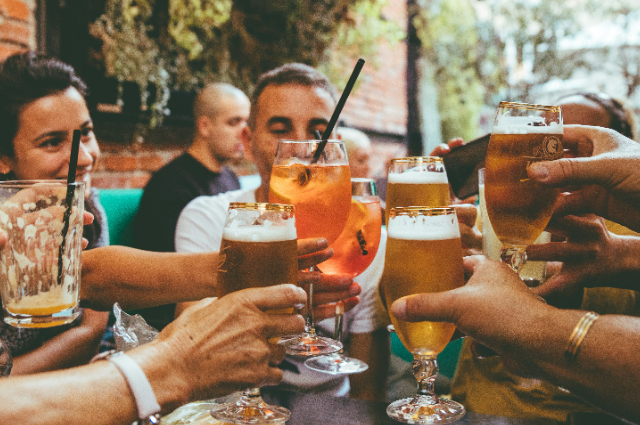
Generation Z is drinking significantly less alcohol than previous generations.
Before, college students were notorious for their drinking habits. I mean, how many movies have you seen where the young lead sneaks into a college town and sees empty bottles everywhere?
The idea is classic. And with all things classic, it is also dated.
Addiction psychiatrist Akhil Anand, MD, says: "Younger adults are drinking less alcohol - and it has been moving in that direction for two decades."
So what's the deal?
"Beer?" No
I have had this conversation personally multiple times. Friends have constantly rejected a drinking session - something almost unheard of in Filipino culture, and these tend to be my younger friends. Older ones wouldn't wait for you to ask them out for a drink - they've already got a bottle in hand.
A study published in 2020 found that alcohol abstinence is increasingly common among Gen Z.
Looking at the data, the information becomes increasingly bizarre.
Between 1993 and 2001, there was an increased risk for developing alcohol use disorder as a result of increased frequency of binge drinking. However, in the same period, past-year alcohol abstinence had increased from 16.4% to 19.3%, suggesting a polarisation of drinking behaviour.
- Between 2002 and 2018, a sample of over 180, 000 young adults from the US shared vastly different results. Alcohol use disorder prevalence decreased for both groups, with an annual decrease of 0.66% for college students and 0.61% for non-college students.
- Between 2002 and 2018, the percentage of non-college students engaging in alcohol abstinence increased from 23.6% to 29.9%.
- In the same period, the percentage increased from 20% to 28% for college students.
It seems young adults not in college were even more likely to avoid alcohol. Nearly 30% of this group in 2018 reported that they did not drink beer, wine or spirits.
The Alcohol Industry Crashed, Gen Z Might Be to Blame
In fact, for an industry that has survived just about everything - prohibition, wars, recessions- its biggest enemy right now might actually be the very same people who it supposedly targets.
The current generation is simply not interested in drinking. Shares of the world's top listed beer, wine and spirits makers have shed a combined $830 billion in market value over the past four years.
To put that in perspective, from 2021, the entire alcohol industry dropped by 46%!
According to Gallup, the percentage of US adults who say they consume alcohol has fallen to 54%, the lowest in over 90 years since 1939.
It seems that young adults became less likely to drink alcohol a decade ago, and that trend has only accelerated over the past few years.
"Drinking is Bad For You!" says the young
In fact, it is even funnier that a majority of America's youth are now the ones saying that even drinking in moderation is bad for you.
In 2025, the number of people aged 18 to 34 who said alcohol was bad for one's health was at 66%!
Clean Livers, Clean Mind
Gen Z these days have overwhelmingly adopted a "clean living" lifestyle, making healthier choices when it comes to eating and drinking. In fact, while the alcohol industry is currently at its absolute worst in the past few years, organic food sales and products like kombucha have shot up.
Numerous programs aimed at school-aged children have warned about the dangers of alcohol use. The message might have gotten through.
And this goes for other things too.
Evidence suggests that Gen Z are more likely to go to the gym and work out than the generations who came before them.
Young people are also more likely to eat plant-based meals and be aware of nutrition trends thanks to social media. In 2023, almost 20% of 18- 24-year-olds had obesity - compared to nearly 40% of those 45 to 54.
The Hidden Danger the Media isn't Telling You
However, it isn't all flowers and sunshine for today's younger generation.
Addiction concerns remain. In ditching alcohol, over 13.3 million Gen Z adults aged 18-25 reported marijuana use in 2022, representing the highest prevalence among all age groups.
Only 3% of Gen Z vaped at age 17.
By age 23, that number jumped to 20%.
In fact, studies show that a significant majority of young adults prefer marijuana over alcohol, as much as 69% of today's youth!
Young adults report actively replacing some or all of their alcohol consumption with cannabis, at over 56%. The opinion that weed is a safer, predictable and more relaxing alternative to drinking is quite prevalent among this generation.
It may make sense, however, in the mental landscape that today's youth navigates.
Reports of anxiety, depression, stress and other mental neurodivergencies have increased over the past decade - neurodivergencies for which THC and cannabis-based products have had benefits.
This has driven alcohol usage out and cannabis and vape usage in.
All in all, the world has become an extremely interesting place of change and development. And this applies to our health habits too.
Dr Nour Alkhoudr, M.D., a family medicine physician at Henry Ford Health, has this to say about today's youth:
"There was an increase in depression and anxiety, especially during the 2020 COVID pandemic, and that was particularly hard on adolescents and young adults... While Gen Z gets some things right, there’s definitely room for improvement."
References: