
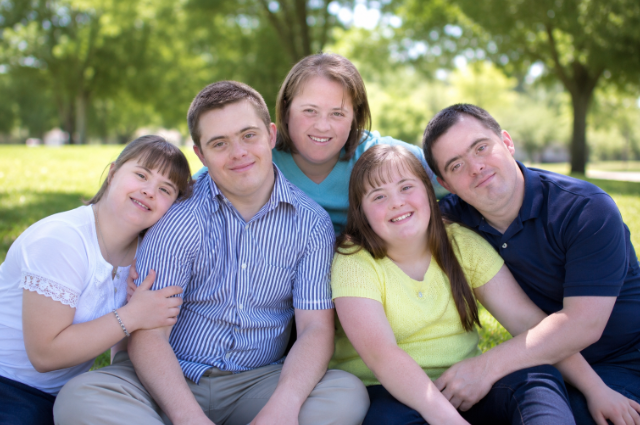
For much of history, a child born with Down syndrome was not expected to live a long life. In the early twentieth century, the average lifespan of a person with Down syndrome was approximately 9 to 11 years. Today, in many countries, people with Down syndrome commonly live into their 60s and beyond. This remarkable change is not because the condition itself changed. It is because society did.
By evaluating this transition through a social science perspective, we see that Down syndrome, a chromosomal condition caused by an extra copy of chromosome 21, is not an illness to be caught or cured. Instead, it represents a demographic that reveals how societal structures dictate human survival. The historical evolution of this lifespan is fundamentally a story of moving away from institutional segregation and embracing the Social Model of Disability, which asserts that people are disabled by systemic barriers and cultural prejudice rather than their biological traits. People with Down syndrome learn, work, build friendships, fall in love, and contribute to their communities. The greatest obstacles they have faced have often come not from their genes, but from the assumptions of others.
De-Institutionalization, Healthcare Access, and the "Disability Paradox"
The story of longer lives for people with Down syndrome is, above all, a story about better healthcare, changing attitudes, and the growing recognition of human dignity. Historically, the medical community operated under a strict medical model, viewing Down syndrome purely as a pathology. Decades ago, many children with Down syndrome died young because common medical conditions went untreated. Congenital heart defects, infections, and poor access to healthcare shortened lives dramatically.
Before the mid-20th century, critical corrections like cardiac surgeries were routinely left unperformed in children with chromosomal variations, a form of institutional neglect driven by the assumption that their lives held less inherent value. As medicine improved, doctors learned how to treat these conditions effectively. Better surgeries, early interventions, vaccinations, and regular health monitoring helped thousands of children survive and thrive. Crucially, this survival was accelerated by de-institutionalisation. For generations, society assumed that they could not learn or participate in everyday life, keeping children out of schools or placing them in state institutions that offered little stimulation and poor healthcare. Shifting individuals into family homes and community care proved that environment determines vitality.
Education and employment now serve as primary indicators of institutional gatekeeping. Transitioning toward inclusive education in mainstream schools has debunked the myth that intellectual disability implies an inability to learn. Today, many students with Down syndrome attend mainstream schools, learn practical and academic skills, and participate in sports, arts, and social activities. Inclusion in education has helped families and communities see ability rather than limitation.
Employment opportunities have expanded as well. Across the world, people with Down syndrome work in offices, restaurants, retail stores, and community organisations. They earn incomes, develop independence, and contribute meaningfully to society. Their success challenges long-standing stereotypes about disability.
This social integration exposes what sociologists call the "Disability Paradox." While able-bodied observers frequently assume that living with a genetic disability causes chronic suffering, empirical data show the exact opposite. A landmark sociological study led by Dr Brian Skotko and published in the American Journal of Medical Genetics found that 99% of people with Down syndrome self-reported being happy with their lives, 97% liked who they were, and 96% expressed satisfaction with their physical appearance. They value their relationships, enjoy their daily activities, and express satisfaction with who they are. This finding raises an important question: if the individuals concerned are living meaningful and happy lives, why does society still struggle to fully accept them?
Biopolitics and the Policy-Practice Gap
The debate is especially visible in countries such as Iceland. Due to widespread prenatal screening and the frequent decision to terminate affected pregnancies, very few babies with Down syndrome are born there today. Some observers celebrate this as a medical achievement. Others see it as a troubling message about whose lives are considered valuable. From a social science perspective, this trend points to a quiet, market-driven form of consumer eugenics. When healthcare systems normalise screening without providing balanced exposure to the lived experiences of disability, choices are shaped by a cultural fear of dependency and a neoliberal framework that measures worth strictly by economic productivity.
The issue is not about denying parents information or choices. Parents deserve accurate medical advice and support. However, the information they receive must also reflect reality. A diagnosis of Down syndrome is not a prediction of misery or a life without purpose. It is the beginning of a different journey, one that can still be filled with love, achievement, and happiness. The ethical question extends beyond one country. Modern societies increasingly have the power to prevent certain conditions before birth. Yet they must also ask what kind of diversity they are willing to embrace. If a society systematically eliminates a group of people because of disability, it risks sending a message that some human lives are less worthy than others.
Structural barriers manifest differently across geographic divides. India presents a different challenge. Unlike countries focused on prenatal screening debates, India has strong legal commitments to disability rights on paper but struggles with implementation. The Rights of Persons with Disabilities Act, 2016 promises equality, accessibility, education, and inclusion. Yet many families raising children with Down syndrome still face barriers in schools, workplaces, and public spaces.
Inclusive education remains uneven. Teachers may lack training. Public infrastructure is frequently inaccessible. Employment opportunities are limited, and social stigma continues to affect families. In many cases, parents must fight for rights that should already be guaranteed. Because public infrastructure remains unaccommodating, the economic and emotional labour of inclusion is entirely privatised, falling squarely on individual families.
True inclusion requires more than laws. It demands a change in mindset. People with Down syndrome do not need pity. They need opportunities. They need schools that welcome them, employers who value their skills, and communities that treat them with respect. Inclusion is not an act of charity; it is an acknowledgement of equal humanity.
The progress made over the last century shows what is possible. A lifespan that once averaged 25 years has more than doubled. Medical care improved. Educational opportunities expanded. Public attitudes slowly evolved. Each of these changes reflected a simple but powerful idea: every life has value. Yet the journey is not complete. Many families still encounter prejudice and isolation. Many adults with Down syndrome continue to struggle for independent living and meaningful employment. Around the world, debates about prenatal testing force societies to confront difficult moral questions about disability and acceptance.
The answers should begin with listening to the people most affected. When individuals with Down syndrome consistently express happiness, pride, and satisfaction with their lives, their voices deserve attention. Their experiences challenge assumptions that disability automatically means suffering. They remind us that a good life can take many forms. The real lesson of the past hundred years is therefore not merely that people with Down syndrome live longer. It is that society finally started removing some of the barriers that held them back.
The extra chromosome was never the true obstacle. Our expectations were. And if humanity wishes to build genuinely inclusive communities, it must continue replacing fear and prejudice with understanding, respect, and opportunity. The measure of a society is not how efficiently it excludes difference, but how generously it makes room for every person to belong.
References:
- Better Health Channel, Victorian Government. (n.g.). Down Syndrome and Health. Retrieved from betterhealth.vic.gov.au
- Skotko, B. G., Levine, S. P., & Goldstein, R. (2011). Self-advocates with Down syndrome voice their opinions. American Journal of Medical Genetics Part A, 155(10), 2360-2369. Available at nih.gov
- Ministry of Law and Justice, Government of India. (2016). The Rights of Persons with Disabilities Act, 2016. Gazette of India. Available at indiacode. nic. in