
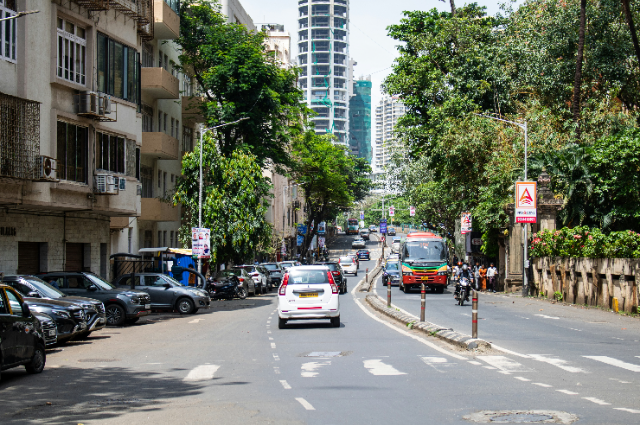
Modern development promised a higher quality of life, yet the chaotic concrete expansion happening across Indian cities is achieving the exact opposite. True progress cannot be measured in kilometres of asphalt and glass if it renders our local environment toxic and our society indifferent. By systematically decimating urban green canopies, filling up local wetlands, and treating street animals as hazardous waste, our current growth model is actively endangering the Earth and consequently threatening human survival. Under the Guardianship Principle of environmental jurisprudence, the government does not own public lands, trees, or native wildlife; it is merely a trustee. The Public Trust Doctrine dictates that the state holds vital natural resources in trust for the public and the living ecosystem. Furthermore, the Supreme Court of India has consistently expanded Article 21 of the Constitution, which guarantees the Right to Life, to include the right to a healthy environment. In the landmark Animal Welfare Board of India v. A. Nagaraja case, the court explicitly recognised that animals possess an inherent right to life, dignity, and protection from unnecessary suffering. When municipal corporations chop down heritage trees and pave over natural habitats for commercial projects, they violate their role as legal guardians and create a hostile environment where native birds, stray cats, dogs, and urban wildlife cannot survive.
Development Without Aftercare and the Ecological Cost
The current trajectory of development is structurally flawed because it treats nature as a disposable commodity. When government bodies permit commercial developers to clear old-growth trees, they promise a counter-measure of compensatory afforestation funded by the Compensatory Afforestation Fund Management and Planning Authority (CAMPA). Yet, official Comptroller and Auditor General (CAG) audits reveal a systemic failure where tree plantation survival rates frequently drop below 30% due to institutional corruption, a total lack of long-term tracking, and an absence of watering. This failure is deeply visible in our suffocating urban centres. Satellite data compiled by the Indian Institute of Science illustrates a catastrophic decadal shift, revealing that Kolkata’s tree cover plummeted from over 23.4% to just over 7.3%, while Ahmedabad's fell from 46% down to 24%. Simultaneously, concrete built-up areas shot up by over 130%. This is not development but ecological erasure. By allowing infrastructure to cut blindly through ecosystems without post-project accountability, India has lost over 2.4 million hectares of tree cover since 2001. This total disregard has caused the death of over 186 elephants via train collisions between 2009 and 2021, alongside more than 220 elephant deaths from electrocution due to poorly maintained linear infrastructure. Furthermore, it has triggered a 95% collapse in vital scavenger species like vultures, which directly threatens human health by leaving rotting carcasses out in the open.
Taxpayer Accountability and Government Intervention
Citizens heavily subsidise local governments through direct and indirect taxes, yet municipal budgets rarely reflect the public's desire for a compassionate, green city. It is an administrative failure to expect underfunded non-governmental organisations and exhausted individual animal feeders to solve a nationwide crisis. According to the State of Pet Homelessness Index, nearly 71% of all dogs in India are homeless, translating to over 52 million animals roaming the streets without guaranteed access to food or clean water. With only 8 million animals accommodated in shelters, the vast majority are left to starve in plain sight. This stark neglect directly triggers human-animal conflicts, contributing to over 3.7 million dog-bite cases and approximately 20,000 rabies deaths annually. To resolve this, the state must build robust feedback mechanisms, such as localised ward-level digital voting or citizen budgeting forums, allowing taxpayers to directly mandate where their money goes. Taxpayers have a legitimate right to demand that public financial resources be funnelled directly into ecological infrastructure, including decentralised urban sanctuaries, state-funded shelters for sick or elderly animals, citizen-led feeding networks, automated solar-powered public water troughs, and community bird feeders managed directly by municipal corporations.
Enforcing State Responsibility for a Sustainable Future
The state must internalise ecological preservation as a core administrative responsibility rather than an afterthought. Municipalities must run highly funded, scientifically sound Animal Birth Control and anti-rabies programs, as regularised, compassionate management decreases animal-human conflict by lowering defensive aggression in properly fed, healthy animals. In cities like Bengaluru, a systematic commitment to these programs yielded a 10% reduction in the street dog population over four years alongside a 20% increase in systematic neutering. Simultaneously, state entities must enforce severe financial and legal penalties on commercial developers who destroy existing green pockets, ensuring that urban planning works around nature rather than cutting through it. We are navigating a critical climate and biodiversity crisis. A government that fails to protect its most vulnerable living creatures, its birds, its street dogs, its cats, and its trees is fundamentally failing its citizens. By utilising direct citizen feedback and redirecting tax revenues toward ecological guardianship, India can pioneer a form of development that preserves the Earth, respects animal rights, and secures human longevity.
References
- Animal Welfare Board of India v. A. Nagaraja & Others (2014) 7 SCC 547.
- Constitution of India, Article 51A(g).
- Audit on Compensatory Afforestation, Comptroller and Auditor General (CAG) of India.
- Urban Canopy Decadal Data, Indian Institute of Science (IISc), Bengaluru.
- Global Forest Demographics, Global Forest Watch (India Dashboard).
- Pet Homelessness Statistics, The State of Pet Homelessness Index.
- Public Health and Wildlife Data, World Health Organisation (WHO) & Wildlife Protection Society of India (WPSI).