
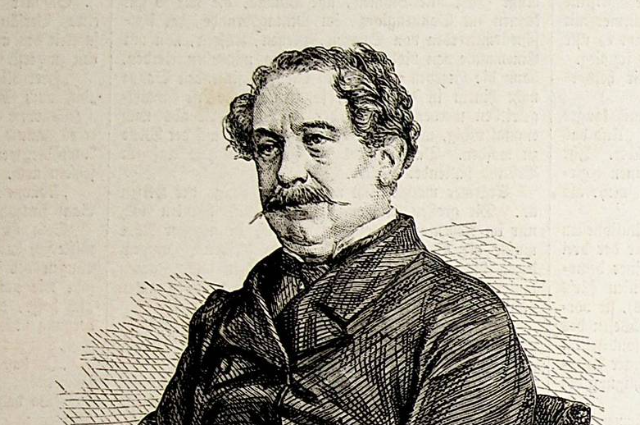
In February 1854, an Irish journalist named William Howard Russell was given a deadline he would spectacularly fail to meet. His editor at The Times, John Delane, told him he was being sent to accompany British troops heading toward a brewing conflict with Russia, and promised he'd be "back by Easter." Russell stayed for 22 months. What he sent home in that time didn't just report a war. It rewired the relationship between the public and the battlefield, and in the process toppled a government and helped launch modern nursing.
A War Sold as Glory
When Britain and France went to war with Russia in 1854 over influence in the crumbling Ottoman Empire, the public back home was fed the usual diet of patriotic spectacle: brave soldiers, noble cause, inevitable victory. Russell, sent first to Malta and then on to Varna and the Crimean peninsula, was supposed to supply more of the same color and pageantry that readers expected from a foreign campaign.
Instead, he watched the British army fall apart from the inside, not from Russian guns, but from its own government's incompetence.
What Russell Actually Saw
Russell's dispatches described soldiers without winter coats sleeping in freezing trenches outside Sevastopol, horses starving for lack of forage, and medical care so primitive that wounded men sometimes died waiting for transport that never came. A cholera outbreak tore through the camps before a single major battle had even been fought. He covered the war's set-piece moments too, the doomed Charge of the Light Brigade at Balaclava, and the stand of the 95th Highlanders that he famously described as a "thin red streak topped with a line of steel," a phrase that entered the language as "the thin red line." But it was his unglamorous reporting on supply failures and medical neglect that did the real damage to the government's reputation.
He didn't soften any of it for his readers. He wrote about what he called the "human barbarity" of the medical system serving wounded men, and he named the failure plainly: not bad luck, not the enemy, but mismanagement by Britain's own commanders, including the army's commander-in-chief, Lord Raglan. Raglan reportedly told his officers not to speak with Russell at all. It didn't matter — Russell got his information from the ordinary soldiers and junior officers who were living the disaster, and he kept writing.
The Dispatches That Brought Down a Government
This was new. Earlier wars had been covered by occasional correspondents, but none had stayed embedded with an army for nearly two years, filing regularly, with reports reaching home via telegraph faster than ever before. For the first time, the British public was reading about a war almost as it happened, and what they read horrified them.
The public reaction was severe enough that it's widely credited as a major factor in the collapse of Lord Aberdeen's government in January 1855, although historians note the picture is more complicated than dispatches alone toppling an administration; economic and political pressures were already mounting. What's not disputed is that Russell's reporting forced an institutional reckoning: the army was compelled to overhaul its supply chains, and a private contractor built the Grand Crimean Central Railway specifically to fix the logistics collapse Russell had exposed.
Tsar Nicholas, I reportedly said of British military intelligence, "We have no need of spies; we have The Times", a line that captures just how thoroughly Russell's reporting had become part of the war itself, read on both sides of the conflict.
Inspiring Florence Nightingale
Russell's accounts of the medical catastrophe in Crimea are widely credited with spurring Florence Nightingale into action. Reading about soldiers dying from neglect and disease rather than wounds, she organized a team of nurses and traveled to the military hospital at Scutari, where she became the most famous reformer in the history of military medicine. Russell also publicized the work of Mary Seacole, the Jamaican-born nurse and healer who treated soldiers near the front lines, writing admiringly that "a more tender or skilful hand about a wound or a broken limb could not be found among our best surgeons", coverage credited with helping rescue Seacole from financial ruin after the war.
A Reputation Built on Refusing to Flatter Power
Russell wasn't universally loved for any of this. He was dismissed by some officers as crude and unpolished, and the military establishment resented him for years. He later accused a rival correspondent of fabricating details to make his own war coverage more dramatic, a charge that underscores what actually set Russell apart. He wasn't simply willing to report bad news; he refused to manufacture good news, even when romanticized stories of heroism would have been easier to write and more popular to read.
The Legacy
Russell went on to cover the Indian Rebellion, the American Civil War, and the Franco-Prussian War, but Crimea remained the work that defined him. He was knighted in 1895, and when he died in 1907, a memorial bust was installed in the crypt of St Paul's Cathedral, describing him as "the first and greatest of war correspondents." It's a title historians still debate on technical grounds; earlier reporters had covered earlier wars, but none had made unflinching, sustained, on-the-ground truth-telling the actual job. Russell did, and every war correspondent who has filed an honest dispatch from a battlefield since owes him something for it.
References:
- https://en.wikipedia.org/wiki/William_Howard_Russell
- https://www.britannica.com/biography/William-Howard-Russell
- https://www.maynoothuniversity.ie
- https://dib.ie/biography/russell-sir-william-howard-a7850
- https://www.royalparks.org.uk
- https://research.kent.ac.uk
- https://britishonlinearchives.com