
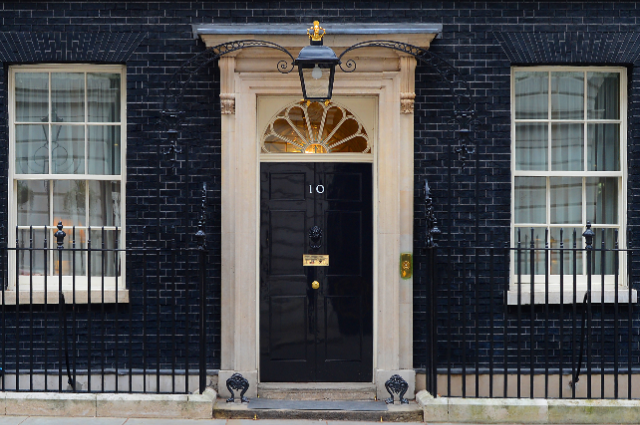
Less than two years after leading the Labour Party to one of the largest election victories in modern British history, Keir Starmer stood outside 10 Downing Street on Monday, 22 June 2026, and announced his resignation as Prime Minister and Labour leader. His departure sets in motion a process that will produce Britain's seventh prime minister in a decade — and the fifth since the Brexit referendum to leave office before completing a full term (PBS News; NBC News).
Visibly emotional, and flanked by his wife Victoria, Starmer acknowledged that his own MPs had turned against him. He said his party was asking whether he was the right person to lead it into the next general election — and that having heard their verdict, he would "accept that answer with good grace" (Al Jazeera). He confirmed he had informed King Charles III of his decision and would stay on as caretaker Prime Minister until a successor is chosen (NBC News).
The Turning Point: May's Local Election Collapse
Starmer's fall was not a slow fade but a rapid political collapse, and its trigger can be dated precisely: the English local elections of 7 May 2026.
The results were catastrophic for Labour. The party lost 1,496 council seats — roughly 59% of the seats it was defending — and lost control of 38 councils, including symbolic strongholds such as Newham, which Labour had run since 1971 (Wikipedia; Local Government Chronicle). Psephologists Rallings and Thrasher estimated Labour's national equivalent vote share at just 15%, the party's lowest figure in a 40-year data series and a 19-point drop from its 34% at the 2024 general election (Local Government Chronicle).
The chief beneficiary was Nigel Farage's hard-right Reform UK, which gained 1,453 councillors and took control of 14 additional councils, with roughly 800 of its gains coming directly from Labour, concentrated in post-industrial towns across the Midlands and the North (Local Government Chronicle). But Labour was squeezed from both flanks. YouGov polling found that only 46% of Labour's 2024 voters stayed loyal at the locals; 22% defected to the Greens and 16% to the Liberal Democrats, while just 6% switched to Reform (YouGov). Labour was, in the analysts' phrase, caught in a pincer movement — losing traditional working-class voters rightwards and progressive urban voters leftwards.
For a governing party less than two years into a landslide mandate, the message was unmistakable.
The Mutiny Inside Labour
Electoral disaster quickly became a leadership crisis. In the weeks following the local elections, discontent hardened into open revolt. Health Secretary Wes Streeting resigned last month with a stinging attack on Starmer's record of indecision, saying he would consider a leadership bid of his own (NBC News). The decisive blow came in mid-June when Defence Secretary John Healey — a long-standing Starmer loyalist — quit in a dispute over military spending, followed shortly by armed forces minister Al Cairns. In total, 20 ministers resigned during Starmer's premiership (CBS News).
Starmer's authority had also been eroded by lingering scandals, most notably his December 2024 appointment of Peter Mandelson as ambassador to the United States despite Mandelson's friendship with Jeffrey Epstein. Starmer eventually fired Mandelson, but was forced to deny misleading Parliament over the vetting process (NBC News).
The Final Trigger: Makerfield
The endgame arrived via a by-election. Andy Burnham — the popular Greater Manchester Mayor nicknamed the "King of the North" — resigned his mayoralty and stood for Parliament in Makerfield. On 19 June he won decisively, taking 55% of the vote and beating Reform UK's candidate by more than 9,200 votes, a far wider margin than expected (Al Jazeera).
Burnham's return to the Commons removed the last constitutional obstacle to a leadership challenge, since prime ministers are by convention drawn from sitting MPs. Starmer had vowed to fight any contest, but as MPs coalesced around Burnham over the weekend — and even US President Donald Trump weighed in, claiming Starmer had failed on immigration and energy — his position became untenable (NBC News; CBS News).
What Happens Next
Starmer will remain in Downing Street as caretaker until a new Labour leader is in place. Nominations open on 9 July and close when Parliament rises for summer recess on 16 July. If a contest is required, a new leader will be chosen by 1 September, before Parliament returns (Al Jazeera).
In practice, the race may already be over. Burnham declared his candidacy within hours of Starmer's statement and was photographed with around 200 supportive Labour MPs that afternoon; Streeting, his most plausible rival, has stood aside and endorsed him (PBS News; CNN). If no challenger secures sufficient nominations, Burnham becomes Labour leader — and Prime Minister — without a ballot.
The political weather remains hostile. Farage has demanded an immediate general election, though none is legally required until 2029, and Conservative leader Kemi Badenoch has attacked the summer-long transition as a governance vacuum (CNN). National polling now puts Reform at around 27% against Labour's 17%, with seat projections pointing towards a hung parliament (BritPolls).
The Verdict
Starmer's resignation was ultimately a story of confidence lost — not primarily with the electorate at a general election, but within his own parliamentary party, which concluded after May's historic rout that only new leadership could halt Reform's advance. He won big in 2024; he lost his party's faith even faster.
References:
- NBC News — "Keir Starmer resigns as British prime minister" (22 June 2026) https://www.nbcnews.com
- CNN — Live coverage: "Keir Starmer resignation, UK to get sixth PM in seven years" (22 June 2026) https://www.cnn.com
- Al Jazeera — "Why has Keir Starmer resigned as UK prime minister, and who will take over?" (22 June 2026) https://www.aljazeera.com
- PBS News — "Starmer resigns as UK's prime minister, succumbing to political pressure" (22 June 2026) https://www.pbs.org
- CBS News — "British Prime Minister Keir Starmer announces resignation" (22 June 2026) https://www.cbsnews.com
- The Washington Post — "U.K. Prime Minister Starmer to resign as Labour Party seeks reboot" (22 June 2026) https://www.washingtonpost.com
- Wikipedia — "2026 United Kingdom local elections" https://en.wikipedia.org
- Local Government Chronicle — "Rallings & Thrasher: How Labour fell to historic defeat" (13 May 2026) https://www.lgcplus.com
- YouGov — "Labour's voter coalition broke more to left than right at 2026 local elections" (21 May 2026) https://yougov.com
- BritPolls — "Local Elections 2026: Reform Gains" (21 May 2026) https://britpolls.co.uk