
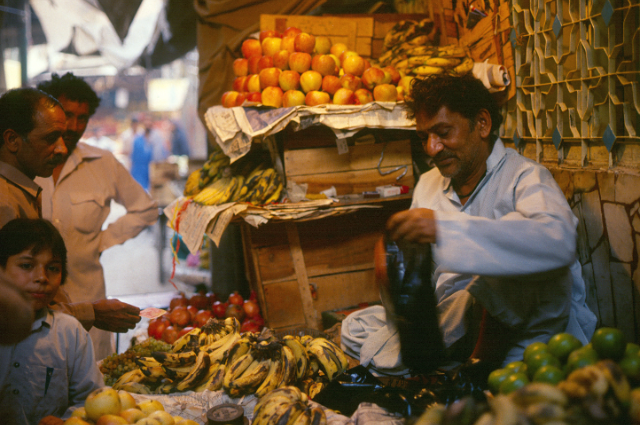
There are stories of success that begin with wealth, privilege and opportunity. Harekala Hajabba’s story begins somewhere else entirely, with a basket of oranges, a bus stand and a man who had never been inside a classroom as a student. For years, he earned his living selling oranges at the Mangaluru bus depot, surviving on a modest income. He had no degree to display, no influential family behind him and no financial security to fall back on. Yet, from that ordinary life emerged an extraordinary conviction: the children of his village should not inherit the deprivation that had shaped his own childhood. Hajabba, who grew up without access to formal education in Harekala-Newpadpu in Karnataka’s Dakshina Kannada district, eventually helped create a government school that grew from just 28 students to serving children through Class 10. His journey is often reduced to the simple phrase “orange seller builds school”. But that description misses the harder truth. He did not simply build a building. He spent decades turning his own experience of illiteracy into an argument for somebody else’s future. In a country where education is frequently discussed in terms of policies, budgets and institutions, Hajabba demonstrated something more intimate: sometimes the desire to educate a child begins with one person refusing to forget what it feels like to be denied an education.
The moment that changed his life was almost painfully ordinary. In 1978, while Hajabba was selling oranges, a foreign visitor asked him the price of the fruit in English. Hajabba could not understand the question. He knew neither how to respond nor how to bridge the distance created by a language he had never been taught. For most people, such an encounter would have disappeared from memory within days. For Hajabba, it became a wound that refused to close. His embarrassment was not really about English. It was about what the absence of education had taken from him: the ability to communicate confidently, to understand a stranger and to participate in a world beyond the limits of his own circumstances. Instead of allowing that humiliation to become bitterness, he turned it into a promise. He decided that children in his village should have access to the education he had never received. That decision sounds simple when told backwards, after the school exists and the Padma Shri has been awarded. In reality, it was an audacious idea for a man whose livelihood depended on selling oranges. Hajabba did not possess the resources to make the dream easy. He possessed something less visible and, perhaps, more powerful: persistence. He began putting aside whatever he could from his earnings and continued approaching people who could help. His dream survived not because circumstances favoured him, but because he refused to allow circumstances to have the final word.
For two decades, the distance between Hajabba’s dream and reality remained enormous. Saving money from a small fruit-selling business could never be enough by itself to create a functioning school. He therefore became a fundraiser, petitioner and organiser in addition to being an orange vendor. He approached officials and local leaders and sought support wherever he believed someone might listen. Former MLA U.T. Fareed became an important supporter, helping the effort move towards the establishment of a school. The story is important precisely because it was not a miracle that happened overnight. It was administrative work, fundraising, persuasion, sacrifice and years of refusing to give up. In 2000, the long struggle began to take institutional form, and the school started with 28 children. What began as a small educational initiative eventually developed into the Dakshina Kannada Zilla Panchayat Primary and High School at Newpadpu. The primary school began in 2001, while the high school section was added in 2007. By 2021, reports said the institution was serving roughly 175 to 177 students from Classes 1 to 10. The numbers matter, but they do not tell the whole story. Every child walking through those school gates represented something Hajabba himself had once been denied: the right to sit in a classroom, open a book and imagine a life larger than the one poverty had prescribed.
What makes Hajabba’s achievement more remarkable is the kind of life he continued to live while his name became known outside the village. Recognition did not transform him into the sort of public figure who suddenly became distant from the people around him. He remained associated with the humble work from which his mission had begun. Reports have described him as a man who cleaned classrooms and toilets and personally encouraged families to send their children to school. His humility was not merely a public performance; it was reflected in the way he spoke about the institution. He did not present the school as a monument to himself. He acknowledged the donors, officials, teachers and members of the community who helped turn his idea into reality. There is something deeply powerful about that attitude. In an age when even small acts are often turned into personal branding, Hajabba’s instinct was different. He wanted the school to matter more than his name. His struggle also revealed that building a school is only the beginning of the educational battle. Before and after the institution was established, access remained difficult for many families. Students could struggle to continue beyond Class 10 because a nearby government pre-university college was unavailable. A school can open a door, but society must ensure that children have a path beyond it. Hajabba understood that distinction. His dream therefore did not end with primary education or even high school. He continued asking for a pre-university college so that children would not have to abandon their education after Class 10.
Then came the recognition that transformed an obscure village story into a national one. The Government of India announced Hajabba among the recipients of the Padma Shri in 2020, and on 8 November 2021, President Ram Nath Kovind presented him with the honour at Rashtrapati Bhavan. The image was striking: a man who had once stood at a bus depot selling oranges was now standing at the seat of India’s highest constitutional ceremony to receive one of the country’s civilian honours. Yet the award was never the most important part of his story. The medal could recognise his work, but it could not explain it. A Padma Shri could not measure the years of saving, the requests made to officials, the ridicule he reportedly endured, or the personal sacrifices behind the school. It could only place a national seal of recognition on work that had already transformed a community. His story also challenges the conventional idea of who gets to become a nation-builder. We often associate nation-building with people who hold offices, command institutions or possess extraordinary resources. Hajabba had none of those things. His influence began with a small daily income and a deeply personal understanding of deprivation. He showed that service to a nation does not always begin in Parliament, government offices or corporate boardrooms. Sometimes it begins at a roadside stall, with a person asking a simple question: “What can I do so that the next generation does not suffer what I suffered?”
Perhaps the most moving part of Hajabba’s story is that even the Padma Shri did not make him think his work was finished. He continued to dream beyond the school already standing in his village. He wanted more educational opportunities for children, including a pre-university college. That dream has continued to develop. In February 2026, the foundation stone was laid for a dedicated government pre-university college building at Harekala-Newpadpu, with the first phase supported by a ₹45 lakh CSR grant from Mangalore Refinery and Petrochemicals Ltd. The college is intended to serve students from Harekala and neighbouring areas, giving greater substance to a vision Hajabba had pursued for years. This development gives his story an important second chapter. The real legacy of a reformer is not simply the institution he creates but the questions he leaves behind. Hajabba’s question remains relevant: what happens to a child who finishes Class 10 but has no affordable pathway to continue? What happens to rural children when distance, poverty and inadequate infrastructure quietly become reasons to leave education? His life has never been about constructing walls alone. It has been about removing barriers. The orange seller who once felt powerless because he could not answer a question in English spent the rest of his life trying to ensure that children would have the education and confidence to answer the questions that the future would ask of them.
Harekala Hajabba’s life therefore deserves to be remembered for more than its inspirational headline. It is not simply the story of a poor man who became famous, nor is it a convenient tale in which hard work magically defeats every obstacle. It is a story about what one person can do when compassion becomes stubbornness and a private humiliation becomes a public purpose. He could have accepted his lack of education as an unchangeable fact of life. Instead, he treated it as a reason to change somebody else’s life. He could have spent his modest earnings only on himself and his family. Instead, he saved for a school whose greatest beneficiaries would be children he did not know. He could have stopped when the first classrooms opened. Instead, he kept thinking about high school, higher education and the students who might otherwise be forced to stop studying. That is why the image of Hajabba selling oranges is more meaningful than the image of him receiving a medal. The medal tells us that India recognised him. The oranges tell us where his journey began. Between those two images lie decades of patience, sacrifice and service. His story reminds us that greatness does not always announce itself loudly. Sometimes it stands quietly at a bus stop, counts a few rupees at the end of the day and saves them for a dream that may take twenty years to become real. Hajabba did not inherit the power to change a village. He earned it, one small act at a time. And perhaps that is the most enduring lesson of his life: education does not merely change the person who receives it. When one person fights to make education possible, the change can travel from one classroom into an entire generation. Harekala Hajabba may have sold oranges for a living, but what he ultimately gave his village was something far more valuable: a chance to imagine a different future.
References:
- The Hindu – Reports on Harekala Hajabba's educational initiatives.
- Hindustan Times – "An orange seller who went on to build a school for underprivileged kids."
- India Today – "Orange vendor from Karnataka receives Padma Shri."
- The Times of India- From selling oranges at a bus stand to building a school for his village: The inspiring story of Harekala Hajabba
- Hindustan Times- A year that was: An orange seller who went on to build a school for underprivileged kids
- Mint -Meet Harekala Hajabba, orange vendor from Karnataka who received Padma Shri for revolutionising rural education