
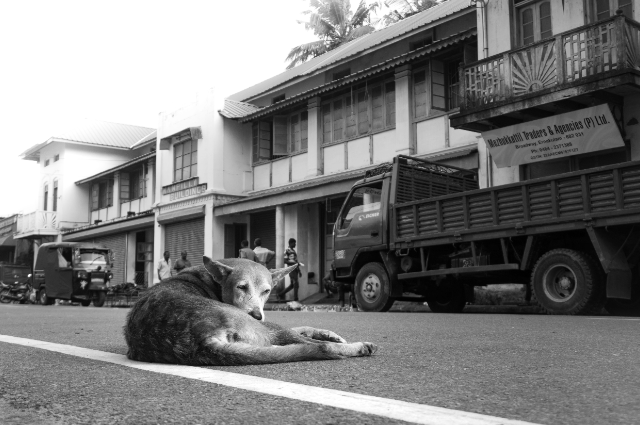
There is something profoundly moving about the eyes of a street dog. Behind the dust-covered fur, the scars of survival and the cautious glance lies a living being searching for the same things every creature desires—food, safety, and kindness. As someone who deeply loves dogs, I have never seen them as a public nuisance. I have always seen them as innocent souls trying to survive in a world that humans have shaped. Yet love alone cannot solve India's stray dog crisis. Neither can fear.
India today stands at the centre of one of the world's most challenging debates on urban animal welfare. It is home to an estimated 25 million stray dogs, while also recording one of the highest numbers of dog bite cases and rabies-related deaths globally. Every attack on a child, every frightened elderly person, every family grieving the loss of a loved one to rabies deserves compassion. Equally, every starving, injured or abandoned dog deserves protection from cruelty. This is not a battle between humans and animals. It is a test of whether a compassionate society can protect both.
Unfortunately, public discussion often becomes polarised. One side demands the removal of all street dogs, believing that elimination is the only solution to ensure safety. The other argues that every dog has an unconditional right to remain where it lives. Reality, however, is far more complex than these extreme positions. The true answer lies not in choosing one life over another but in building a scientific, humane and accountable system that protects both.
The first question India must ask is not why there are so many stray dogs, but why our cities continue to create the conditions that allow their numbers to grow. Open garbage bins overflowing with food waste, unmanaged dumping grounds and poor waste collection provide an endless food supply. Where food is abundant, animal populations naturally increase. In many ways, India's stray dog population reflects failures in urban governance rather than failures of the animals themselves.
Street dogs are territorial by nature. They establish familiar territories where they know the people, food sources and environmental risks. This explains why illegally relocating dogs from one neighbourhood to another often creates greater conflict rather than reducing it. Newly introduced dogs face unfamiliar packs, competition for resources and heightened stress, increasing aggressive behaviour and the likelihood of dog bites. Scientific evidence consistently demonstrates that irresponsible relocation destabilises local populations instead of solving the problem.
Recognising these realities, India has adopted a legal framework based on humane population management rather than mass culling. The Animal Birth Control (ABC) Rules, supported by the Supreme Court of India, require municipalities to implement Catch-Neuter-Vaccinate-Return (CNVR) programmes. Under this approach, healthy street dogs are captured, sterilised, vaccinated against rabies and released back into the exact locations from which they were collected. Sterilised dogs no longer reproduce, vaccinated dogs reduce the spread of rabies, and established territorial packs prevent unsterilised dogs from migrating into the same area.
This approach is not simply an act of compassion. It is internationally recognised as the most effective long-term strategy for controlling stray dog populations while protecting public health. Organisations such as the World Health Organisation have consistently supported mass dog vaccination and sterilisation as essential tools for eliminating rabies.
However, laws alone cannot transform reality. Across many Indian cities, the implementation of ABC programmes remains inconsistent. Municipal corporations frequently struggle with inadequate funding, insufficient veterinary staff, limited surgical facilities and a shortage of functional Animal Birth Control centres. Sterilisation drives often begin with enthusiasm but lose momentum before reaching the coverage needed to produce lasting results. Population control requires continuity, not occasional campaigns.
Cities that have maintained high sterilisation coverage demonstrate encouraging outcomes. Sustained ABC programmes, combined with widespread anti-rabies vaccination, have significantly reduced dog-human conflict while gradually stabilising stray populations. These examples prove that coexistence is achievable when science replaces reactionary decision-making.
Rabies remains one of India's greatest public health challenges. It is a disease that is almost entirely preventable through vaccination, yet it continues to claim thousands of lives. Every preventable death represents a failure of administration rather than an unavoidable tragedy. Universal vaccination of community dogs, accessible post-exposure treatment for bite victims and widespread public awareness together form the strongest defence against this deadly disease.
Public safety, however, cannot be ignored in the name of compassion. Children walking to school, patients entering hospitals and elderly citizens using public spaces have an unquestionable right to feel secure. The Supreme Court has repeatedly affirmed that the right to life includes the right to move freely without constant fear of animal attacks. Accordingly, the law allows authorities to remove dogs that are demonstrably aggressive, rabid or terminally ill. In carefully defined circumstances and following veterinary assessment, humane euthanasia may be permitted for animals suffering from incurable disease or posing severe danger to public safety.
These legal provisions demonstrate that India's framework does not value animal welfare above human life. Rather, it seeks to balance both through evidence-based management instead of emotional reactions.
Feeding community dogs remains another area of intense public debate. For many animal lovers, feeding hungry street dogs is an expression of compassion. Yet indiscriminate feeding on busy streets, outside residential entrances or near children's play areas can unintentionally increase conflict. Food attracts larger groups of dogs, encourages territorial disputes and may inconvenience residents.
A more balanced approach involves designated feeding areas or feeding within private premises where disturbance to the public remains minimal. Responsible feeding also includes ensuring that food waste is cleaned afterwards and that the animals being cared for are sterilised and vaccinated. Compassion and responsibility must always exist together.
Adoption offers another meaningful path towards reducing stray populations. Indian Pariah or Indie dogs possess remarkable intelligence, resilience and adaptability. They are naturally suited to India's climate, generally enjoy strong health, and form deep emotional bonds with their families. Yet despite these qualities, many prospective pet owners continue to prefer imported pedigree breeds.
Changing this mindset requires public education rather than criticism. Every Indie dog adopted from the street or a shelter creates space for another animal in need while demonstrating that loyalty, affection and companionship have nothing to do with breed. Rescue organisations, volunteers and countless compassionate citizens continue to prove that street dogs can become extraordinary family members when given love and patience.
Equally important is the role of local communities. Successful coexistence rarely depends on government action alone. Resident Welfare Associations, municipal authorities, veterinarians, animal welfare organisations and responsible citizens must work together. Communities that actively support sterilisation drives, maintain designated feeding zones, manage waste responsibly and monitor vaccinated dogs consistently report fewer conflicts than areas where no coordinated effort exists.
Perhaps the greatest misunderstanding in this debate is the belief that dogs are the problem. They are not. Dogs respond to the environment humans create. Open waste attracts them. Abandonment increases their numbers. Irresponsible breeding expands populations. Administrative failures prevent sterilisation. Inadequate vaccination allows rabies to persist. Blaming the animals without addressing these causes only postpones meaningful solutions.
As someone who loves dogs deeply, I believe their innocence deserves protection. Their wagging tails, trusting eyes and remarkable loyalty remind us that kindness still exists in its purest form. But loving dogs also means accepting responsibility. Real compassion does not ignore human suffering. It recognises that protecting children from attacks, preventing rabies and ensuring safe public spaces are equally acts of humanity.
India's stray dog crisis cannot be solved through anger, cruelty or denial. It demands scientific planning, legal accountability and moral courage. Humane sterilisation, universal vaccination, effective waste management, responsible feeding, greater adoption and sustained municipal investment are not isolated solutions; together they form the foundation of peaceful coexistence.
The question is no longer whether humans and stray dogs can live together. They already do. The real question is whether we possess the wisdom to create cities where both can live safely, with dignity and without fear.
A compassionate nation is not measured only by how it protects its people, nor solely by how it treats its animals. It is measured by its ability to protect both. That is the India we should strive to build—an India where humanity and compassion walk side by side, and where every life, whether on two legs or four, is treated with responsibility, respect and hope.