
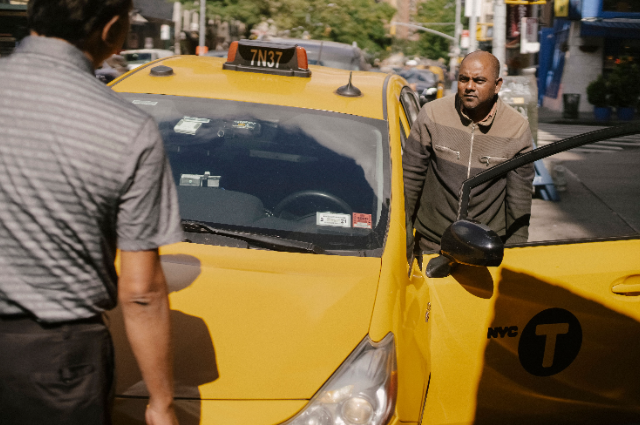
On a busy evening in Thane, a city that constantly negotiates between rapid urban growth and everyday civic challenges, an act of confrontation over something as basic as public hygiene spiralled into a violent episode that has left citizens shaken. Outside the premises of Jupiter Hospital near Viviana Mall, a 70-year-old senior citizen was allegedly assaulted by an aggregator cab driver after he objected to the driver spitting on a public road. What should have remained a simple reminder of civic responsibility turned into a brutal confrontation, raising difficult questions about public behaviour, urban discipline and the fragility of everyday safety.
The incident reportedly took place on Tuesday evening, around 7 pm, when the elderly man, identified as Sarosh Dastur, was walking near the hospital with his wife. According to multiple reports, the driver—identified as Nishant Dhar Shukla and associated with Ola—was allegedly seen spitting on the road. The senior citizen objected to this act, reminding him of basic public cleanliness norms. What followed, however, escalated beyond words. The argument turned heated, and the driver allegedly lost control, abusing the elderly man and then physically attacking him. Reports indicate that the victim suffered serious injuries, including a fractured leg, after being beaten during the altercation.
Eyewitness accounts and widely circulated video footage suggest that the situation escalated dangerously when the accused allegedly picked up stones and nearby branches, attempting to strike the senior citizen. The disturbing visuals of an elderly man being assaulted in a public space, especially outside a hospital—an institution associated with care and safety—quickly spread across social media platforms. The viral video became the centre of public outrage, sparking conversations about not only individual behaviour but also the larger question of declining civic sense in urban India.
The impact of the viral video was immediate and intense. Citizens, activists and public figures expressed shock over how a minor civic objection could escalate into a life-threatening assault. Social media amplified the incident, with users questioning how public spaces have become arenas for aggression rather than coexistence. The fact that the confrontation occurred outside a hospital intensified public emotion, as many felt that the setting itself symbolised vulnerability and the need for restraint, not violence.
Law enforcement authorities acted swiftly after the video gained traction. A First Information Report was registered against the accused under relevant sections of the Bharatiya Nyaya Sanhita, including provisions relating to assault and attempted murder. Police officials confirmed that the accused was taken into custody following the investigation. Authorities also recorded statements from the victim and eyewitnesses as part of the ongoing inquiry. While the investigation continues, officials have indicated that the case is being treated with seriousness due to the nature of the injuries and the circumstances of the assault.
Political reaction followed soon after the incident gained public attention. Maharashtra Chief Minister Devendra Fadnavis described the matter as “serious” and directed police authorities to take strict action against the accused. He emphasised that incidents of violence arising from such trivial triggers cannot be tolerated in a civil society. Deputy Chief Minister Eknath Shinde, who represents Thane, also intervened, reportedly instructing police officials to consider stringent charges, including attempt to murder, given the severity of the attack and the evidence seen in the viral footage.
An unusual aspect of this case was the response from across political lines at the local level. Members linked to different factions of Shiv Sena, including both the Shinde-led and Uddhav Thackeray-led groups, were reported to have independently responded to the incident and supported efforts to locate the accused. While their methods drew mixed reactions, their statements converged on one point: that civic violence of this nature demands accountability beyond political divisions. This rare moment of convergence highlighted how deeply the incident had resonated across the local political and social landscape of Thane.
From a legal standpoint, the case raises serious questions about proportionality and intent. What began as an objection to spitting—a violation of basic civic norms—allegedly escalated into a violent attack that caused severe injury. Under Indian criminal law, such escalation can attract stringent provisions when intent to cause grievous harm is established. The invocation of attempted murder charges, as directed by authorities, reflects the seriousness with which the legal system is treating the incident. At the same time, the case also underscores the importance of everyday discipline in public spaces, where even minor acts of disregard can escalate into conflict if met with aggression rather than restraint.
Beyond the legal and political responses, the emotional weight of this incident continues to linger. It is difficult for many citizens to reconcile the vulnerability of an elderly individual with the aggression captured in the viral footage. The hospital setting adds another layer of discomfort, as it represents a space where people expect empathy, not confrontation. The incident has reopened discussions on how rapidly urban stress, impatience and lack of civic discipline can combine into dangerous outcomes.
At its core, this case is not only about one individual’s alleged actions but also about the environment that allows such confrontations to escalate. Cities like Thane are expanding rapidly, and with that expansion comes the urgent need for stronger civic awareness, better conflict resolution and greater respect for shared public spaces. The viral video has become more than evidence—it has become a reflection of societal tension that many prefer not to acknowledge.
As investigations continue and legal proceedings take their course, the incident stands as a stark reminder that civility is not a passive expectation but an active responsibility. A simple request to avoid spitting should never become a trigger for violence. Yet here, it reportedly did, leaving behind physical injury, public outrage and uncomfortable questions about the state of everyday urban conduct.
In the end, the Thane assault is not just a news story—it is a moment of reflection. It forces society to confront how quickly ordinary interactions can turn dangerous when respect is replaced by anger. And it calls for a renewed commitment, both from individuals and institutions, to ensure that public spaces remain places of dignity, not disorder.
References / Sources
- Ola driver held for assaulting elderly man who objected to him spitting on the road in Thane — The Indian Express.
- Reprimanded for spitting, cab driver assaults senior citizen in Thane; held after CM’s intervention — The Prin.t
- Maharashtra Deputy CM Eknath Shinde orders attempt to murder case against cab driver for assaulting elderly man over spitting — The Times of India.
- Reprimanded for spitting, cab driver assaults senior citizen in Thane; held after CM's intervention — Hindustan Times.