
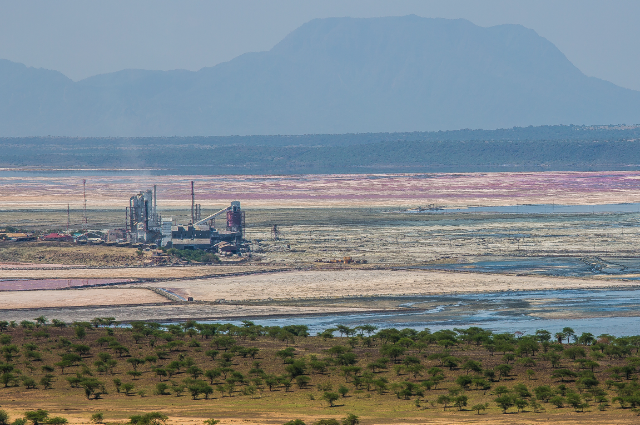
At the edge of Kenya’s Lake Magadi, the landscape has long carried a strange mixture of beauty and industry. The lake lies in Kajiado County in southern Kenya, where the earth holds trona, a naturally occurring mineral that has supported soda-ash production for more than a century. For generations, the mineral beneath this landscape has travelled far beyond Kenya, becoming part of products used in homes and factories around the world. Commercial soda-ash production at Magadi began in 1911, long before Tata Chemicals entered the story. For more than 100 years, the operation survived changing ownership, economic cycles and generations of workers. Yet in 2026, this century-old industrial relationship suddenly came under serious question. On July 28, 2026, Kenya’s Ministry of Mining, Blue Economy and Maritime Affairs communicated concerns to Tata Chemicals Magadi Limited, or TCML. On July 29, the ministry ordered the suspension of mining operations at the Magadi site. Tata Chemicals later said that it submitted the required information, reports and documentation on August 11. Then, on September 3, President William Ruto publicly directed Tata Chemicals to end its operations in Kenya. On September 9, the company announced that a high-level technical committee would be established with the Kenyan government to review the regulatory issues affecting TCML. The sequence of events transformed what initially appeared to be a regulatory dispute into a much larger debate about natural resources, foreign investment and local development. A business can survive for a century, but its relationship with the community around it must be renewed by every generation. The Magadi story is therefore not simply about the possible departure of a Tata company. It is about what a country expects in return when a private company is allowed to build a business around one of its most valuable natural resources.
Lake Magadi is not an ordinary industrial location. Situated in Kajiado County, the lake is part of Kenya’s Great Rift Valley and is known for its highly alkaline waters and naturally occurring mineral deposits. The mineral that makes the area economically important is trona, which can be processed into soda ash. Soda ash is the common industrial name for sodium carbonate, a basic chemical used in several manufacturing sectors. It plays an important role in glass production, where it helps lower the melting temperature of silica and makes manufacturing more efficient. It is also used in detergents, soaps and other chemical processes. The material may look distant from everyday life, but products connected to soda ash can be found in homes, factories and construction projects. Kenya has therefore not simply been mining an obscure mineral from a remote lake. It has been participating in an international industrial supply chain for more than a century. Kenya is regarded as one of the world’s important natural soda-ash producers, and the Magadi operation has been an important part of that position. According to figures reported by The Associated Press, Kenya exported 254,779 tonnes of soda ash worth about $56.9 million in the year to July 2025. Tata Chemicals Magadi has also been described as Africa’s largest soda-ash manufacturer and one of Kenya’s leading exporters. The importance of Magadi therefore goes beyond the physical factory. It connects a Kenyan natural resource to international markets, industrial customers, workers, transport networks and government revenue. Every tonne extracted and processed represents part of a much wider economic chain. This is why the dispute has attracted attention far beyond Lake Magadi. At its heart is a difficult question: how much economic value should Kenya receive from a natural resource that has been commercially exploited for more than 100 years?
The history of Magadi began long before the Tata Group became involved. Commercial soda-ash production at Lake Magadi dates back to 1911, making the operation one of the oldest continuing industrial stories associated with Kenya’s mineral resources. The business existed through different corporate arrangements and historical periods before becoming part of Tata Chemicals. This distinction matters because the history of the Magadi operation should not automatically be presented as a 100-year Tata contract. A March 20, 1928 lease is referenced in a 2025 Kenya Court of Appeal judgment involving Tata Chemicals Magadi and the Kajiado County Government. The judgment describes TCML as Africa’s largest soda-ash manufacturer and one of Kenya’s leading exporters. The reference to the 1928 lease is important because it demonstrates how deeply the legal and historical questions surrounding the resource go. The present dispute is therefore connected to a much older history of mining rights, government authority and commercial operations. It would be misleading to suggest that Tata Chemicals itself had operated the same business under one unchanged agreement for a full century. Tata entered the Magadi story much later, when the global chemicals industry was already undergoing major changes. Understanding this history makes the present dispute more complicated than a simple story of a foreign company arriving in Kenya and extracting a resource. The operation was already established when Tata Chemicals became its owner. At the same time, ownership brings responsibilities that can change as economic conditions and government expectations change. The history also shows why Magadi has become more than another asset on a corporate balance sheet. It represents a long relationship between Kenya, a natural resource and successive industrial operators. The question facing the country in 2026 is whether the terms of that relationship still satisfy the expectations of the government and the community. That question cannot be answered properly without understanding how the relationship developed in the first place.
The Tata Chemicals chapter began in the mid-2000s. Tata Chemicals acquired a 100% stake in the Brunner Mond Group in December 2005, bringing the Magadi operation into the Indian company’s international soda-ash business. The Magadi business, formerly associated with Magadi Soda, subsequently became Tata Chemicals Magadi Limited. The acquisition gave Tata Chemicals an established African production base and strengthened its international presence in soda ash. For Kenya, it meant that a historic local operation became part of a large Indian multinational group belonging to the wider Tata Group. The change in ownership brought questions that are common whenever a global company takes control of a resource-based business. Would investment increase? Would employment opportunities expand? Would technology and management systems improve? Would exports grow? Would the local community see greater economic benefits? Would government revenue increase? And would the company develop industries beyond the extraction and processing of the mineral itself? These questions do not automatically make Tata responsible for every development challenge in Kajiado. Nor do they prove that the company failed to meet its obligations. They simply show why foreign ownership of a natural-resource business carries expectations beyond the factory gate. Tata Chemicals itself has a long history in the chemical industry in India. The company was incorporated in Mumbai on January 23, 1939, after the Tata Group took over the Okhamandal Salt Works enterprise associated with chemical engineer Kapilram Vakil. Its Mithapur operations in Gujarat later became an important base for soda ash and other chemical production. Over decades, Tata Chemicals expanded from a domestic chemical producer into a multinational company with operations across India, Europe, North America and Africa. The acquisition of the Magadi operation in 2005 was part of that broader international expansion. But the size of the company does not erase the local questions surrounding Magadi. A multinational business may operate globally, but the resource beneath the ground remains tied to the country and community where it is found.
Soda ash is more than a mineral leaving a mine on its way to an overseas customer. It is the first link in a chain that can potentially create much wider industrial activity. The trona found around Lake Magadi is processed into soda ash and then sold into international markets. The chemical becomes an industrial input rather than an end product that consumers usually recognise by name. Glass manufacturers, detergent producers and chemical companies depend on materials such as soda ash for their production processes. This makes the Magadi operation strategically important to Kenya’s export economy. Tata Chemicals Magadi has an annual soda-ash production capacity of around 350,000 tonnes, according to company-related information cited in reports about the dispute. The Associated Press reported that Kenya exported 254,779 tonnes of soda ash worth $56.9 million in the year to July 2025. These numbers help explain why a shutdown can have consequences beyond one company. A disruption can affect export earnings, suppliers, transport networks, workers and customers in other countries. At the same time, the figures raise a question that is now central to Kenya’s argument. If the country is exporting a valuable mineral-based product, should it also develop more industries around that resource? There is a difference between earning money by extracting and processing a mineral and creating an industrial ecosystem that uses that mineral to make higher-value products. Soda ash can be exported, but it can also support downstream industries, particularly glass manufacturing and other chemical production. The more stages of the value chain that remain within the country, the greater the possibility of creating additional jobs, businesses and skills. That does not mean every stage must be located in the mining region, nor does it mean foreign companies should automatically build every possible industry. It does, however, explain why value addition has become such a powerful part of the Kenyan government’s argument. The Magadi dispute is therefore also a debate about whether Kenya should remain mainly a supplier in a global value chain or attempt to capture a larger share of that chain at home.
This is where Kenya’s central criticism becomes clearer. President William Ruto has argued that Tata Chemicals operated in Kenya for many years without creating sufficient local industrial development in Kajiado. During his September visit to the region, he questioned why a company connected to the long-running Magadi operation had not established major manufacturing facilities in the county. His criticism focused particularly on the absence of large-scale downstream industries. Ruto spoke about the possibility of bringing in new companies to establish a major glass factory and a chemical manufacturing facility in Kajiado. The government’s broader concerns have also included issues related to mineral beneficiation, value addition, royalties, export reporting, community development, employment, skills transfer, local procurement and regulatory compliance. These are serious issues, but they should be described as government concerns rather than proven wrongdoing by Tata Chemicals. Kenya’s position is essentially that the extraction of a natural resource should create benefits that are visible within the country and particularly within the communities surrounding the resource. That argument is not limited to Tata Chemicals. It reflects a wider debate across resource-rich countries about how much value should remain within national economies. Governments increasingly want mining to support manufacturing, technology, employment and local businesses rather than simply generating exports. For communities, the question can be even more direct. If a resource is beneath or near their land, what tangible opportunities should they receive from its development? Employment is one answer, but communities may also seek infrastructure, training, local procurement, representation and a meaningful role in decisions affecting them. For governments, the issue also involves royalties and taxes, industrial policy and national economic planning. For companies, however, predictable laws and clearly defined regulatory obligations are equally important. A healthy resource economy requires all of these interests to coexist. The Magadi dispute shows what happens when the expectations of the state and the company begin moving in different directions. It also shows that regulatory compliance and local economic expectations are not always the same conversation.
The confrontation became more serious in late July 2026. On July 28, the Ministry of Mining, Blue Economy and Maritime Affairs communicated its concerns to Tata Chemicals Magadi Limited. The following day, on July 29, Cabinet Secretary Hassan Ali Joho ordered the immediate suspension of TCML’s mining operations. The ministry referred to statutory obligations under Kenya’s Mining Act, Cap. 306, the Mining (Licence and Permit) Regulations, 2017, and the Mining (Royalty Collection and Management) Regulations, 2024. The government said that several matters remained unresolved and directed the company to suspend mining activity. Reports about the dispute have referred to concerns involving royalties, regulatory requirements and export-related information. The precise legal status of every issue should not be confused with political statements made later in the dispute. A suspension is a regulatory action, while a permanent termination of a business is a separate and much larger step. That distinction became increasingly important as the dispute developed. The July decision immediately affected the operation of a plant that had been part of Kenya’s industrial landscape for decades. It also raised questions about what would happen to production, exports and the people whose livelihoods were connected to Magadi Soda. For the government, the suspension represented an attempt to enforce its regulatory expectations. For Tata Chemicals, it became a matter requiring formal engagement with the relevant authorities. The company did not simply disappear after receiving the ministry’s communication. Instead, Tata Chemicals later stated that TCML had submitted the required information, reports and documentation on August 11. The company maintained that the Kenyan subsidiary was fully compliant with regulatory requirements. This meant that the two sides were presenting fundamentally different views of the situation. Kenya was highlighting unresolved regulatory and economic concerns, while Tata Chemicals was asserting compliance and seeking further review. The disagreement was therefore no longer only about production. It had become a question of whose interpretation of the company’s obligations would prevail.
The people living around Magadi brought another dimension to the dispute. A natural resource may belong within a national economic system, but the consequences of extracting it are experienced most directly by people living near the operation. Kenya News Agency reported community concerns involving representation, employment, skills transfer and community participation. Some residents welcomed the suspension, reflecting dissatisfaction with aspects of the relationship between the operation and the surrounding community. Their concerns point to an important reality of resource-based development. Economic statistics can show export earnings and production volumes, but they cannot fully measure whether people living beside an industrial operation feel included in its success. A worker may measure the value of the business through a salary. A local supplier may measure it through contracts. A family may see it through employment opportunities for younger members. A community may judge it through infrastructure, participation and whether local voices are heard. The county government may look at revenue and development. The national government may focus on exports, royalties and industrialisation. These different perspectives can all exist at the same time. That is why the question of who benefits from a natural resource cannot be answered simply by looking at the company’s balance sheet. It requires attention to the entire ecosystem around the resource. Workers, contractors, transport operators, suppliers, shopkeepers and families can all become economically connected to a large industrial operation. When operations stop, uncertainty can spread far beyond the mine itself. At the same time, community participation should not be treated as a symbolic demand. People living in resource-producing regions reasonably expect to understand how decisions affecting their economic future are made. The Magadi dispute therefore has a human dimension that cannot be reduced to a disagreement between Nairobi and a multinational corporation. Behind the regulatory language are people wondering what the future of their community will look like.
Yet any serious account of the dispute must also give Tata Chemicals its full voice. After receiving the ministry’s communication dated July 28, Tata Chemicals said that Tata Chemicals Magadi Limited submitted all the required information, reports and documentation on August 11, 2026. The company stated that TCML was fully compliant with the applicable regulatory requirements. It said that, having provided a comprehensive response to the matters raised by the ministry, it was awaiting the ministry’s review and further direction. Tata Chemicals also said that it respected the authority of the Kenyan government and remained committed to constructive engagement through the appropriate legal and regulatory channels. The company emphasised that the Magadi operation had been an important part of its business since the acquisition in 2005. It also said that its priority remained the well-being of its employees, the Magadi community and its stakeholders in Kenya, along with the country’s continued economic development. These statements are important because the government’s allegations and Tata Chemicals’ position are not identical. Kenya has raised concerns about regulatory obligations and the economic value generated locally, while Tata says it has fulfilled the requirements and provided the requested documentation. Until the relevant legal and regulatory processes establish otherwise, an article should not turn allegations into facts. This distinction is particularly important in a story involving a century-old business, a major multinational company and a sovereign government. The company’s response also shows that it did not frame the situation simply as a confrontation. It said it wanted to continue engaging with Kenyan authorities through the appropriate channels. The issue therefore remained open to discussion even after the suspension. Tata Chemicals’ response also brings another question into focus: can a company be considered successful in a host country only through regulatory compliance, or must it demonstrate a broader social and economic contribution? The answer may differ between governments, companies and communities. The Magadi dispute exists precisely because those expectations appear to have collided.
The situation changed dramatically on September 3, 2026. President William Ruto publicly directed Tata Chemicals to end its operations in Kenya during a visit to Kajiado County. His remarks went beyond the earlier regulatory suspension and placed the future of the Magadi business directly into a national political debate. Ruto argued that the Tata-linked operation had not delivered sufficient economic benefits to Kajiado despite its long presence in the region. He questioned why major factories had not been built in the county and said Kenya would bring in new companies to take over the operation. He specifically referred to the possibility of establishing a large glass manufacturing facility and another factory focused on chemicals. His message was that Kenya should not remain a place where natural resources are extracted while the higher-value stages of industrial production take place elsewhere. Ruto’s comments were unusually direct for a dispute involving a multinational company. He questioned whether Kenyans should remain dependent on foreign companies to exploit their natural resources. The remarks immediately turned the Magadi issue into a broader debate about sovereignty and economic self-determination. The July action had been a regulatory suspension. The September presidential statement turned the controversy into a much larger question about Tata Chemicals’ future in Kenya. That distinction is important because it shows how quickly a technical regulatory dispute can become an issue of national economic policy. It also increased uncertainty for the company, workers and communities connected to the operation. Reports said Ruto wanted two new companies to replace Tata’s role and create greater industrial capacity in Kajiado. Such a transition, if implemented, would not be simple. Mining rights, employees, equipment, contracts, environmental responsibilities, export arrangements and regulatory approvals would all have to be considered. The president’s statement therefore represented a political direction, but the precise legal and administrative consequences still depended on subsequent processes. That is why the September 3 announcement should be understood as a major escalation rather than as proof that every aspect of Tata Chemicals’ departure had already been legally completed.
For ordinary people, the most important question may be what happens when a major industrial operation is stopped. Corporate disputes are often described through stock prices, government statements and production figures, but livelihoods exist beneath those numbers. A mining and processing operation can support direct employees as well as contractors, transport operators, suppliers and local businesses. Families can depend on salaries earned at the plant or on economic activity generated around it. County authorities can also be affected when a major industrial contributor changes its operations. Export income can change as well if production is interrupted for a prolonged period. The Associated Press reported concerns that Tata’s departure could lead to job losses and reduced revenue. It is important, however, not to invent a precise number of workers or families affected when reliable information is unavailable. A responsible article should acknowledge the potential scale of the human impact without manufacturing statistics. There is also another side to the employment argument. Kenya’s demand for greater local industrialisation is itself partly a demand for more employment opportunities. A glass factory, chemical plant or expanded manufacturing ecosystem could create jobs that are different from those associated with mining and soda-ash processing. The challenge is ensuring that future industrialisation does not simply replace one set of livelihoods with another period of uncertainty. Workers cannot be treated as numbers that move automatically from one company to another. They need continuity, skills, training and economic security. Local suppliers also need predictable demand if businesses around the operation are to survive. This makes the future of Magadi a question not only of ownership but of transition. If Tata leaves, Kenya will need to manage the consequences carefully. If Tata remains after negotiations, the company and government may need to address the concerns that triggered the dispute. In either case, the people whose lives are connected to Magadi should remain at the centre of the conversation.
The deepest issue in the Magadi dispute may be the difference between exporting a resource and building an economy around it. Kenya’s argument is fundamentally about value addition. The country already has the mineral, the production history and access to international markets. The question is whether more stages of the industrial chain can be developed inside Kenya. The simplest economic chain can be imagined as mineral, processing, manufacturing, jobs, local supply chains, exports and wider economic benefit. Soda ash is already being produced, but the government wants industries that use such materials to develop locally as well. Glass manufacturing is the most obvious example because soda ash is a major input in glass production. If soda ash is produced near Lake Magadi and glass is manufactured nearby, the mineral could support another layer of industrial activity. That could create demand for workers, engineers, transport companies, suppliers, maintenance businesses and other services. Chemical manufacturing could create another layer of value. The benefit would not necessarily remain inside Kajiado alone. Industrial supply chains can spread across counties and sectors when infrastructure, skills and investment develop together. But value addition also requires more than political declarations. It needs capital, electricity, water, transport infrastructure, skilled workers, technology, markets and stable regulation. Investors need confidence that the rules governing their operations will remain predictable. Governments, meanwhile, need confidence that companies will meet their commitments and contribute meaningfully to national development. These requirements are not mutually exclusive. In fact, they are dependent on each other. Natural resources become truly transformative when they create opportunities beyond the mine. The real question for Kenya is therefore not whether soda ash should be exported at all. It is whether the country can use its natural advantage to build a broader manufacturing economy around that resource. The Magadi dispute has brought that question into the public spotlight with unusual force.
The Tata question goes even deeper than the argument over factories and royalties. It asks what responsible business should mean in a resource-rich community. A company can look at its responsibilities through the lens of licences, permits, reporting requirements and compliance with the law. A community may look at the same relationship differently. It may ask whether enough jobs were created, whether young people gained skills, whether local businesses benefited and whether the community had a meaningful voice. Both questions can exist at the same time. Legal compliance and social legitimacy are related, but they are not always identical. A company may say, “We comply with the law,” while a community may ask, “Are we receiving enough from the resource beneath our land?” Neither question should automatically cancel the other. This is where the wider values associated with the Tata Group become relevant, although they should not be confused with the specific decisions made in the 2026 Magadi dispute. Ratan Tata, whose public reputation has often been associated with humility, institution-building, long-term thinking and concern for communities, represents a philosophy that many people connect with the Tata name. It would be inaccurate to suggest that he personally made decisions about the present dispute. He should not be used as a substitute for evidence about what happened at Magadi. Yet the principles associated with responsible institution-building provide a useful lens through which to consider the larger question. Long-term businesses are not sustained only by contracts. They are sustained by trust between institutions and the people around them. That trust can weaken when communities believe that economic benefits are inadequate, even when a company believes it is meeting formal obligations. It can also weaken when governments change expectations without providing clear and predictable rules. Responsible development therefore requires honesty from both sides. Companies must understand that community acceptance matters. Governments must understand that investment requires legal certainty. Communities must be given meaningful opportunities to participate in decisions that affect their future. The real test of responsible business is not simply whether a company can operate for 100 years. It is whether the relationship remains valuable to the people and institutions around it after those 100 years have passed.
Then came September 9, 2026, bringing another important development that makes it impossible to write the Magadi story as though the final chapter has already been written. Tata Chemicals announced that a high-level technical committee would be established with the Kenyan government to review the regulatory issues affecting Tata Chemicals Magadi Limited. This development matters because it leaves room for institutional dialogue after the dramatic political statements of the previous week. It would therefore be inaccurate to simply write that Tata Chemicals has permanently left Kenya. The company’s operations had been suspended, and President Ruto had publicly directed the business to cease operations, but the regulatory and governmental process was still developing. The committee could provide a structured forum for examining the issues raised by the Kenyan authorities. It could also allow both sides to clarify their positions using documents, regulations and technical assessments rather than political rhetoric alone. For Tata Chemicals, such a process could provide a route to demonstrate its compliance position. For the Kenyan government, it could provide an opportunity to examine whether the company’s operations satisfy current regulatory and economic expectations. For the community, the hope would be that any future arrangement addresses questions about employment, participation, skills and local development. The committee does not automatically mean that the dispute will be resolved in Tata’s favour. Nor does it mean that the government’s concerns have disappeared. It simply means that the story remains unfinished. The factory may have stopped, but the conversation has not. That distinction is essential for responsible journalism. The words used to describe the situation should therefore remain precise. Tata Chemicals was ordered to cease operations, its mining activities were suspended, the president directed the company to leave, and the company said it remained committed to dialogue. None of those statements should automatically be transformed into a claim that the business has permanently disappeared from Kenya. The next stage will depend on regulatory findings, government decisions, negotiations and potentially other legal processes. Until those processes develop, certainty would be premature. The September 9 committee therefore offers something that the previous weeks had begun to lose: the possibility of a conversation based on evidence rather than only confrontation.
Lake Magadi has produced soda ash for more than 100 years, but the 2026 dispute asks what the next 100 years should look like. The central question is not simply whether Tata Chemicals should remain in Kenya or leave it. It is what Kenya wants its natural resources to achieve for its people. Should resources mainly generate exports, or should they become the foundation for larger manufacturing industries? Should companies operating for decades in resource-producing regions be expected to make deeper local investments? Should communities have a stronger voice in decisions affecting the resources around them? Should governments demand more from foreign investors while also guaranteeing clear and predictable rules? Can companies protect shareholder interests while creating meaningful benefits for workers and communities? Can regulation be firm without damaging investor confidence? These questions have no easy answers, and the Magadi dispute should not be reduced to a simple contest between a government and a corporation. Kenya has legitimate reasons to ask whether more value can be created locally. Tata Chemicals has a legitimate interest in having its compliance claims examined through appropriate regulatory and legal channels. Workers have a legitimate interest in protecting their livelihoods. Communities have a legitimate interest in participation and development. Investors have a legitimate interest in knowing that agreements and regulations will be applied predictably. The future of Magadi will depend on whether these interests can be brought into the same conversation. A century of industrial history cannot be judged only by the number of tonnes produced or the value of exports. It should also be judged by the opportunities created around those tonnes, the skills developed among local people and the trust built between business, government and community. The story of Tata Chemicals Magadi is therefore larger than Tata, larger than Kenya and larger than soda ash. It is a story about the difficult balance between investment and sovereignty, resources and responsibility, business and community. I am not here to decide who is right. I am here to understand what this dispute tells us about natural resources, communities, companies and responsible development. Lake Magadi has already given Kenya a century of soda ash; the challenge now is deciding how that resource can create a future in which more of its value remains with the people and the country that call the land home. Development should not be measured only by what leaves a mine, but by what remains behind.
References:
- “Kenya’s Tata Chemicals Standoff Tests Foreign Investor Patience” — ET Chemicals
- “‘Not Delivered Sufficient Value’: Reason Why This Famous Tata Group Firm Got Exit Orders from Kenya President” — Mint
- “‘Not Delivered Sufficient Value’: Reason Why This Famous Tata Group Firm Got Exit Orders from Kenya President” — LiveMint
- “Why Does Kenya Want Tata Chemicals Gone? Inside the Escalating Row Over a 100-Year-Old Soda Ash Business” — OpIndia
- “Tata Chemicals’ Kenya Unit Ordered to Cease Operation” — The Hindu