
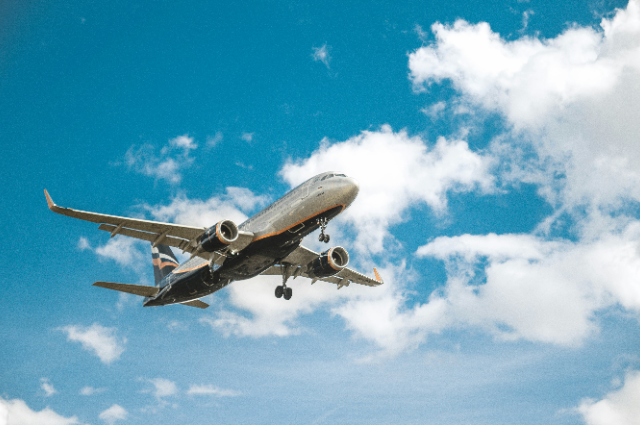
On September 30, 2026, a routine Flydubai flight from Dubai to Tel Aviv became a terrifying struggle for survival thousands of feet above the ground. Flight FZ1073, operating from Dubai International Airport to Ben Gurion International Airport, was carrying 174 people when an extraordinary incident unfolded inside the cockpit. What began as an ordinary international journey suddenly turned into an aviation emergency after one pilot was reportedly attacked by the other. Israeli officials later said that the co-pilot had stabbed the Indian captain, Smit Machchhar, and apparently attempted to bring the aircraft down. Flydubai itself initially described the event more cautiously as an “altercation” in the flight deck and said the aircraft was successfully secured by crew members travelling on the flight. The distinction matters because the precise circumstances, motive and sequence of events have not yet been conclusively established. What is beyond dispute is that the Boeing 737 MAX 8 entered a terrifying descent, transmitted emergency signals and eventually diverted to Tabuk in north-western Saudi Arabia, where it landed safely. Flight-tracking data showed an extraordinary loss of altitude, with reports recording a descent of roughly 14,000 feet in less than half a minute and other tracking accounts showing an overall fall of more than 17,000 feet during the emergency. The aircraft transmitted the general emergency squawk 7700 before switching to 7500, the internationally recognised code associated with unlawful interference or a possible hijacking, and later returned to 7700. For passengers inside the cabin, technical codes and aviation procedures were far removed from the immediate reality of fear. Overhead bins opened, people clung to their children, and passengers later described the aircraft dropping so sharply that they believed they were about to die. Yet, in those frightening moments, a sequence of individual decisions prevented the flight from becoming a catastrophe. At the centre of that sequence was Captain Smit Machchhar, an Indian pilot from Mumbai. Seriously wounded after the reported stabbing, Machchhar nevertheless managed to open the cockpit door, allowing passengers and crew to enter and confront the attacker. That single action became one of the most important moments in the entire incident.
The story of what happened inside the cockpit is still being reconstructed from passenger accounts, official statements, flight-tracking data and the airline's investigation. According to Israeli officials, the reported attack began when the co-pilot stabbed Machchhar while the aircraft was cruising at high altitude. The plane then plunged dramatically, creating a situation in which every second mattered. Israeli Prime Minister Benjamin Netanyahu said Machchhar, despite being seriously injured, fought back, resisted and managed to release the cockpit door, allowing passengers and crew to intervene. The passengers who reached the cockpit included Yaniv Hayun, whom Netanyahu later publicly praised for his role. Hayun reportedly entered the cockpit, helped overpower the attacker and briefly handled the aircraft controls. Other passengers also rushed forward when they realised something was terribly wrong. Among them was Dr Shota Musaev, a dentist, who said he found the injured captain on the floor, suffering severe wounds and massive blood loss. Musaev provided emergency assistance and also helped restrain the attacker, reportedly using headphone cords and plastic ties. Passenger accounts describe the atmosphere as chaotic and desperate. Some passengers said the aircraft appeared to nose-dive for seconds that felt much longer, while others recalled thinking that death was imminent. One passenger, Naama Bershadski, reportedly closed her eyes and prayed because she believed the aircraft was going to crash. Another passenger, Peleg Itali, a 16-year-old student, described the overwhelming fear of believing that he was about to die. As the passengers struggled with the attacker, other qualified pilots who were travelling aboard the aircraft were able to assist with the flight. Reports have described them as relief or repositioning pilots who happened to be travelling as passengers, although the precise operational status of those pilots has been described differently in different accounts. What matters in the sequence of events is that trained aviation personnel were available when the original flight crew had been incapacitated by the violence. The aircraft was eventually stabilised and diverted towards Saudi Arabia. The dramatic rescue therefore did not depend upon one individual alone. It was a chain of courage, professional training, instinctive action and extraordinary circumstance. Machchhar opened the door; passengers entered; others restrained the attacker; medically trained passengers helped the wounded; and other pilots helped restore control. A disaster that had appeared only seconds away was gradually pushed back from the edge.
Captain Smit Machchhar's own journey to the cockpit makes the events of September 30 even more striking. Aviation, according to his own earlier remarks, was never his childhood dream. He was born and raised in Mumbai, where his parents still live, and initially considered a different professional path. Reports say he studied textile engineering and had also considered management and his family's business before an aviation seminar changed the direction of his life. At around 19, he travelled to Dunedin in New Zealand for flight training, joining Mainland Air and spending roughly 18 months there during 2008 and 2009. Philip Kean, the chief executive of Mainland Air and one of his former instructors, remembered him as a cheerful, hardworking and composed young man. Kean later said Machchhar had always appeared capable of remaining calm under pressure, although no ordinary training could fully prepare a person for an attack inside a cockpit at cruising altitude. After completing his training, Machchhar began his commercial aviation career with SpiceJet in India in 2011. He spent around 11 years with the airline, eventually serving as a senior commander and line-training captain. His professional profile lists approximately 9,750 hours of flying experience, including more than 6,400 hours as pilot-in-command during his SpiceJet career. In June 2022, he joined Flydubai as a direct-entry captain and became part of the airline's Boeing 737 operation. His experience included the Boeing 737-800 and Boeing 737 MAX aircraft, and his professional profile reflected experience in pilot mentoring, assessment, safety and operational standards. His professional history is important because the crisis did not suddenly create his discipline; years of training and experience had already shaped the way he responded to danger. In a podcast conversation in 2025, Machchhar spoke about the profession with a humility that now carries particular meaning. He said aviation had not been his childhood ambition, but once he discovered flying, he became deeply committed to it. He also spoke about the importance of separating professional responsibility from personal life and advised people to give personal life equal importance because, in his words, it would help them “fly longer.” He recalled other emergencies he had faced during his career, including a medical emergency involving a passenger who went into labour during a flight. On that occasion, he and the first officer assessed nearby airports and conditions while working to ensure the safety of the mother and baby. His attitude towards flying was equally revealing: delays, he suggested, were secondary as long as passengers walked safely out of the aircraft. Those words, spoken before the crisis, now read less like a professional observation and more like a statement of the principle that guided his actions when his own life was at risk.
The emergency aboard FZ1073 also demonstrated how quickly an aircraft can move from normal operation to an existential crisis. The flight departed Dubai at approximately 03:05 GMT, or 07:05 local time, bound for Tel Aviv. Around two and a half hours into the journey, the aircraft was cruising at roughly 33,000 to 34,000 feet when the incident unfolded. Flight-tracking data later showed an exceptionally rapid descent. Reports differ slightly in the precise measurements because different tracking services and calculations captured different stages of the event, but the scale of the descent was extraordinary. The aircraft lost roughly 14,000 feet in less than 30 seconds according to one reconstruction, while other accounts recorded a total fall of more than 17,000 feet. FlightRadar24 also reported extreme vertical-speed readings far outside normal airline operations. The aircraft briefly entered Jordanian airspace before turning back towards Saudi Arabia, eventually beginning its descent towards Tabuk. The transponder codes added another layer of alarm. Squawk 7700 indicated a general emergency, while squawk 7500 signalled unlawful interference, commonly associated with a hijacking situation. The aircraft later returned to 7700. The emergency landing took place at Tabuk, where the Boeing 737 was examined, and passengers were brought safely off the aircraft. Images from the ground showed substantial damage around the tail and rudder area, although the exact cause and timing of that damage remain matters for investigators. Aviation experts noted that the aircraft had been subjected to severe aerodynamic forces during the rapid and apparently erratic descent. Former aviation professionals who examined the incident expressed surprise that the aircraft remained controllable after such an extreme manoeuvre. Their observations underline how narrow the margin for recovery can become when a large commercial aircraft loses altitude at an abnormal rate. The fact that the aircraft still had sufficient altitude to recover became crucial. Had the descent continued for longer, there might have been far less time or altitude available for the people who eventually regained control. The safe landing at Tabuk was therefore not simply the conclusion of a frightening flight; it was the final result of a sequence in which altitude, aircraft integrity, human intervention and professional flying skills happened to align before the remaining margin disappeared.
But the story belongs not only to the cockpit. It also belongs to ordinary passengers who suddenly found themselves confronted with a responsibility no traveller expects to carry. Yaniv Hayun, who was later described by Netanyahu as one of the passengers who entered the cockpit, reportedly acted without formal aviation responsibility for the flight. He has described how he grabbed the controls after entering the cockpit, pulling them back in a way he had seen demonstrated on television. Other passengers fought to restrain the attacker while crew members attempted to regain order. Dr Shota Musaev, the dentist aboard the aircraft, moved towards the cockpit and treated Machchchhar while he was losing blood. Another passenger described people acting on instinct when they realised the aircraft was falling. Among the most remarkable details is that several people who had no expectation of becoming part of an aviation emergency suddenly became links in the chain that kept the aircraft and its passengers alive. There were also other pilots aboard the flight who were able to assist with the recovery and eventual landing. Passenger Almog Itali said two relief pilots travelling aboard the aircraft entered the cockpit and helped pull the aircraft up and stabilise it. Flydubai later confirmed that on-duty crew members travelling on the flight secured the aircraft and landed it safely at Tabuk. The exact division of responsibilities among the passengers, cabin crew and additional pilots is still being clarified, but their collective intervention is central to the story. The passengers did not possess the luxury of waiting for certainty. They had to act while the aircraft was descending and while the cockpit was the scene of a violent struggle. Their actions also show something important about emergencies: courage does not always arrive wearing a uniform. A captain may carry the formal responsibility for hundreds of lives, but in a crisis, survival can depend upon the actions of people who are simply present at the right moment. Hayun, Musaev, the other passengers, cabin crew and additional pilots each contributed in different ways. None could have known whether their decision would succeed. Yet they acted. Their response transformed a frightening passenger cabin into an unexpected network of assistance, allowing the aircraft to reach the ground rather than becoming another name in aviation history.
After the emergency landing, Captain Machchhar and the co-pilot were taken for medical attention in Tabuk. The Indian Embassy in Riyadh said Machchhar was receiving necessary medical treatment and was reported to be in stable condition. Indian diplomatic officials also remained in contact with his family and monitored his recovery. Reports said he underwent treatment for serious injuries and massive blood loss. The images and accounts emerging from the aircraft described a scene of extraordinary violence: blood in the cockpit, an injured pilot on the floor and passengers trying to understand what had happened. Yet the most important medical fact was that Machchhar survived. The 174 people aboard the aircraft were ultimately safe, and a replacement Flydubai aircraft was sent to bring passengers onwards to Ben Gurion Airport in Tel Aviv. By the time they arrived, the journey that should have been remembered simply as a flight from Dubai to Tel Aviv had become a story of survival. In India, the response was immediate. Prime Minister Narendra Modi praised Machchhar's courage and said that despite being seriously injured, he had shown immense courage and an unwavering determination to protect others. Indian External Affairs Minister S. Jaishankar also praised his presence of mind and bravery. In Israel, Benjamin Netanyahu called Machchhar a “true hero” and credited him with helping prevent what he described as a catastrophic mid-air disaster. Israeli officials also praised the passengers who entered the cockpit and helped overpower the attacker. United States President Donald Trump likewise described the pilot as a hero while recounting his understanding of the incident. Former colleagues and people who knew Machchhar personally also spoke about his character. A former neighbour from Mumbai described him as soft-spoken, kind-hearted and good-natured. His former instructor in New Zealand expressed pride in the way he responded to the crisis. SpiceJet, where Machchhar had spent more than a decade, also praised his actions. Such tributes are understandable after an event of this scale, but behind the public language of heroism is a more human reality: Machchhar was a professional doing what he had spent years learning to do, while passengers around him were ordinary people suddenly forced into extraordinary circumstances. His actions were courageous precisely because he was severely injured and had every reason to be consumed by his own survival. Instead, his response helped create the opportunity for others to act.
The incident has also raised difficult questions that cannot be answered by praise alone. Israeli authorities have said they intend to strengthen security checks on pilots flying into the country. That decision reflects the unusual nature of the event: aviation security traditionally concentrates heavily on threats entering the aircraft from outside, while this incident involved an alleged threat arising within the flight deck itself. Israeli officials described the episode as a possible terrorist attack, and Israel's Defence Minister Israel Katz called it an attempted jihadist terrorist attack. At the same time, Flydubai has explicitly urged authorities and the public to avoid premature speculation, stating that the underlying reasons and motives remain unknown and are subject to formal investigation. Even Netanyahu acknowledged that questions surrounding the attack remained under examination. Reports have identified the co-pilot as an Omani national, but his identity has not been officially established in all public accounts, and the motive has not been conclusively determined. Questions have also emerged about how an individual reportedly from Oman was cleared to serve aboard a flight bound for Israel, given that Oman and Israel do not have diplomatic relations. That question, however, must be answered through aviation employment, regulatory and security records rather than assumption. The investigation is expected to examine cockpit communications, flight-data records and other evidence that can reconstruct what happened minute by minute. The cockpit voice recorder and flight data recorder, commonly known as the black boxes, will be particularly important because they can provide objective information about conversations, aircraft movements, controls and system behaviour. Investigators may also examine available video evidence, passenger recordings, crew statements, security procedures and the physical condition of the aircraft. Saudi Arabia's transport-safety authorities, Israeli authorities and the United Arab Emirates' aviation authorities are among those involved in examining different aspects of the incident. The episode has already drawn attention to earlier cases of unlawful interference and cockpit-related incidents in commercial aviation, but comparisons must be made carefully because every event has different circumstances. What investigators now need is not a dramatic explanation but an accurate one. Why did the confrontation begin? How did the alleged weapon enter the cockpit? What exactly happened to the aircraft controls during the descent? How were the additional pilots able to assume control? Were existing security and crew-assessment procedures followed? And, most importantly, could any part of the sequence have been detected or prevented? Those questions will matter far beyond one flight.
Flydubai responded by suspending its flights to and from Israel while the investigation continues. The airline said it was cooperating with authorities, regulators and airport stakeholders and would review the suspension as more information became available. The incident therefore reached beyond the aircraft itself, affecting passengers, airline operations and aviation-security discussions between several countries. Flydubai, owned by the Dubai Aviation Corporation, began operations in 2009 and operates a network of more than 125 destinations, including India. Its partnership with Emirates, announced in 2017, has made it an important part of the region's aviation network. FZ1073 was one of the flights connecting Dubai and Tel Aviv, a route that suddenly became the centre of an international investigation. Yet perhaps the most significant lesson from the episode lies somewhere beyond airline schedules, diplomatic questions and security protocols. It lies in the human capacity to act when circumstances become almost impossible. Captain Machchhar did not know how the crisis would end when he reached for the cockpit-door release. The passengers who rushed forward did not know whether they would succeed in restraining the attacker. Dr Musaev did not know whether medical treatment would be enough to save the wounded captain. The additional pilots who helped stabilise the aircraft did not know whether the damaged Boeing 737 would respond normally. Each person acted without the certainty of success. That is what makes the story powerful without needing to turn it into mythology. Machchhar's journey from a young man who had not originally imagined a career in aviation to a captain responsible for an aircraft carrying 174 people is a reminder that professional courage is often built quietly, long before anyone notices it. Years of training, thousands of hours in the air, lessons from senior pilots, difficult emergencies and an understanding of responsibility eventually meet in a single moment. His own earlier description of the pilot's responsibility was simple: the important thing was that people walked out of the aircraft safely. On September 30, that principle was tested in the most extreme circumstances imaginable. The aircraft did land safely. The passengers reached Israel. Machchhar survived and was receiving treatment in Saudi Arabia. The investigation will determine what happened inside that cockpit and why. Until those facts are established, the incident should be described with care rather than certainty. But one fact already stands out from the uncertainty: when the flight came frighteningly close to disaster, the courage and cooperation of people inside the aircraft created a path back to safety.
In the end, the most enduring image from Flight FZ1073 may not be the plunging aircraft, the emergency codes or the damaged tail. It may be the moment when an injured captain opened a door that allowed others to enter. A cockpit door normally represents separation, security and control. On that flight, for a few terrifying minutes, it became something else: an opening through which help could reach the people inside. Captain Smit Machchhar's name is now associated with the survival of 174 people, but the story is larger than one individual. It includes the passenger who ran towards danger, the dentist who treated a severely wounded man, the crew members who helped restore order and the pilots who helped bring the aircraft safely to the ground. It includes frightened parents holding their children, passengers praying in silence and strangers choosing to act together when the situation seemed beyond their control. It also includes the investigators who must now work patiently through evidence rather than emotion to establish what really happened. That distinction is important because admiration should never replace accountability, and a dramatic survival should never prevent difficult questions from being asked. Aviation safety advances when frightening incidents are examined honestly, procedures are tested against reality, and lessons are converted into stronger systems. The flight from Dubai to Tel Aviv was supposed to be an ordinary journey of a few hours. Instead, it became a test of professional training, human courage and the fragile margin separating an emergency from catastrophe. Machchhar had once described himself simply as “blessed” to be a pilot. On September 30, 2026, that profession placed him in a situation no training manual could fully reproduce. He was seriously wounded, yet he found enough strength to act. Others saw the opening he created and acted too. The aircraft descended, recovered, diverted and landed. The passengers walked away. That is the simplest and most powerful conclusion the facts currently allow. The unanswered questions will belong to investigators. The gratitude belongs to those whose actions kept the aircraft in the sky long enough to reach the ground. And the lesson belongs to everyone: courage is not always loud, celebrated, or planned. Sometimes it is a single decision made in a few seconds, when fear is everywhere, and there is no time left to wait.
References:
- Al Jazeera. “Netanyahu Calls Stabbed Indian Pilot a Hero; Flydubai Halts Israel Flights.”
- BBC News. “Who Is the ‘Hero’ Indian Pilot Who Was Stabbed on Israel-Bound Flight?”
- The Guardian. “A ‘Hero’ Pilot, Plumber and Dentist Among Those Who Saved Flydubai Flight to Israel.”
- The New York Times. “Plane to Israel Narrowly Averts Disaster After Pilot Stabbing.”
- The Hindu. “Stabbing on Dubai-Tel Aviv Flydubai Flight: What Happened and What We Know So Far.”
- CNBC. “Passengers and Crew Foil Co-Pilot’s Apparent Attempt to Crash Flydubai Flight to Israel.”
- CNN World. “Captain Smit Machchhar: The ‘Jovial’ Pilot and Father Who Thwarted the Flydubai Attacker.”
- Hindustan Times. “Who Landed the Flydubai Plane at Tabuk Airport? Inside the Dramatic Rescue That Saved Over 174 Lives.”
- The Hindu. “Flydubai Incident: Altercation, Emergency Landing and Investigation | Explained.”