
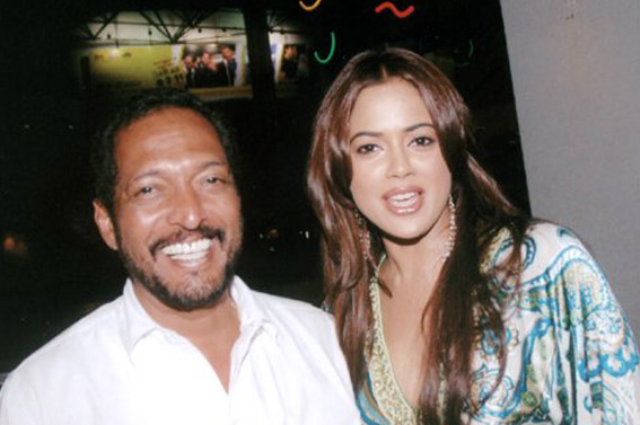
On October 8, 2026, Indian cinema lost an actor whose presence could command attention without relying on conventional stardom. Nana Patekar, born Vishwanath Patekar on January 1, 1951, died at the age of 75 after suffering a cardiac arrest at his residence in Goa. He was declared dead at Manipal Hospital at approximately 5:20 a.m. His passing marked the end of a career that spanned nearly five decades across Hindi and Marathi cinema, but his contribution cannot be measured simply by the number of films he made or awards he received. Patekar belonged to a rare category of performers who could make audiences uncomfortable, provoke thought and leave a lasting impression through the sheer force of their acting. His voice carried anger, his eyes communicated suspicion, and his silences often revealed more than an elaborate speech could. From the terrifying gangster Anna in Parinda (1989) to the impassioned Pratap Narayan Tilak in Krantiveer (1994), he created characters that became part of India's cinematic memory. Yet his journey was not an overnight success story. It was shaped by theatre, demanding roles, professional discipline and a willingness to work outside the established conventions of a Hindi film hero. His death invites a closer examination of how an actor who never depended on conventional glamour established an identity that remained unmistakably his own.
Patekar's artistic foundations were laid in Maharashtra, where he grew up in a Marathi-speaking family in Murud-Janjira, in present-day Raigad district. His father encouraged his interest in theatre, introducing him to an art form that would eventually influence his approach to cinema. Patekar studied at Mumbai's Sir J. J. Institute of Applied Art, but performance became the defining pursuit of his professional life. Marathi theatre provided him with an understanding of dialogue, rhythm, character and the relationship between a performer and an audience. His stage experience also helped develop the intensity that later became his cinematic signature. Unlike actors whose careers are built primarily around appearance or romantic appeal, Patekar frequently gravitated towards complicated individuals whose motivations were not easily understood. His early film appearances included Gaman (1978), followed by smaller roles in Hindi and Marathi productions. He subsequently appeared in films such as Aaj Ki Awaz (1984), Ankush (1986), Pratighaat (1987) and Andha Yudh (1987). These performances gradually brought his abilities to the attention of filmmakers, even when he was not the central attraction. His appearance in Mira Nair's Salaam Bombay! (1988) further established his credibility as an actor capable of working within realistic, socially grounded cinema. The transition from theatre to film did not erase his stage instincts; instead, it gave them a new form. His delivery retained the urgency of a live performance, while the camera captured the smallest changes in his expression. Those qualities would soon distinguish him from many of his contemporaries.
The turning point arrived with Vidhu Vinod Chopra's Parinda (1989), a crime drama that explored the violent world of Mumbai's underworld. Patekar played Anna, a gangster whose frightening authority was strengthened by sudden eruptions of cruelty and disturbing unpredictability. Rather than presenting violence as a theatrical display of villainy, he gave the character an unsettling psychological dimension. Anna could appear controlled one moment and terrifying the next, making his behaviour difficult to anticipate. Patekar's performance earned him the National Film Award for Best Supporting Actor and the Filmfare Award for Best Supporting Actor, establishing him as a major force in Indian cinema. The recognition was significant because it rewarded a performance that challenged the conventional division between leading men and supporting actors. He followed this achievement by directing and starring in Prahaar: The Final Attack (1991), a film centred on military discipline, personal responsibility and the consequences of violence. To prepare for his role as an army officer, he underwent military training, demonstrating his commitment to understanding the physical and psychological demands of a character. In Angaar (1992), he delivered another memorable portrayal of a morally compromised man, earning the Filmfare Award for Best Villain. His work in Raju Ban Gaya Gentleman (1992) and Tirangaa (1993) revealed that he could also contribute to films built around romance, patriotism and mainstream entertainment. These roles established an important pattern: Patekar could enter a film as a supporting presence and still become one of its most memorable elements. He did not need to dominate every scene through volume. His ability to make menace believable, authority convincing and emotion unpredictable was becoming the foundation of his reputation.
If Parinda established Patekar's power as a performer, Krantiveer (1994) demonstrated his ability to carry a film through the force of his convictions. As Pratap Narayan Tilak, a disillusioned and rebellious man who confronts corruption and communal hatred, he transformed personal anger into a larger social argument. The film's dramatic monologues became inseparable from his performance, particularly its insistence that human suffering cannot be divided along religious lines. Its most enduring moments challenged audiences to examine prejudice, political manipulation and the distance between patriotic slogans and social responsibility. Patekar's delivery was forceful, but its impact came from the sense that his character's outrage had accumulated through disappointment with the world around him. The role earned him the National Film Award for Best Actor, the Filmfare Award for Best Actor and the Screen Award for Best Actor. His performance also demonstrated how an actor could turn dialogue into a public conversation that continued beyond the cinema hall. During the same decade, he explored sharply contrasting emotional territories. In Agni Sakshi (1996), he portrayed an abusive and controlling husband, creating a deeply disturbing representation of domestic cruelty. In Khamoshi: The Musical (1996), he played Joseph, a deaf father whose love for his daughter exists alongside emotional limitations and personal pain. The latter earned him another National Film Award for Best Supporting Actor. He also appeared in Ghulam-E-Mustafa (1997), Yeshwant (1997), Wajood (1998) and Hu Tu Tu (1999). Taken together, these films reveal an actor unwilling to remain confined to one emotional register. His characters could be brutal, vulnerable, morally conflicted or quietly affectionate. The common thread was his ability to make their inner lives visible.
The new millennium brought further opportunities to demonstrate this range. In Shakti: The Power (2002), Patekar portrayed a violent father whose authority becomes a source of fear within his own family. In Ab Tak Chhappan (2004), he played Sadhu Agashe, an encounter specialist whose professional competence is inseparable from the moral questions surrounding extrajudicial violence. His performance resisted the easy temptation to present a police officer as either an uncomplicated hero or an obvious villain. Instead, it placed the character within a world where power, duty and personal conscience frequently collide. Apaharan (2005) earned him another Filmfare Award for Best Villain, while Taxi No. 9211 (2006), opposite John Abraham, revealed his ability to sustain a compelling screen partnership through conflict and contrasting personalities. In Raajneeti (2010), directed by Prakash Jha, he brought measured intelligence to a political strategist navigating the ambitions and compromises of electoral power. His portrayal of Joint Commissioner Rakesh Maria in The Attacks of 26/11 (2013) and his role in Dr Prakash Baba Amte: The Real Hero (2014) further reflected his interest in characters connected to real events and public life. Patekar also continued to contribute to Marathi cinema, appearing in Deool (2011) and portraying the celebrated social reformer and doctor Prakash Amte in the 2014 biographical film. In 2016, he delivered one of the defining performances of his later career as Ganpatrao 'Appa' Belwalkar in Natsamrat, the film adaptation of V. V. Shirwadkar's celebrated Marathi play. Playing a retired stage actor confronting ageing, family estrangement and the loss of his former identity, Patekar brought his theatre roots full circle. The performance earned him the Filmfare Award for Best Actor in Marathi and reaffirmed his command of emotionally demanding material.
Patekar's enduring popularity, however, cannot be explained through anger and tragedy alone. One of his most successful transformations came with Welcome (2007), in which he played Uday Shetty, a powerful gangster who dreams of becoming an actor. Paired with Anil Kapoor's flamboyant Majnu Bhai, Patekar discovered a comic register that relied on timing, restrained reactions and the absurd contrast between criminal authority and artistic ambition. His exasperated attempts to maintain control, particularly the now-famous “Control Uday, control” refrain, became part of popular culture. The character returned in Welcome Back (2015), extending his appeal to audiences who knew him through comedy rather than intense dramatic performances. This shift was especially revealing: an actor celebrated for psychological darkness could make audiences laugh without abandoning the individuality of his screen presence. His earlier work in Thodasa Roomani Ho Jaayen (1990) and Raju Ban Gaya Gentleman had already shown a gentler, more playful side, while his performance in The Jungle Book (2016), as the Hindi voice of Shere Khan, introduced his distinctive vocal presence to another generation. He subsequently appeared in projects including Kaala (2018), Tadka (2022), The Vaccine War (2023) and Housefull 5 (2025). Even when a film received a mixed or unfavourable response, reviewers continued to recognise the force of his individual performances. Alongside acting, he explored directing and playback singing, contributing songs to films such as Yeshwant (1997), Wajood (1998) and Aanch (2003). In 2013, he received the Padma Shri for his contribution to the arts. His career demonstrated that versatility does not necessarily mean disappearing into every role; sometimes it means making radically different characters unmistakably one's own.
Away from the screen, Patekar developed a reputation for supporting people affected by poverty and rural distress. Having experienced financial difficulties during his early life, he was familiar with the insecurity that accompanies limited resources, although his public work was not confined to recalling his own circumstances. He contributed to charitable initiatives, supported relief work for flood-affected communities and donated the monetary award associated with Maharashtra's Raj Kapoor Special Contribution Award towards drought relief. He also donated the remuneration he received for Paathshaala (2010) to charitable organisations. His most prominent social initiative began in September 2015, when he co-founded the Naam Foundation with fellow Marathi actor Makarand Anaspure. The organisation was established to assist drought-affected farmers and families facing agrarian distress in Maharashtra, particularly in regions such as Marathwada and Vidarbha. Its work has included financial assistance, water conservation, the restoration of water bodies and efforts to improve rural livelihoods. In villages affected by recurring water shortages, such initiatives have sought to strengthen access to water and support agricultural activity. Patekar's association with Naam Foundation gave his public life a dimension that extended beyond celebrity charity: it connected his influence to practical attempts to address persistent rural problems. Yet his legacy also carries a serious controversy. In 2018, actress Tanushree Dutta revived allegations of sexual harassment relating to an incident she said occurred on the sets of Horn 'Ok' Pleassss in 2008. She alleged that Patekar behaved inappropriately during a song shoot; he denied the allegations. The controversy became one of the significant episodes associated with India's #MeToo movement. In 2019, Mumbai Police filed a closure report citing insufficient evidence to substantiate the allegations, and the criminal case was subsequently closed. The allegations were not tested at trial. A responsible account of Patekar's life must acknowledge both the documented legal outcome and the seriousness of the allegations, without presenting either an accusation as a proven fact or a closure report as a judicial finding that establishes what happened.
Patekar's death on October 8, 2026, brought renewed attention to the extraordinary range of his career and the contradictions that shaped his public image. Four days earlier, he had appeared at an event in Goa, where he spoke about theatre, life and mortality. His final days now form part of the biography of an actor who spent much of his career confronting difficult questions through the characters he played. Tributes from colleagues, admirers and political leaders reflected the reach of his work across generations. Shah Rukh Khan, who appeared alongside him in Raju Ban Gaya Gentleman and Shakti: The Power, remembered their association, while other colleagues recalled his individuality, candour and commanding performances. His films remain the clearest record of what made him distinctive. Anna in Parinda revealed the terrifying unpredictability of violence; Pratap in Krantiveer channelled anger into a challenge to communal prejudice; Joseph in Khamoshi: The Musical exposed the vulnerability beneath a father's silence; Sadhu Agashe in Ab Tak Chhappan confronted the moral complications of policing; and Uday Shetty in Welcome showed that even a formidable gangster could become a source of laughter. These characters were different in temperament and circumstance, but each carried the unmistakable stamp of an actor who trusted performance more than glamour. Patekar received three National Film Awards, several Filmfare honours and the Padma Shri, yet his influence extends beyond a list of distinctions. His career demonstrated that Indian cinema could make room for performers whose strength lay in complexity rather than conventional perfection. The man who could unsettle an audience with a glance and amuse it with a weary expression leaves behind a body of work that continues to invite interpretation. His story is not simply one of success, nor can it be reduced to controversy or public acclaim. It is the story of a demanding artist whose performances became cultural reference points, whose social work reached beyond the screen and whose complicated legacy calls for both admiration and critical reflection. From Parinda to Krantiveer, Nana Patekar became an acting force because he did more than deliver dialogue: he made audiences confront the people, conflicts and uncomfortable truths that cinema can bring into view.
References:
- “Nana Patekar Passes Away: Actor’s Last Rites Carried Out with Full State Honours.” The Hindu.
- “Nana Patekar’s Most Memorable Dialogues.” The Shillong Times.
- “Showbiz Will Miss the Sound of Nana Patekar’s Irritation.” Rediff.com.
- “Nana Patekar: The Star Who Came in from the Cold.” Open Magazine.
- “Nana Patekar Played a Key Role in Establishing Naam Foundation to Help Distressed Farmers.” ETV Bharat.
- “Three Hours Before Death, Nana Patekar Texted Friend He Wasn’t Feeling Well.” NDTV.
- “Nana Patekar, Bollywood’s ‘Krantiveer’, Dies of Cardiac Arrest at 75.” NDTV.
- “Five Nana Patekar Films Which Are Yet to Be Released.” News18.
- “Veteran Actor Nana Patekar Dies at 75.” The New Indian Express.
- “Outspoken Indian Actor Nana Patekar Dies Suddenly at 75.” BBC News.
- “Nana Patekar Death: Tanushree on ‘Evil Dead’ Remark; ‘Cheap Publicity,’ Says Cine Association.” Screen, The Indian Express.