
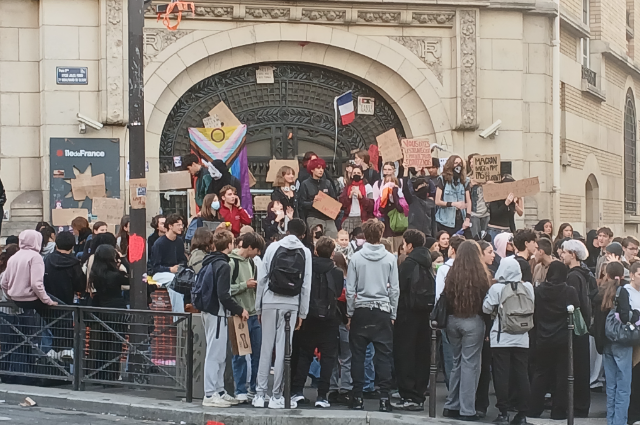
France has witnessed weeks of student demonstrations that have grown from protests over poor educational conditions into a nationwide movement against wider social and economic problems. What began at Lycée Saint-Exupéry in Créteil, a suburb southeast of Paris, in September 2026, soon spread to high schools across the country. Students initially demanded more teachers, better school buildings, smaller classes and access to basic facilities. However, their concerns gradually expanded to include long school days, the university admissions system and the rising cost of living. Teachers, parents, university students, labour unions, farmers and members of the Yellow Vests movement later joined the demonstrations. The protests have brought thousands of people onto the streets and disrupted classes at hundreds of educational institutions. Although many participants have marched peacefully, some demonstrations have been marked by fires, looting, damage to public buildings and clashes with police. The unrest has become a serious challenge for President Emmanuel Macron’s government, which is facing pressure to address the students’ demands while restoring public order.
The protests began after students and teachers at Lycée Saint-Exupéry raised concerns about staff shortages and inadequate school resources. Teachers had reportedly struggled to cover several subjects, while students complained about missing support staff and deteriorating facilities. As the movement developed, similar problems emerged at schools in Paris’s surrounding suburbs and other French cities. Students described overcrowded classrooms, with some containing between 32 and 36 pupils, broken toilets, leaking roofs, damaged furniture and poorly maintained buildings. Reports and videos shared on social media also drew attention to rats and other problems in school corridors. Extreme summer temperatures added to their frustration, with some classrooms reportedly reaching 40°C during heatwaves. Students argued that these conditions made it difficult to concentrate and learn safely. Many also complained about school days that could begin at 8 a.m. and continue until 6 p.m., leaving little time for homework, rest or family life. The restrictions on mobile phones introduced in schools became another source of dissatisfaction for some pupils. Together, these complaints exposed growing frustration among young people who believed that their educational needs were not receiving sufficient attention.
Another major concern was Parcoursup, France’s online platform for applications to universities and other higher-education programmes. Students have criticised the system for what they describe as unclear selection criteria and unequal access to preferred courses. They argue that applicants often struggle to understand why they have been rejected, even when they believe their academic results are strong. Concerns have also been raised about whether students from disadvantaged neighbourhoods receive equal opportunities compared with those attending more privileged schools. The issue has added to the pressure faced by young people preparing for higher education and planning their futures. Teacher shortages have further weakened confidence in the education system. Students have reported going weeks or months without a teacher for certain subjects, while a lack of nurses, counsellors and other support staff has affected school life. Poor infrastructure and limited resources have made these difficulties worse, particularly in economically disadvantaged communities. For the protesters, the problem is not limited to individual schools but reflects wider questions about public investment and educational equality. They argue that every student should have access to safe classrooms, qualified teachers and fair opportunities, regardless of family income or where they live.
As the demonstrations spread, school blockades became a central feature of the movement. Students gathered outside school entrances, used bins and other objects to block gates, and carried placards calling for better learning conditions. The movement gained momentum through social media and student-led organisations, allowing complaints from individual schools to reach a national audience. By late September and early October, protests had expanded beyond the Paris region to cities including Lyon, Marseille, Nantes, Rennes, Strasbourg and Bordeaux. University students and other groups also began joining the demonstrations. On October 6, nationwide mobilisation brought students, teachers, parents and political activists onto the streets, with reports estimating that hundreds of thousands participated across France. However, not all demonstrations remained peaceful. In several locations, protesters reportedly set fires, damaged school property and threw objects at police, who responded with tear gas and other crowd-control weapons. Fires at educational institutions and confrontations near school gates raised concerns about student safety and disruption to lessons. Protest organisers maintained that the movement had emerged from genuine frustration among students. They rejected suggestions that political parties had created the unrest, insisting that young people were organising themselves to demand changes to conditions that had affected them for years.
The police response became one of the most controversial aspects of the crisis. French authorities reported large numbers of arrests as security forces attempted to control demonstrations and prevent further violence. The Interior Ministry reported 1,949 arrests by October 1, while subsequent reports recorded further detentions as the movement expanded. Some broader accounts placed the cumulative number of arrests substantially higher, although figures differed according to the dates and incidents covered. Many of those detained were reported to be minors, raising questions about the treatment of children during public demonstrations. Serious injuries also intensified public anger. On October 5, a 15-year-old protester in Lens reportedly lost his hand after an encounter involving a police-deployed stun grenade. Other reports described injuries to students, teachers and police officers during clashes. Human rights organisations criticised the use of force, particularly where children were involved. Amnesty International raised concerns about disproportionate police action, while Human Rights Watch highlighted reports of serious injuries to minors. The United Nations human rights office also called for peaceful demonstrations and warned against disproportionate force. French officials rejected accusations that the police response was generally excessive, arguing that officers had to maintain public order and respond to violent incidents. The disagreement deepened tensions between demonstrators, authorities and rights groups.
On October 17, the movement entered a new phase when students were joined by workers, trade unions, farmers and members of the Yellow Vests movement in nationwide demonstrations against education problems and rising living costs. The official turnout was reported at approximately 550,000 people, while some estimates suggested a higher figure. Protesters raised concerns about inflation, housing costs, fuel prices, employment and reductions in public spending, arguing that the problems facing students were connected to wider economic pressures. In several cities, however, demonstrations descended into serious violence. Reports described looting, arson, attacks on public buildings and confrontations between protesters and police. The historic town hall in Limoges suffered a devastating fire, while Marseille’s town hall was reportedly stormed by demonstrators. Businesses and shops were also damaged, leaving shopkeepers facing financial losses and residents concerned about public safety. Reports from the period described thousands of arrests and injuries among protesters and security personnel; accounts of casualties varied, with reports also describing the deaths of a police officer and a protester. The violence drew condemnation from political leaders and raised questions about how the authorities had prepared for the demonstrations. At the same time, organisers and supporters argued that the actions of violent groups should not be used to dismiss the demands of the much larger number of peaceful participants.
President Emmanuel Macron condemned the violence, expressing anger and shame over the destruction while insisting that those responsible for rioting and theft should face justice. Prime Minister Sébastien Lecornu called on ministers to prepare proposals to address the students’ concerns by the end of October. Government representatives held discussions with student organisations and education groups, but several student unions argued that the initial response did not offer enough concrete action. The authorities proposed improvements to school staffing, facilities, timetables and the transparency of university admissions. The government also pledged to deploy additional substitute teachers and examine the problems affecting high-priority schools. On October 24, a further round of demonstrations drew hundreds of thousands of people. The Interior Ministry reported approximately 410,000 participants, while organisers gave higher estimates. Authorities deployed around 70,000 security personnel in an effort to prevent a repeat of the previous week’s destruction. The security operation limited the scale of disorder in several areas, although clashes and arrests continued in some cities. Police restrictions on protest routes and bans on certain gatherings also prompted criticism from civil liberties groups, which warned that public safety measures should not undermine the right to peaceful assembly. Meanwhile, the government announced further proposed reforms, including substantial changes to Parcoursup for the 2027 admissions round and plans to replace the platform in 2028. Other proposals included additional higher-education places, increased student grants, more teaching posts and funding for school and university renovations.
The protests have also become part of a wider debate about political responsibility, public trust and the future of France. The government has accused far-left groups of exploiting student demonstrations and contributing to violence, while the movement’s organisers have described the unrest as spontaneous and rooted in genuine social grievances. Political leaders from different sides have blamed one another for the crisis, particularly as France approaches its next presidential election. Critics argue that political disputes should not overshadow the concerns of students who have called for better schools and fairer opportunities. Support for the movement has remained significant: a poll cited in the reporting supplied for this article found that 62 per cent of respondents considered the students’ actions justified. Solidarity demonstrations have also been reported in Belgium, Italy, Greece and Albania, with wider protests in parts of Europe reflecting concerns about living costs, public services and young people’s futures. The French government now faces the difficult task of turning its promises into practical improvements while preventing further violence. The outcome will depend not only on security measures but also on whether students see meaningful changes in their classrooms and university applications. What began at a single school in Créteil has become a national test of how France responds when young people demand to be heard. The immediate challenge is to protect public safety without losing sight of the educational and economic concerns that brought thousands of people onto the streets in the first place.
References:
- “Will Respond to Legitimate Demands’: Macron Moves to Ease France’s Student Unrest; Vows ‘Concrete Measures’.” The Times of India.
- “Nearly 2,000 Schools Blockaded or Closed in France as Student Protests Continue.” IT.com.
- “France Protests: Police Say 1,10,000 Marched in Paris.” The Hindu.
- “Thousands Gather in Paris After Court Lifts Protest Ban Despite Fears of New Violence.” The Hindu.
- “France to Deploy 70,000 Police for Fresh Weekend Protests.” The Hindu.
- “French Protest Groups Demand More Rallies as Macron Faces Tough Choices.” The Hindu.
- “Protests in France | Beginning of the End of Macronism.” The Hindu.
- “France Pledges Education Reforms After Protests Over Costs, School Funding.” The Times of India.
- “What’s Driving the French Student Protests?” The New Yorker.
- “What France’s Student Protesters Want – and What the Government Is Offering.” France 24.
- “France’s School Protests: What Lies Behind the Anger?” BBC News.
- “Why French Students Are Revolting.” The Nation.
- “Katya Adler: France Divided Over Who to Blame for Riots and What to Learn from Them.” BBC News.
- “Why Are Students Protesting Across France? Hundreds of Thousands Take to the Streets in Nationwide Demonstrations.” TIME.