
For a four-year-old girl in Hyderabad, a royal visit became a memory she would carry for the rest of her life. On 14 February 1992, during Prince Charles and Princess Diana’s royal tour of India, Diana visited Lalapet Government High School in Hyderabad. Among the children gathered for the occasion was a young dancer named Avanti Reddy, dressed in traditional Lambadi attire, her face painted and her feet bare after performing with other children. She was only four, yet something about the little girl caught Diana’s attention. Photographs from that afternoon preserve the moment: Diana sitting with Avanti on her lap, while the child who had arrived as one of many young performers suddenly found herself at the centre of the princess’s affection. The photograph became one of the most recognisable images from Diana’s Hyderabad visit, but the picture tells only part of the story. Behind it was an encounter remembered not for ceremony, protocol or royal glamour, but for an unexpectedly intimate gesture between two people from entirely different worlds. According to Avanti’s later recollection, Diana asked her name, her school and her class. She noticed that the child had a cold and, in a gesture Avanti remembered decades later, used her own handkerchief to wipe the little girl’s nose. It was an ordinary act of care, almost too small to be noticed amid the formality of a royal tour. Yet that small gesture became central to Avanti’s memory of Diana. Getty’s photographic archive independently records the date, location and images of Diana with young Avanti at Lalapet High School. The story has endured because it presents Diana not simply as a princess being watched by thousands, but as a woman momentarily absorbed in the presence of one child. For Avanti, there was no palace, no distant throne and no complicated history in that moment. There was simply a little girl and an adult who had noticed that she was unwell. More than three decades later, the photograph still invites the same question: what was it about that brief meeting that made it remain so powerful? Perhaps the answer lies not in the grandeur surrounding Diana, but in the simplicity of what happened when she stopped to care for a child.
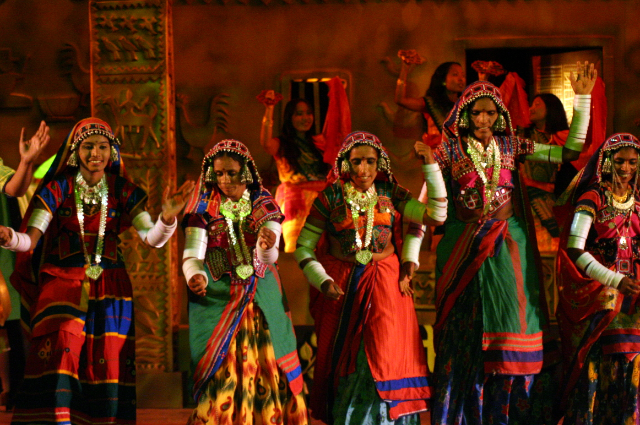
Avanti Reddy was not brought to the school to meet Diana privately. She was one of the children taking part in a cultural performance prepared for the royal visitors. Her connection with dance began within her own family. Her mother, Japamala Rani, was a dance teacher and was involved in choreographing the performance arranged for Diana’s visit. Avanti therefore entered that February afternoon not merely as a spectator but as a young performer carrying a small part of Hyderabad’s cultural welcome. She was the youngest girl among the dancers, according to her later recollection, and she performed a traditional Lambadi dance with the confidence of a child who knew her part without necessarily understanding the historical significance of the person watching her. That innocence is an important part of Avanti’s story. She was not attempting to impress a princess in the manner an adult might approach a royal encounter; she was a four-year-old child dancing because she had been taught to dance. Former Hyderabad Director of School Education Pronoti Suhasini Kavoori later recalled Avanti as a bold and confident child who did not appear conscious of the attention around her. According to Kavoori’s recollection, Avanti’s confidence during the performance stood out, and she was placed at the front. Diana’s visit itself was part of a highly organised royal tour, but Avanti’s presence introduced something spontaneous into the carefully planned proceedings. Diana could have simply watched the performance and moved on to the next engagement. Instead, she noticed the child. Later photographs show Avanti beside Diana and, at one point, sitting on the princess’s lap. That visual has often been reproduced because it seems to compress two very different worlds into a single frame: the British royal family and a little Indian schoolgirl in traditional dress. Yet Avanti’s personality matters just as much as the photograph. She was already connected to dance through her mother, and that artistic background would remain part of her identity as she grew older. Her childhood performance was therefore not an isolated curiosity in her life. It was an early expression of a discipline that she would later study more formally. The child Diana encountered that day was surrounded by music, movement, family and education. Perhaps that is why the story feels less like an encounter between a celebrity and a fan and more like a meeting between two individuals whose lives happened to cross for a few extraordinary minutes.
The most intimate part of the story came after the performance. According to Avanti’s later recollection, Diana noticed that she had a cold. The princess then wiped the child’s nose with her own handkerchief. The gesture may sound almost insignificant when separated from the scene, but that is precisely what gives it emotional power. Royal visits are usually defined by distance: the person being visited waits, the dignitary arrives, formal greetings take place, photographs are taken, and the procession continues. A handkerchief, however, belongs to a completely different vocabulary. It is personal, practical and instinctive. Avanti remembered Diana not because the princess delivered a speech to her, but because she noticed something as ordinary as a runny nose. In later interviews, Avanti recalled Diana asking about her name, school and class before caring for her. She remembered being picked up and placed on Diana’s lap and said that Diana kept her close during the visit. Contemporary photographs confirm the physical closeness between them, although the more intimate details of the conversation and the handkerchief come from Avanti’s later recollection rather than from a contemporaneous transcript. That distinction matters because memories of childhood naturally become intertwined with stories retold over many years. Yet the fact that Avanti repeatedly recalled the same central moment gives it an important place in her personal narrative. There is also something revealing about Diana’s personality in the way this story has been remembered. Her public life was dominated by ceremony, expectation and scrutiny, but her interaction with children often created opportunities for a less formal version of herself to appear. In Avanti’s memory, Diana was not distant. She was attentive. She did not treat the child as merely another participant in a royal programme. She noticed her. For a four-year-old, being noticed by an adult can be powerful; being noticed by someone surrounded by cameras, officials and attention can become unforgettable. The handkerchief therefore became more than an object in Avanti’s story. It came to represent the difference between being seen and being cared for. That is why a gesture that might have taken only a few seconds has survived in the telling of this story for decades.
Then came the words that transformed a brief meeting into a story people would remember long after the royal tour ended. According to Avanti’s recollection, Diana told her, “I don’t have a daughter, so today you are my daughter.” Avanti also remembered Diana saying, “I don’t want to leave you.” These words should be understood in the context of an affectionate interaction between an adult and a young child, not as a literal statement of family relationship. Avanti was never Diana’s daughter in the biological or legal sense. She was a little girl Diana encountered during a school visit and toward whom, according to Avanti’s recollection, the princess showed unusual warmth. Yet language can give an ordinary moment an extraordinary emotional life. For Avanti, who was too young to understand the full significance of Diana’s position in the world, the sentence may simply have sounded like something beautiful an affectionate adult had said to her. As she grew older, however, its meaning changed. The child who once knew only that a famous woman had held her began to understand who Princess Diana was and why millions of people cared about her. In later years, Avanti described Diana as a very motherly figure. That description is significant because it moves the story away from the glamour of royalty and towards the emotional qualities Avanti associated with her. Diana did not need to make a grand declaration. She could simply have smiled for the cameras and continued with the programme. Instead, Avanti remembered an interaction in which she felt personally welcomed. That is perhaps why the phrase “my daughter” became attached so strongly to the story. It did not create a family relationship; it created a memory of belonging. The distinction is important, especially because stories about famous people can easily become exaggerated as they travel through newspapers, websites and social media. The documented photographs show Diana and Avanti together, while the affectionate words and the details of the encounter come primarily from Avanti’s recollections reported in later interviews. For Avanti, however, the emotional truth of that afternoon did not depend upon whether the world interpreted the words literally. She remembered being treated with tenderness. And sometimes, particularly in childhood, tenderness is remembered more clearly than almost anything else.
For Avanti, the moment did not end when the royal motorcade left the school. According to later accounts, correspondence continued between Diana and Avanti’s family after the visit. Avanti recalled proudly showing people the letter Diana had sent her, and she kept a signed photograph of herself with the princess as a treasured possession. The photograph became more than a souvenir of a famous person. It became a physical reminder of a childhood moment that could otherwise have existed only in memory. For a child who had met one of the most recognisable women in the world, such an object must have carried an unusual kind of significance. Years later, Avanti continued to preserve the photograph, and reports about her story repeatedly mention the importance she attached to it. There is something deeply human about this part of the story. Great historical figures are often remembered through monuments, books, official portraits and archives. Avanti remembered Diana through a photograph and letters. The scale of their relationship was never conventional, and it should not be romanticised into something it was not. Yet its emotional meaning for Avanti was genuine within her own life story. Diana had crossed her path for only a short time, but the memory travelled with her into adulthood. In that sense, the encounter reveals something important about memory itself. We do not always remember the longest conversations or the most expensive gifts. Sometimes we remember a person's expression, the way they spoke our name, the feeling of being held safely, or the small gesture that told us someone had noticed us. Avanti’s story also demonstrates how childhood experiences can acquire new meaning as a person matures. At four, she could not have fully understood Diana’s charitable work, public responsibilities or place within the British royal family. Later, she read about Diana, learned more about her life and came to appreciate her work with charities, children and people affected by leprosy. The woman she came to admire as an adult was therefore different from the princess she had encountered as a child, yet the two memories remained connected. One was Diana as a global public figure; the other was Diana as the woman who had once wiped a little girl’s nose with her own handkerchief.
Avanti’s life did not remain frozen in that famous photograph. She grew up within a family closely connected to dance and eventually pursued the discipline herself. Reports about her life have described her as a trained dancer and teacher, including work as a pre-primary teacher at Infant Jesus School, where she reportedly taught for several years. She also completed a degree in dance, graduating in 2007. Her mother’s influence remained significant because dance had already been part of the family environment in which Avanti was raised. The child who once performed Lambadi dance for Diana therefore carried that artistic connection into adulthood. At different points, Avanti spoke about returning to teaching and choreography and even imagined creating a dance production for the younger generation of the British royal family. Her comments reveal an individual life that continued to develop independently of her association with Diana. She was not simply “the girl from the photograph”; she became a dancer, teacher, daughter, wife and mother, with ambitions and experiences of her own. Different reports published at different stages of her life have given different ages for Avanti—28 in a 2017 report and older ages in later retellings—so the age attached to her name should always be understood in relation to the publication date rather than treated as a timeless fact. Her own recollections also reveal how her understanding of Diana matured. As a small child, she remembered the affection. As she grew older, she began to understand the woman behind the title. She read Diana’s biography, admired her work and even remembered wanting a hairstyle similar to the princess’s. There is a gentle irony in that memory: the little girl who had once been held by Diana eventually grew into a woman who could look back at the princess not simply with childhood wonder but with adult appreciation. Avanti’s identity, however, was never entirely defined by Diana. Her connection with dance, education and teaching belonged to her own journey. That is important because the most meaningful biographies do not leave people trapped inside one famous moment. They show what happened after the photograph was taken. In Avanti’s case, life continued—with its ambitions, ordinary responsibilities, joys and profound losses—while the memory of one extraordinary afternoon remained quietly present.
The story also carries the sadness of an unfinished reunion. Avanti’s dance activities later took her and her troupe to Leuven in Belgium in 1997, and according to accounts of her life, her family hoped that she would meet Diana again during that trip. The reunion never happened. Diana died in a car crash in Paris on 31 August 1997, when Avanti was still a child. Avanti later recalled that she was in Belgium, performing with her group, when Diana died, and that she remembered the princess’s funeral as a deeply sad moment. The tragedy transformed what had been a future possibility into a permanent “what if”. There would be no second meeting, no opportunity for Avanti to introduce the adult she would become to the woman who had known her only as a four-year-old dancer. Avanti’s later life also included a devastating personal loss: reports have said that she lost her one-year-old daughter, Moksha Ragni, after the child experienced breathing difficulties. That painful chapter belongs to Avanti’s own life and should be approached with sensitivity rather than used merely to intensify a sentimental narrative. Her story therefore contains both extraordinary memories and ordinary human suffering. There is another aspect of Diana’s connection with India that must be kept entirely separate from Avanti’s story. In 2013, research and genealogical DNA testing were reported to have identified an Indian maternal-line connection in Diana’s ancestry through Eliza Kewark, a woman connected to Diana’s ancestor Theodore Forbes, a Scottish merchant who worked for the East India Company in India. The reported genetic connection was passed through the maternal line and therefore also reached Diana’s sons, Prince William and Prince Harry. This ancestry story is historical and genetic; it has absolutely no connection to Avanti Reddy. Avanti was not Diana’s biological daughter, and the DNA research did not establish any relationship between the two. Keeping these two stories separate is essential because their similarity—the presence of India in both narratives—can easily lead to misleading claims. One story concerns ancestry across generations; the other concerns a brief human encounter between a princess and a four-year-old child. Their meanings are completely different, even though both have contributed to the continuing fascination with Diana’s relationship with India.
More than three decades after that February afternoon, the image of Princess Diana holding little Avanti Reddy continues to carry a quiet emotional force. It is easy to look at a royal photograph and see only the princess, the clothes, the ceremony and the historical significance of the occasion. But photographs sometimes preserve something more intimate than history. In this one, there is a four-year-old girl whose life was ordinary in scale but extraordinary for one brief afternoon, and there is a woman whose global identity momentarily gave way to something simpler: attention, warmth and care. Diana’s life has been examined through countless photographs, biographies and public memories, yet stories such as Avanti’s remind us that a person's influence is not always measured by the size of the audience watching them. Sometimes it is measured by what one person remembers when everyone else has moved on. Avanti did not spend years living beside Diana. She did not grow up inside the royal family. Their relationship was never a conventional one. What remained was a meeting, some correspondence, a signed photograph and a memory powerful enough to survive childhood and adulthood. That may be why the story continues to resonate. It is not really a story about a princess adopting a daughter, nor is it a secret royal family story. It is a story about how an adult can make a child feel visible, and how a moment that seems small to one person can become enormous in another person’s life. Diana’s public image was built around her royal status, but her enduring place in popular memory has often been connected to moments in which that status appeared to disappear. With Avanti, the princess was simply a woman holding a little girl on her lap. The handkerchief, the remembered words, the photograph and the letters all became fragments of a story that neither woman could have known would be remembered decades later. Avanti was never Diana’s daughter in the literal sense, but for a few minutes in Hyderabad, Diana gave a four-year-old child the feeling of being deeply cherished. And perhaps that is the most enduring lesson in the story: kindness does not always require a grand gesture. Sometimes it is a hand placed gently around a child, a question asked with genuine interest, or a simple act of care when nobody expects it. Diana may have spent only a short time with Avanti, but those minutes became part of a lifetime. The royal tour eventually ended, the cameras moved elsewhere, and history continued. Yet the little girl remained in the photograph—and the photograph became a reminder that even the briefest human encounters can leave an imprint that time does not easily erase.
References:
- CMI Times. Who is Avanti, the Indian Girl That Princess Diana Called ‘My Daughter’?
- Daily Mail. EXCLUSIVE: “I had a cold so she wiped my nose with her own handkerchief.” The Indian girl who Diana called ‘my daughter’ during a royal tour, now 28, tells how she and the princess exchanged letters and planned to reunite.
- HELLO! Magazine. Avanti Reddy is all grown up and remembering her special day as Princess Diana’s ‘daughter’ in India.
- The Times of India. Who is Avanti, the Indian girl whom Princess Diana called ‘my daughter’?
- Astro Ulagam. “Today, You Are My Daughter” – The Touching Bond Between Princess Diana and a Young Indian Dancer.
- The Daily Star. The Indian girl who Diana called ‘my daughter’.