
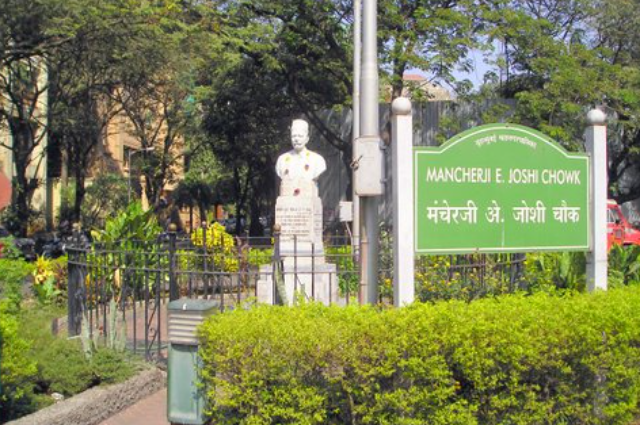
A city can change its skyline, widen its roads and forget the shape of its old streets, yet some memories refuse to disappear. In Mumbai, a few of them survive behind gates, gardens, verandas and quiet residential lanes known as baugs. The word may simply mean “garden”, but in the history of Mumbai’s Parsi community, a baug became something much larger than its literal meaning. It became a home, a neighbourhood, a social world and, above all, a way of preserving a way of life. At a time when Bombay was becoming increasingly crowded, several Parsi residential colonies were created with an idea that now feels surprisingly modern: a community needed more than four walls. It needed air, trees, open spaces, dignity, companionship and a place where traditions could continue naturally. Some of these colonies emerged through philanthropy, particularly through the remarkable work of Bai Jerbai Wadia, who helped create affordable housing for members of the Parsi community. The Wadia legacy eventually became associated with Nowroz Baug, Rustom Baug, Jer Baug, Cusrow Baug and Ness Baug. Their story is not merely about charitable housing. It is about a particular understanding of responsibility: that prosperity could be converted into shelter, security and community. Elsewhere, the Dadar Parsi Colony developed through a different but related vision. Mancherji Edalji Joshi played a crucial role in securing land for Parsi families within the planned Dadar-Matunga development of the early twentieth century, a scheme shaped partly by the need to address congestion and unhealthy conditions after Mumbai’s plague epidemics. The resulting neighbourhood was planned around open spaces, gardens, low-rise construction and sanitation. These places therefore tell two stories at once: the story of a community seeking a secure home and the story of a city learning that healthy urban life requires more than buildings. That is why the Parsi baug deserves to be read not merely as an architectural curiosity. It is a social idea built in brick, stone, wood, garden soil and human relationships. It asks a question that remains relevant to every modern city: when land becomes expensive, and life becomes crowded, what happens to the spaces that allow people to belong?
To understand a baug, however, one must look beyond its entrance gate. Its real architecture begins with the relationship between people and space. Dadar Parsi Colony, officially known as the Mancherji Joshi Parsi Colony, is perhaps the clearest expression of this idea. Unlike several gated Parsi bungalows, it developed as an open residential neighbourhood, with low-rise buildings, roads, gardens and community spaces woven together rather than hidden behind one enclosing wall. The Five Gardens became one of its defining features, while the surrounding streets created a neighbourhood where greenery was not an afterthought but part of the original planning. Contemporary accounts of the colony note how different roads were associated with particular varieties of trees, adding another layer of identity to the landscape. This is important because architecture does not merely decide where people sleep; it quietly influences how they meet. A veranda can encourage conversation. A shared garden can become a playground. A shaded road can become a walking route for generations. A low-rise building can leave room for sunlight, trees and sky. In a city increasingly shaped by vertical construction, the baug represents a different imagination of urban life. Cusrow Baug in Colaba, whose residential blocks were developed from 1934 onwards and were designed by architect Claude Batley, contains not only homes but also a Zoroastrian place of worship and community facilities including a gymnasium and sports club. The significance of such planning lies in its completeness. A resident did not simply receive an apartment; the surrounding environment could provide places for worship, recreation, conversation and community life. The baug therefore functioned almost like a small city within the city, but one designed around human scale. Its lanes could hold memories. Its trees could become landmarks. Its gardens could belong simultaneously to childhood and old age. In this sense, Parsi residential architecture is not impressive because it tries to dominate Mumbai. It is memorable because it tries to make room for life.
And life inside these spaces has always been larger than architecture. The walls of a baug may contain homes, but the homes contain stories of faith, family, food, celebration and memory. Parsis follow Zoroastrianism, one of the world’s ancient religions, and the ethical principle commonly expressed through “good thoughts, good words and good deeds” has become one of the most recognisable summaries of its moral philosophy. Religious life includes ceremonies such as the Navjote, which formally initiates a child into the Zoroastrian faith, while fire holds a deeply respected place in Zoroastrian worship. The agiary, or fire temple, therefore occupies a special position in community life. Cusrow Baug itself contains the Seth Nusserwanji Hirji Karani Agiary, whose sacred fire has a history reaching back to the nineteenth century before being moved to the baug in 1935. Yet culture is rarely preserved by prayer alone. It survives in kitchens, family conversations, clothing, celebrations and the dishes that appear repeatedly on dining tables. Parsi food carries traces of a long history of cultural interaction while retaining its own character: dhansak, patra-ni-machhi, salli boti, lagan-related dishes, sweets and festive preparations are not simply recipes but vessels of memory. A grandmother teaching a recipe to a younger family member may preserve something no archive can fully record. A celebration may bring together relatives who live in different parts of Mumbai. A familiar fragrance drifting from a kitchen can make an old house feel young again. Even the smallest domestic rituals can become threads connecting generations. This is where the baug becomes more than heritage. Heritage usually makes us think of monuments, plaques and protected structures. A baug offers a warmer definition. It is heritage that cooks, prays, argues, laughs, celebrates, grows old and begins again. Its greatest achievement is that tradition does not always have to announce itself. Sometimes it survives quietly because people continue doing what their parents and grandparents once did—not because the past is being artificially preserved, but because it still has a place in everyday life.
There is another story written into the foundations of these colonies, and it is the story of giving. The history of Mumbai’s Parsi baugs cannot be separated from the community’s long philanthropic tradition. Bai Jerbai Wadia stands prominently within that history. Born in 1852, she devoted significant energy to philanthropic work, including low-cost housing for Zoroastrians and the creation of trusts connected with the construction and maintenance of Parsi residential colonies. Following the death of her husband, Nowrosjee Wadia, her philanthropy helped create a housing legacy that would include five major bungalows associated with the Wadia family. This matters because a house built through philanthropy is never only a building. It represents a belief about what wealth is supposed to do once it has been accumulated. In the case of these bungalows, the answer was not simply private comfort. It was community security. Families who might otherwise have struggled to find suitable housing could become part of a residential environment created with their needs in mind. The idea also connects with the wider Parsi contribution to Mumbai, where philanthropy has played a significant role in institutions associated with healthcare, education and civic life. But the baug gives philanthropy a particularly intimate form. A hospital may serve thousands of strangers; a school may educate generations; a residential colony does something quieter—it gives people somewhere to come home to. It gives children a street they recognise, older residents familiar neighbours and families a sense that they are not facing the city alone. This is perhaps the most human part of the baug story. Its legacy cannot be measured only by acreage, buildings or the names of donors. It can also be measured in ordinary mornings: a door opening, a neighbour asking after someone’s health, children playing in a shared space, an elderly resident watching the garden change with the seasons. Philanthropy becomes invisible when it succeeds completely. The donor's name may fade into history, but the life made possible by that generosity continues. That is why the Parsi baug is also a lesson in social responsibility. It reminds a city that the most enduring form of giving may not be something spectacular. Sometimes it is simply the creation of a place where another human being can live with dignity.
But every living heritage eventually faces the same difficult question: how does it survive without becoming a museum? Mumbai has changed dramatically around the baugs. Land has become more valuable, families have become smaller, lifestyles have changed, and the pressure for redevelopment has reached neighbourhoods that once appeared almost untouched by the city’s appetite for height. The Dadar Parsi Colony itself illustrates the tension. Its original planning was based on low-rise buildings, greenery, open spaces and carefully organised streets, principles that remain visible even as the surrounding metropolis has become increasingly vertical. Architectural accounts of the colony have highlighted its unusual planning, environmental qualities and the community life created by its physical design, while also noting pressures associated with redevelopment and changing urban conditions. The question, therefore, is not whether a baug should remain exactly as it was a century ago. Cities cannot remain frozen. Buildings need repair, families have changing needs, and communities must respond to contemporary realities. The deeper question is what must not be lost when change arrives. Perhaps it is the garden rather than merely the old wall. The shared space rather than merely the old building. The dignity of affordable community housing rather than simply the appearance of an old façade. The possibility of children knowing their neighbours. The ability of elderly residents to remain connected to familiar surroundings. The presence of religious, cultural and social institutions within reach of everyday life. These are values that can survive even when individual structures change—but only if they are consciously recognised. This is also where the future of the Parsi baug becomes a Mumbai story rather than only a Parsi story. Every neighbourhood in the city is negotiating the same conflict between memory and development. What should be preserved? What can change? What should never be measured only in square feet? The baug does not provide a simple answer. Instead, it offers a living example of what can happen when urban planning begins with people rather than property. Its future will ultimately depend on how residents, trusts, institutions and the wider city understand the value of the spaces they have inherited. Preservation, in that sense, should not mean refusing tomorrow. It should mean carrying the best parts of yesterday into it.
Perhaps that is why the most beautiful way to understand a Parsi baug is not as an old colony, but as a garden of memory that is still alive. Mumbai is a city that rarely pauses. Trains arrive and leave, traffic fills the roads, old shops disappear, towers rise, and neighbourhoods change their faces with astonishing speed. Yet inside the baugs, another rhythm can still be found. A tree grows beside a century-old building. A garden receives the footsteps of children in the morning and older residents later in the day. A familiar doorway carries the memory of people who lived there before the present generation was born. Somewhere, a traditional dish is prepared for a family gathering. Somewhere, a prayer is recited. Somewhere, a child learns a word, a recipe, a custom or a story that existed long before them. These are small things, almost too ordinary to appear in a history book. Yet history is made from precisely such ordinary things. The greatness of the Parsi baug does not lie only in its architecture, nor only in the philanthropy that created it, nor only in the religious traditions practised within and around it. Its greatness lies in the way all these elements meet. Home becomes community. Community becomes culture. Culture becomes memory. Memory becomes responsibility. That is the quiet journey of the baug. It tells us that heritage does not always need a grand monument, a museum ticket or a bronze plaque. Sometimes heritage is a garden where someone still sits every evening. Sometimes it is an old staircase worn smooth by generations of footsteps. Sometimes it is the sound of neighbours speaking across balconies. Sometimes it is a recipe that survives because somebody still remembers how to make it. And sometimes it is simply the knowledge that a place was created by people who believed the future deserved a home. The Parsi baugs have survived because they were never only buildings. They were built around the idea that a community could protect its identity without surrendering its humanity; that faith could live alongside everyday life; that greenery could exist alongside a growing metropolis; and that prosperity could become service. As Mumbai races towards its next century, these gardens of Bombay quietly hold something the city must never mistake for emptiness: space to remember, space to belong and space to remain human. Perhaps that is the true legacy of the Parsi baug—not that it has stopped time, but that it has shown Mumbai how to carry time forward without forgetting where it came from.
References:
- The Indian Express — “The Last Word: Parsiana’s End and the Uncertain Future of the Parsis of Bombay.”
- The Indian Express — “Mumbai’s Parsis, Iran Refugees from Centuries Ago, Have a Justice Folklore.”
- Times of India / Mumbai Mirror — “Fat Deposit, Low Rent: Wealthy Parsis Are Moving into Historic Baugs.”
- Hindustan Times — “Malcolm Baug: A Historic Hundred for Parsi Oasis of Calm.”
- Architectural Digest India — “Dadar Parsi Colony: Cherishing the Bombay That Was.”
- Parsi Khabar — “Life in a Parsi Baug.”
- Global Council of Zoroastrians Trust — “Living Heritage of the Parsi Community in Mumbai.”
- Azure Sky Follows — “A Walk in the Dadar Parsi Colony in Mumbai.”
- Rethinking The Future — “The Parsi Colonies of Mumbai: Understanding the Contrast in Social Architecture of Mumbai.”